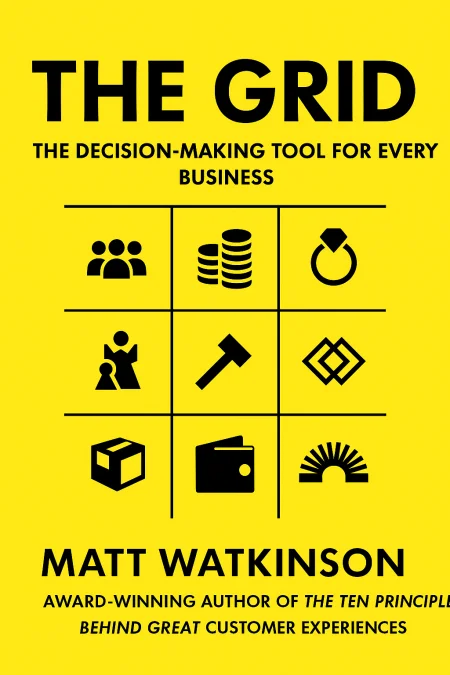
The Grid
The Decision-Making Tool for Every Business (Including Yours)
Book Edition Details
Summary
In the bustling arena of commerce, "The Grid" emerges as a beacon for navigating the labyrinthine complexities of business success. Matt Watkinson, celebrated for his insightful acumen, dissects the intricate interplay of strategic elements that define thriving enterprises. This indispensable guide provides a robust framework to dissect and enhance your business acumen, revealing the hidden levers of influence within your operations. With practical wisdom and illuminating examples, Watkinson equips leaders to foresee and harness market shifts, diagnose core challenges, and foster cross-functional synergy. The essence of strategic clarity and confidence awaits within these pages, promising a transformative perspective on decision-making. Whether you're steering a startup or helming a corporate giant, "The Grid" is your ally in mastering the art of business dynamics.
Introduction
Every business faces countless decisions daily, from strategic pivots to operational tweaks. Yet most leaders navigate these choices using fragmented frameworks, gut instincts, or department-specific metrics that miss the bigger picture. The result is a business landscape littered with failed ventures and missed opportunities, where even well-intentioned decisions create unintended consequences across organizations. The Grid emerges as a comprehensive decision-making framework that treats business as an interconnected system rather than isolated components. This systematic approach recognizes that success emerges from the dynamic interplay of nine essential elements, organized around three fundamental goals: desirability, profitability, and longevity. The framework addresses critical questions about sustainable competitive advantage, customer value creation, and organizational adaptability in an increasingly complex marketplace. This theoretical foundation challenges traditional analytical thinking by emphasizing synthesis over analysis, whole-system optimization over departmental excellence, and dynamic adaptation over static planning. The Grid provides leaders with a mental scaffolding for evaluating strategic decisions, identifying root causes of business challenges, and anticipating market changes while maintaining operational coherence across all business functions.
Understanding the Nine-Box Grid Framework
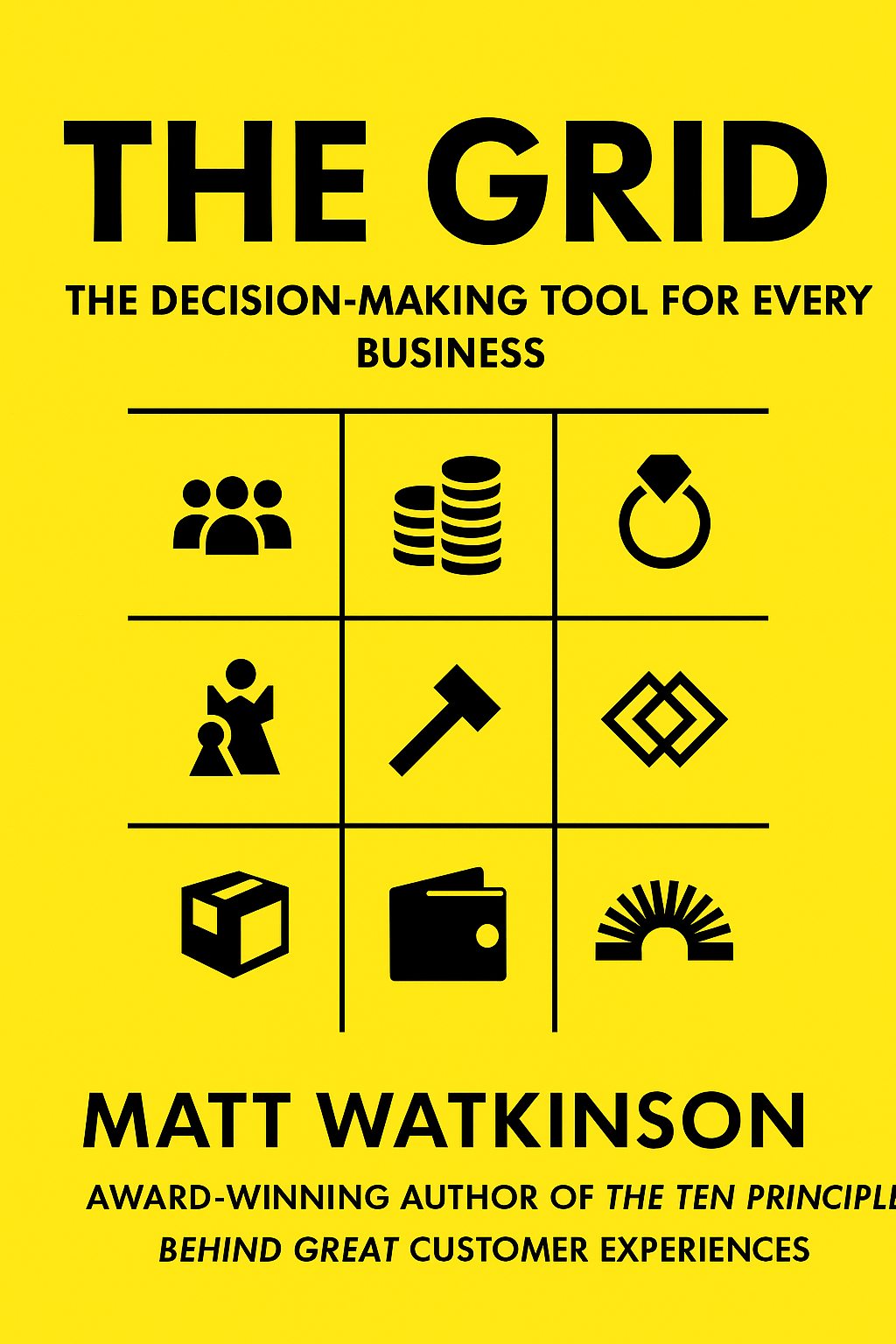
The Grid operates on a fundamental principle that every successful business must simultaneously achieve three interconnected objectives while navigating constant environmental change. These objectives form the columns of the framework: making offerings that customers genuinely desire, generating sustainable profits from those offerings, and building organizational resilience for long-term survival. The framework's architecture recognizes that change occurs across three distinct but interconnected layers. Customer behaviors, preferences, and needs evolve continuously, creating opportunities and threats for businesses. Market conditions fluctuate through competitive dynamics, regulatory shifts, and economic cycles that reshape entire industries. Meanwhile, organizations themselves transform through growth, capability development, and structural changes that alter their strategic options. When these three objectives intersect with the three layers of change, they create nine boxes that capture every critical factor affecting business success. This intersection reveals that customer changes can impact desirability, profitability, and longevity simultaneously. Market shifts affect competitive positioning, cost structures, and survival prospects. Organizational evolution influences customer appeal, financial performance, and adaptive capacity. The power of this framework lies in its recognition of interconnectedness. Traditional business analysis examines each element in isolation, missing the complex web of relationships that determine actual outcomes. A cost-cutting initiative might improve short-term profits while damaging customer relationships and reducing long-term viability. A marketing campaign might boost awareness while straining operational capacity and compromising service quality. The Grid forces decision-makers to consider these ripple effects before taking action. This systematic approach transforms business decision-making from reactive problem-solving to proactive system optimization, enabling leaders to make choices that strengthen the entire enterprise rather than optimizing individual components at the expense of overall performance.
Desirability: Customers, Competition, and Offerings
Desirability represents the fundamental requirement that customers must want what businesses provide. This objective encompasses three interconnected elements that together determine whether offerings will find receptive markets and loyal customer bases. Customer wants and needs form the foundation of desirability, reflecting the deep human motivations, practical goals, and barriers that drive purchasing decisions. Understanding customers requires penetrating beyond demographic categories to grasp their identities, values, and social contexts. People buy products that express who they are, solve meaningful problems, and align with their belief systems. The most successful businesses recognize that customers seek emotional resonance as much as functional utility, requiring offerings that speak to both rational needs and identity aspirations. Competitive rivalry shapes the context within which desirability unfolds, determining the standards customers use to evaluate offerings and the alternatives available in the marketplace. The intensity and nature of competition evolve constantly as new entrants emerge, established players adapt, and substitute solutions gain acceptance. Smart businesses position themselves strategically within competitive landscapes rather than simply trying to outperform existing rivals on conventional metrics. Organizational offerings represent the synthesis of customer understanding and competitive positioning, manifesting as propositions, brand experiences, and customer interactions that create distinctive value. Successful offerings combine functional excellence with emotional appeal, delivering clear benefits while expressing consistent brand promises through every customer touchpoint. The most powerful offerings create unique combinations of attributes that competitors cannot easily replicate. Consider how streaming services transformed entertainment by understanding that customers wanted convenient access to content rather than physical ownership of media. Netflix and others recognized that traditional competitors were vulnerable to new value propositions that eliminated the barriers and friction points inherent in video rental stores, while creating entirely new usage patterns around binge-watching and personalized recommendations.
Profitability: Revenue, Power, and Cost Management
Profitability emerges from the dynamic interaction between revenue generation, power relationships, and cost structures that together determine whether businesses can sustain themselves financially while investing in future growth. This objective requires careful orchestration of multiple financial and strategic elements. Revenue models and pricing strategies form the foundation of profitability, determining how businesses capture value from the desirability they create. The choice of revenue mechanism affects every aspect of customer relationships, from acquisition patterns to retention dynamics. Subscription models create different customer behaviors than transaction-based approaches, while auction systems generate different dynamics than fixed pricing. Successful businesses align their revenue approaches with customer preferences and competitive contexts while ensuring adequate returns on invested capital. Bargaining power shapes the distribution of value among businesses, their suppliers, and their customers, determining who captures the largest share of economic benefits from commercial relationships. Companies with strong positions can demand favorable terms from suppliers while maintaining pricing discipline with customers. However, the exercise of power requires careful balance, as excessive exploitation can generate resentment that ultimately undermines competitive position when alternatives emerge or circumstances change. Cost management and operational efficiency provide the foundation for sustainable profitability by ensuring that businesses can deliver their offerings while maintaining healthy margins. Effective cost structures balance fixed and variable elements to optimize performance across different volume scenarios. The most sophisticated cost strategies recognize the interconnections between operational decisions and customer experiences, avoiding false economies that damage long-term value creation. The technology sector provides numerous examples of businesses that achieved profitability through innovative combinations of these elements. Platform companies like Google created advertising-based revenue models that aligned customer benefits with business economics, while leveraging network effects to build powerful market positions and achieving massive scale economies that competitors could not match.
Longevity: Building Sustainable Competitive Advantage
Longevity requires building organizations that can survive and thrive through multiple business cycles, technological transitions, and competitive challenges. This objective focuses on the fundamental capabilities and strategic positions that enable sustained success over time. Customer base development creates the foundation for long-term survival by building communities of loyal advocates who provide recurring revenue and word-of-mouth marketing. Sustainable customer relationships depend on consistently delivering value that exceeds expectations while continuously adapting to evolving needs and preferences. The strongest customer bases exhibit high retention rates, strong advocacy behaviors, and resistance to competitive offers, creating predictable revenue streams and reducing customer acquisition costs. Competitive protection involves building barriers that prevent rivals from easily copying successful business models or offerings. Legal protection through patents and trademarks provides temporary advantages, while operational excellence and unique capabilities create more durable competitive moats. The most effective protection strategies combine multiple defensive elements that force competitors to replicate entire systems rather than individual features or capabilities. Organizational adaptability ensures that businesses can respond effectively to environmental changes without losing their core identity or competitive advantages. Adaptive organizations maintain strategic flexibility through balanced resource allocation, diverse capability development, and cultural norms that embrace change as opportunity rather than threat. They invest in sensing mechanisms that provide early warning of market shifts and maintain sufficient operational slack to enable rapid response when circumstances require strategic pivots. Financial services companies demonstrate these longevity principles through their approach to risk management and regulatory adaptation. Successful banks build diversified customer bases across multiple segments and geographies while developing compliance capabilities that enable them to adapt quickly to regulatory changes. They maintain strong balance sheets that provide stability during economic downturns while investing continuously in new technologies and service capabilities that meet evolving customer expectations.
Summary
The Grid reveals that business success emerges not from optimizing individual components but from orchestrating complex systems where every element reinforces the others in service of sustainable value creation. This framework transcends traditional analytical approaches by recognizing business as dynamic, interconnected systems that require synthetic thinking and continuous adaptation. The most successful enterprises master the art of balancing immediate performance pressures with long-term capability building, creating offerings that simultaneously satisfy customers, generate profits, and build enduring competitive advantages. This systematic approach to decision-making represents a fundamental evolution in management thinking, providing leaders with the tools to navigate complexity while maintaining strategic coherence across all dimensions of organizational performance.
Related Books
Download PDF & EPUB
To save this Black List summary for later, download the free PDF and EPUB. You can print it out, or read offline at your convenience.
By Matt Watkinson
