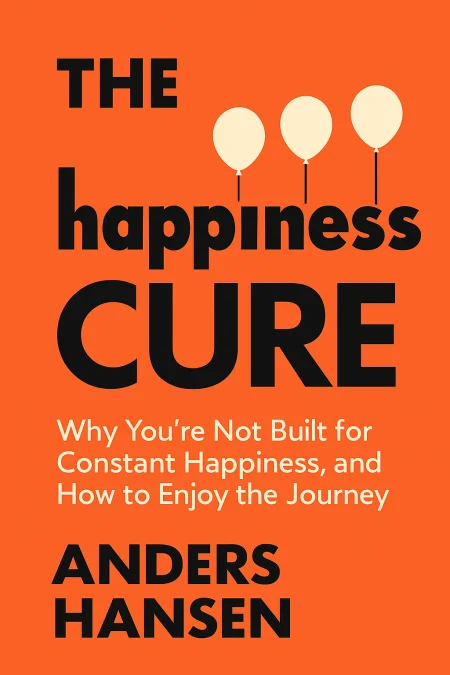
The Happiness Cure
Why You're Not Built for Constant Happiness, and How to Enjoy the Journey
Book Edition Details
Summary
In a world that seems to offer more than ever, why are so many of us still searching for happiness? Enter the realm of "The Happiness Cure" by Dr. Anders Hansen, where science meets the soul. This groundbreaking narrative weaves together evolutionary insights and modern neuroscience to challenge the traditional quest for fleeting joy. Dr. Hansen, with his acclaimed expertise, guides readers on a journey to rediscover happiness not as a quick fix, but as a deep-rooted state of being. Through relatable tales and scientific revelations, he unravels the mysteries of our brains, offering transformative strategies that resonate with the essence of long-term contentment. This is not just a book; it's a call to redefine your path to genuine fulfillment in a complex world.
Introduction
Have you ever wondered why anxiety can strike on a perfectly ordinary Tuesday morning, or why depression can creep in despite having everything seemingly going well? In our modern world of unprecedented comfort and safety, mental health struggles have paradoxically become more common than ever. This puzzling contradiction lies at the heart of one of the most fascinating questions in neuroscience: why our brains, these remarkable organs capable of storing the equivalent of 11,000 libraries worth of information, seem so determined to make us feel terrible when life is objectively good. The answer isn't found in broken brain chemistry or personal weakness, but in understanding that we're carrying around Stone Age minds in Space Age bodies. Our brains weren't designed for happiness or well-being, they were sculpted by evolution for one primary purpose: keeping our ancestors alive in a world where half of all children died before reaching adulthood. Every feeling of dread, every bout of melancholy, every surge of panic served a crucial survival function for hundreds of thousands of years. Today, these same mechanisms fire in response to modern triggers that pose no real threat to our survival, leaving us feeling anxious about job interviews and depressed despite material abundance. Understanding this evolutionary mismatch doesn't just explain our emotional struggles, it opens the door to more effective ways of managing them.
Evolutionary Survivors: How Ancient Programming Shapes Modern Emotions
We are not random products of genetic lottery, but the latest links in an unbroken chain of survivors stretching back 250,000 years. Every single one of your ancestors managed to avoid death by starvation, disease, predation, or violence long enough to reproduce. This fact has profound implications for how your brain works today. Those early humans who were hypervigilant about rustling bushes, who constantly scanned for threats, who prepared for the worst-case scenario, were more likely to survive lion attacks and tribal conflicts. Their cautious, anxiety-prone descendants inherited these same neural tendencies. Your brain operates on what researchers call the "smoke detector principle." Just as we'd rather have our kitchen smoke alarm go off for burnt toast than fail to detect an actual fire, your brain would rather generate a thousand false alarms than miss one genuine threat. This explains why you can feel inexplicably anxious about situations that pose no real danger, or why your mind tends to catastrophize minor setbacks. These weren't bugs in the system, they were features that kept our species alive. The mismatch becomes clear when we consider that for 96% of human history, we lived as hunter-gatherers facing immediate physical threats. Only in the last few centuries have we created a world where death from predators, starvation, or infectious disease is rare. Yet our brains haven't caught up with this dramatic environmental shift. We're running ancient survival software in a modern context, which means our threat-detection systems fire constantly in response to contemporary stressors like work deadlines, social media comparisons, and relationship conflicts. Understanding this evolutionary heritage doesn't diminish the reality of mental suffering, but it reframes it. Your anxiety isn't a sign of personal failure, it's evidence of having ancestors tough enough to survive in a brutally dangerous world. Your brain's tendency toward negativity isn't broken, it's the result of millions of years of natural selection favoring those who erred on the side of caution.
The Science Behind Anxiety and Depression as Defense Mechanisms
Depression and anxiety aren't just random brain malfunctions, they're sophisticated biological responses that once served critical survival functions. Depression, with its characteristic withdrawal and energy conservation, mirrors the behavioral patterns seen in animals facing resource scarcity or social threats. When our hunter-gatherer ancestors encountered prolonged stress or social isolation, pulling back and conserving energy could mean the difference between survival and death. This same mechanism can be triggered today by modern stressors like work pressure or relationship problems. The inflammatory theory of depression reveals how closely our mental state connects to our immune system. When your body detects signs of infection or injury, it releases inflammatory proteins called cytokines. These same chemicals can induce feelings of lethargy, withdrawal, and low mood. Historically, this made perfect sense: if you were injured or infected, feeling motivated to socialize or explore would be dangerous. Better to lie low, conserve energy, and let your immune system do its work. The problem is that modern lifestyle factors like chronic stress, poor diet, and lack of exercise can trigger this same inflammatory response, leading to depression without any actual physical threat. Anxiety operates on similar principles, functioning as a preemptive strike against potential dangers. While stress responds to actual threats, anxiety responds to imagined ones, flooding your system with the same chemicals that would help you escape a charging mammoth. The physical symptoms, racing heart, sweating, muscle tension, are your body preparing for fight or flight. This hair-trigger response system saved countless ancestors from predators, but in our safe modern world, it can turn a job interview into a perceived life-or-death situation. Research shows that people with certain anxiety and depression genes weren't evolutionary mistakes, they were survivors. In dangerous environments, having some individuals who were extra cautious or who could retreat and analyze complex social problems provided survival advantages for the whole group. We needed both the bold risk-takers and the anxious planners. Today's mental health challenges often reflect these ancient survival strategies running in overdrive in environments they were never designed for.
Physical Activity and Social Connection: Your Brain's Essential Needs
Our brains evolved in bodies that moved 15,000 to 18,000 steps daily, hunting, gathering, and traveling across varied terrain. Modern humans average just 5,000 to 6,000 steps per day, creating a profound mismatch between what our brains expect and what they receive. This movement deficit has cascading effects on mental health. Physical activity doesn't just build muscle and cardiovascular fitness, it fundamentally alters brain chemistry in ways that counteract depression and anxiety. Exercise works as a natural antidepressant by targeting multiple biological systems simultaneously. It increases levels of mood-regulating neurotransmitters like serotonin and dopamine, reduces inflammatory markers that contribute to depression, and strengthens the brain's stress-management systems. The hippocampus, crucial for memory and stress regulation, actually grows larger in people who exercise regularly. Perhaps most importantly, physical activity normalizes the HPA axis, our body's central stress response system, making us more resilient to life's inevitable pressures. Social connection represents the other fundamental pillar of mental health that modern life has disrupted. For 99.9% of human history, isolation meant death. Our ancestors lived in tight-knit groups of 50 to 150 people, depending on each other for protection, food sharing, and child-rearing. Loneliness triggers the same biological alarm systems as physical pain, flooding the body with stress hormones and inflammatory chemicals. Studies show that chronic loneliness increases mortality risk equivalent to smoking 15 cigarettes per day. The digital age has created a paradox: we're more connected yet more isolated than ever. Social media provides the illusion of connection while often increasing feelings of inadequacy and social comparison. Real social bonding requires physical presence, shared experiences, and the release of bonding chemicals like oxytocin through activities like laughing together, eating together, or engaging in group activities. Even brief, meaningful interactions, like a 10-minute phone call with someone who cares, can measurably reduce loneliness and its associated health risks.
Breaking Free from the Happiness Trap and Destiny Thinking
Modern society has sold us a dangerous myth: that happiness is a permanent state we should strive to maintain, and that feeling bad indicates personal failure or brain dysfunction. This "happiness trap" sets impossible expectations that paradoxically make us less happy. Emotions, including negative ones, are meant to be temporary signals that guide our behavior. They're like the weather, constantly changing based on internal and external conditions. Expecting perpetual happiness is like expecting endless sunny days. The pursuit of constant positivity can actually backfire. Studies show that people who read articles promoting happiness before watching a comedy film enjoyed it less than those who had neutral expectations. When we're told we should be happy, anything short of euphoria feels like failure. This creates a vicious cycle where normal emotional fluctuations become sources of additional distress. The brain's prediction system works by comparing reality to expectations, so unrealistic emotional expectations guarantee disappointment. Equally problematic is "destiny thinking," the belief that our mental health is predetermined by genetics or brain chemistry. While genes certainly influence our emotional tendencies, they're not our destiny. Learning that you have genetic risk factors for depression or anxiety can actually become a self-fulfilling prophecy if you believe these conditions are inevitable. The brain is remarkably plastic, constantly rewiring itself based on our experiences, thoughts, and behaviors. How we live our lives, exercise, sleep, manage stress, and connect with others, powerfully shapes how our genes are expressed. The antidote to both traps is understanding that mental health exists on a spectrum, and that struggling sometimes is part of being human, not evidence of being broken. Anxiety and depression, while painful, often signal that our brain is working exactly as evolution designed it to, just in an environment it wasn't prepared for. This perspective reduces shame and self-blame while opening space for practical interventions. Instead of chasing happiness or accepting genetic fatalism, we can focus on building resilience through lifestyle changes that honor our evolutionary heritage while adapting to modern realities.
Summary
The most profound insight from understanding our brain's evolutionary heritage is that mental suffering often reflects not broken minds, but ancient survival systems operating in environments they were never designed for. We are Stone Age brains trying to navigate a modern world, and many of our emotional struggles stem from this fundamental mismatch rather than personal inadequacy or faulty brain chemistry. This realization transforms how we view anxiety and depression: not as diseases to be cured, but as overactive defense mechanisms to be understood and managed. The path forward isn't found in pursuing endless happiness or accepting genetic destiny, but in honoring our evolutionary needs for movement, genuine social connection, and realistic expectations about the natural ebb and flow of human emotions. What would change in your own life if you truly understood that your brain's primary job isn't to make you happy, but to keep you alive and how might this knowledge reshape your relationship with difficult emotions?
Related Books
Download PDF & EPUB
To save this Black List summary for later, download the free PDF and EPUB. You can print it out, or read offline at your convenience.
By Anders Hansen
