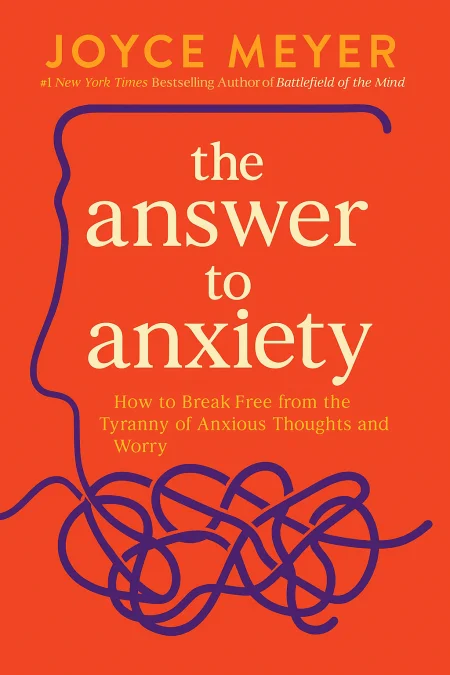
The Answer to Anxiety
How to Break Free from the Tyranny of Anxious Thoughts and Worry
Book Edition Details
Summary
In a world where anxiety seems inevitable, Joyce Meyer offers a beacon of hope with her latest work, "The Answer to Anxiety." This isn't just another self-help book—it's a lifeline for those drowning in worry. Meyer, a revered Bible teacher and bestselling author, invites readers to experience a radical shift in their perspective. She lays out a divine blueprint drawn from Scripture, revealing how to anchor your heart in God's unwavering promises. Discover how faith can transform your moments of panic into opportunities for peace. With practical guidance and spiritual wisdom, Meyer shows that God’s plan is not for you to be burdened with fear, but to embrace a life of tranquility and assurance. Are you ready to reclaim your peace and step into a God-centered life of joy and serenity?
Introduction
In contemporary society, anxiety has become an epidemic that affects millions of people worldwide, with statistics showing that anxiety disorders are among the most prevalent mental health conditions. Yet despite countless therapeutic approaches and medical interventions, many individuals continue to struggle with worry and fear that seem to dominate their daily existence. This exploration presents a fundamentally different approach to understanding and conquering anxiety—one rooted in ancient biblical wisdom yet profoundly relevant to modern psychological challenges. The central proposition examined here challenges the conventional assumption that anxiety is simply an inevitable byproduct of modern life's complexities. Instead, it argues that worry and anxiety represent a fundamental misalignment with spiritual principles that, when properly understood and applied, can lead to genuine peace regardless of external circumstances. This perspective doesn't dismiss the reality of stress or difficulty but reframes our response to these challenges through a lens of faith-based practical wisdom. The methodology employed combines scriptural analysis with real-world application, demonstrating how ancient texts provide concrete strategies for contemporary anxiety management. By examining specific biblical formulas and testing them against lived experience, readers encounter a systematic approach that moves beyond mere positive thinking to embrace transformative spiritual principles that have sustained individuals through countless generations of human struggle.
The Biblical Command Against Anxiety and Its Practical Application
The foundation of this approach rests on a seemingly impossible command: "Be anxious for nothing." This directive, found in Philippians 4:6, appears to contradict human nature itself, as worry often feels like an automatic response to life's uncertainties. Yet this command reveals profound insight into the nature of anxiety and its ultimate futility in solving problems or improving outcomes. Anxiety fundamentally represents an attempt to control tomorrow while sacrificing today's peace and effectiveness. When individuals spend mental and emotional energy rehearsing potential disasters or trying to mentally solve problems beyond their control, they engage in a form of circular thinking that produces stress without solutions. The biblical prohibition against anxiety isn't merely a religious platitude but a practical recognition that worry accomplishes nothing constructive while consuming valuable psychological resources. The command gains credibility through its recognition of human limitations and divine capabilities. Rather than suggesting that people should feel no concern about real problems, it redirects that concern toward productive channels. The underlying logic suggests that if an all-knowing, all-powerful God exists and cares for His creation, then human anxiety becomes not only unnecessary but counterproductive to accessing divine assistance. Historical examples throughout biblical narratives demonstrate individuals who faced seemingly impossible circumstances yet maintained peace through trust in divine provision. These accounts serve not as fairy tales but as evidence that an alternative response to crisis is both possible and practical, offering a different paradigm for approaching life's inevitable challenges.
Five Essential Keys to Conquering Worry and Fear
The systematic approach to overcoming anxiety involves five specific strategies that transform how individuals process and respond to stressful situations. The first key involves remembering past victories—consciously recalling times when seemingly insurmountable problems were resolved or when strength was found during difficult periods. This practice counters anxiety's tendency to project worst-case scenarios by establishing a track record of survival and divine intervention. Fighting the good fight of faith represents the second key, acknowledging that overcoming anxiety requires active resistance rather than passive hope. This involves deliberately choosing trust over worry when fearful thoughts arise, recognizing that anxiety attacks must be met with conscious opposition. The metaphor of warfare suggests that peace doesn't come naturally but must be defended through intentional mental discipline and spiritual commitment. The third and fourth keys work in tandem: believing that God is in control while actively choosing to trust Him with outcomes beyond human influence. These principles address anxiety's root cause—the fear that circumstances will overwhelm one's capacity to cope. By transferring responsibility for ultimate outcomes to divine wisdom while maintaining personal responsibility for appropriate action, individuals find relief from the impossible burden of trying to control uncontrollable factors. The fifth key focuses on embracing God's unconditional love as the antidote to fear-based thinking. Since most anxiety stems from fear of abandonment, rejection, or inadequate provision, experiencing perfect love dissolves these foundational fears. This isn't merely intellectual knowledge but a deep heart-level conviction that one is valued and protected regardless of circumstances or performance.
Prayer and Gratitude as Spiritual Weapons Against Anxiety
Prayer emerges not as religious obligation but as the most practical tool available for addressing anxiety-producing situations. The immediacy of prayer access means that no individual need face fearful circumstances alone or without supernatural assistance. Rather than being a last resort after human efforts fail, prayer becomes the first response that opens possibilities beyond natural limitations. The specific type of prayer required for anxiety relief involves making definite requests rather than vague petitions for general blessing. This precision reflects confidence in divine care and willingness to engage specific problems with specific solutions. The act of articulating exact needs to God serves multiple purposes: it clarifies what help is actually needed, demonstrates faith in divine capability, and transfers mental energy from worry to productive communication. Thanksgiving functions as a powerful anxiety antidote by shifting focus from what's missing or threatening to what's already provided and secure. This isn't denial of real problems but recognition that gratitude produces entirely different brain chemistry than worry. Grateful thinking activates neural pathways associated with calm confidence rather than stress responses, creating physiological changes that support peaceful problem-solving. The combination of prayer with thanksgiving creates what might be called spiritual warfare against anxiety. Where worry multiplies problems in imagination, grateful prayer acknowledges problems while accessing resources beyond human capacity. This practice doesn't guarantee that external circumstances will change immediately, but it ensures that internal responses remain stable and effective regardless of external conditions.
Achieving God's Peace That Transcends Human Understanding
The ultimate goal isn't merely anxiety reduction but access to a quality of peace that defies natural explanation. This peace remains stable during genuinely difficult circumstances, not because problems disappear but because individuals discover an internal source of stability unaffected by external turbulence. Such peace becomes evidence of successful spiritual practice rather than favorable circumstances. This transcendent peace differs fundamentally from worldly peace, which depends on circumstances being manageable and predictable. Divine peace operates independently of external conditions, providing strength and clarity even when facing genuine crises. Individuals who access this peace often report feeling supported and guided even through their most challenging seasons, discovering capabilities they never knew they possessed. The practical cultivation of this peace requires consistent application of biblical principles rather than crisis-only spiritual practice. Like physical fitness, spiritual peace develops through regular exercise of faith-based responses to daily stresses. Small annoyances become training opportunities for maintaining peaceful responses that prepare individuals for larger challenges. The resulting lifestyle transformation affects not only anxiety levels but overall life satisfaction and effectiveness. People operating from this peace demonstrate remarkable resilience and often inspire others through their calm responses to difficulty. They become living demonstrations that anxiety need not dominate human experience, offering hope to others trapped in cycles of worry and fear.
Summary
The fundamental insight presented reveals that anxiety represents a choice point where individuals either trust in human limitation or access divine resources that transcend natural capabilities. Through specific, testable practices including immediate prayer, conscious gratitude, and deliberate trust in divine care, anyone can develop peace that remains stable regardless of external circumstances. This approach doesn't promise problem-free living but offers a completely different way of experiencing whatever life brings, transforming victims of circumstance into people who remain internally free no matter what challenges arise.
Related Books
Download PDF & EPUB
To save this Black List summary for later, download the free PDF and EPUB. You can print it out, or read offline at your convenience.
By Joyce Meyer
