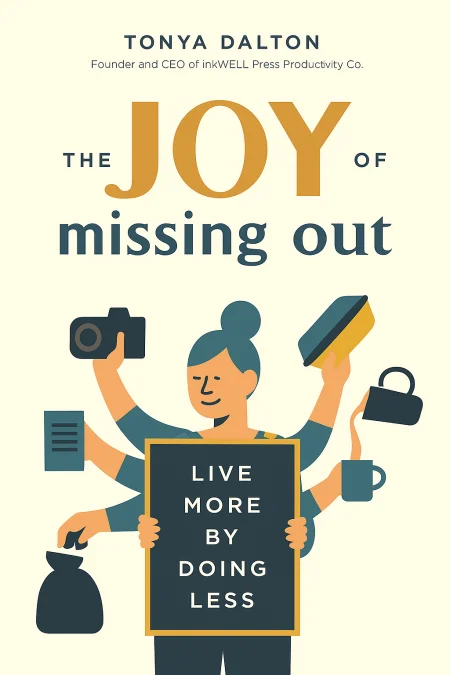
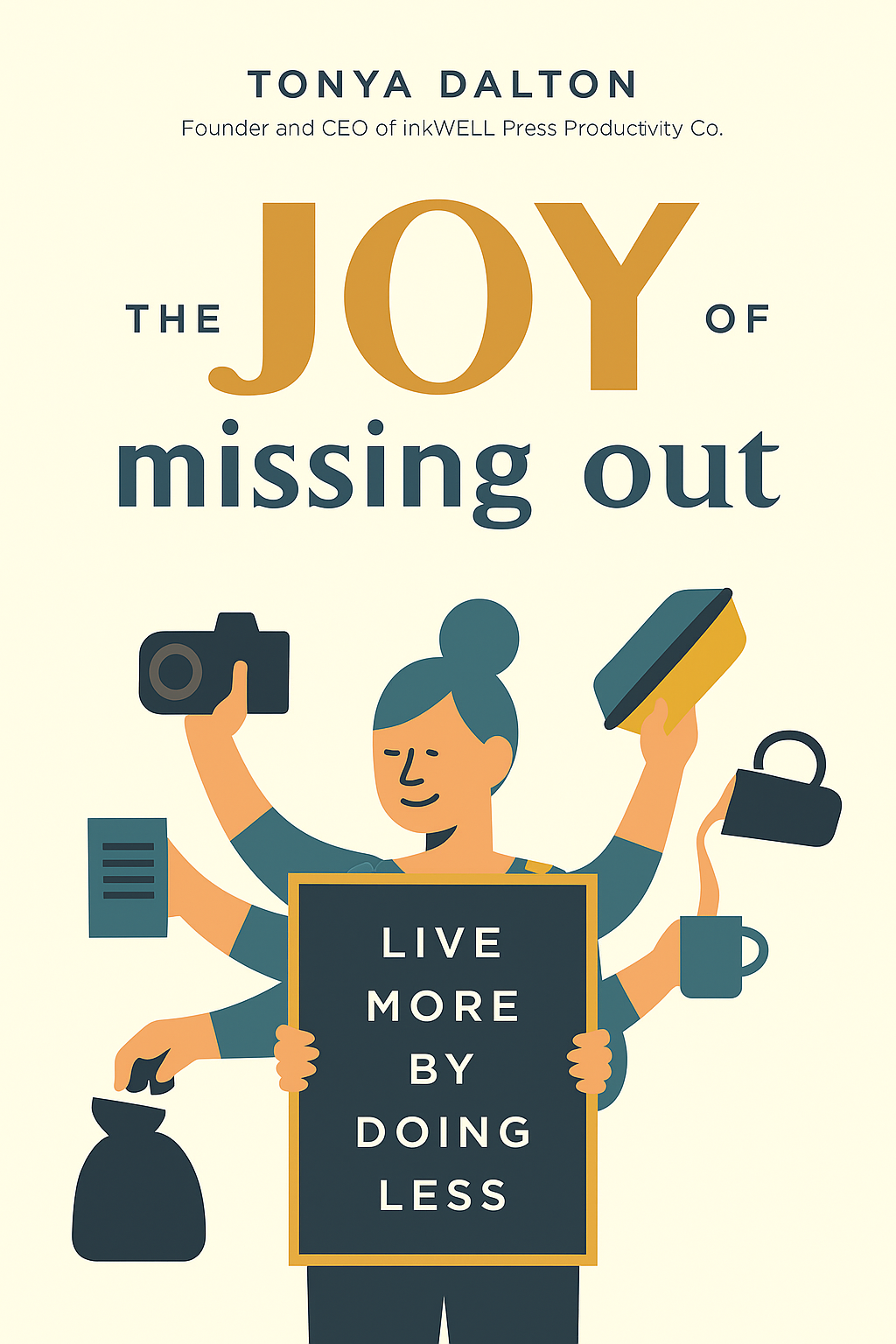
The Joy of Missing Out
Live More by Doing Less
Book Edition Details
Summary
Lost in the chaos of daily life? Tonya Dalton, an acclaimed productivity maven, offers a fresh perspective on the relentless hustle that leaves you drained before your day even begins. In "The Joy of Missing Out," Dalton flips the script on conventional productivity. The secret? It’s not about squeezing more into your day, but about carving out what truly matters. This celebrated guide, heralded by Fortune magazine as a top business read, brims with actionable insights and practical resources. Discover the liberating power of doing less, and embrace a life of abundance and freedom from guilt. Transform overwhelm into clarity, and watch as your true priorities emerge, leading you to a more fulfilling existence.
Introduction
How often do you find yourself spinning in circles in your kitchen, overwhelmed by the sheer volume of tasks demanding your attention? You're not alone in feeling like time is slipping through your fingers while your to-do list grows longer by the hour. This constant state of busyness has become our badge of honor, yet it leaves us feeling empty and unfulfilled despite checking off countless tasks. The truth is, we've been approaching productivity all wrong. We've convinced ourselves that doing more equals being more successful, but what if the secret to a meaningful life lies not in adding more to our plates, but in deliberately choosing what to leave off? What if true productivity isn't about cramming every moment with activity, but about creating space for what truly matters? This journey isn't about becoming a productivity machine or mastering the latest time-management hack. It's about discovering the profound satisfaction that comes from living intentionally, from saying no to the noise so you can say yes to what feeds your soul. It's time to stop glorifying busy and start embracing a life centered on your deepest priorities.
Discover Your North Star and True Priorities
Your North Star isn't just a pretty metaphor – it's the fundamental compass that should guide every decision you make. Just as sailors once navigated treacherous waters by fixing their eyes on that constant celestial guide, you need a clear sense of purpose to navigate the overwhelming choices that bombard you daily. Consider Alfred Nobel's transformative moment. When he read his own premature obituary calling him "The Merchant of Death," he was devastated to realize this would be his legacy. That shocking revelation became his catalyst for change. He redirected his wealth toward establishing prizes for achievements in peace, science, and literature. Nobel didn't just stumble into a better legacy – he consciously created one by clarifying his North Star and aligning his actions with his deeper values. This same clarity is available to you. Nobel's story shows us that it's never too late to rewrite your narrative. He transformed from someone known for creating destruction into someone celebrated for promoting human advancement. His North Star became about contributing to human flourishing rather than just accumulating wealth. To discover your own North Star, start by examining what you truly value versus what you think you should value. Write down your mission statement in one clear sentence – what do you do and why do you do it? Then articulate your vision statement describing where you want to be. Finally, identify your core values that will guide how you get there. These three elements work together to create your North Star, giving you the clarity to make decisions that align with your authentic self. When you're clear on your North Star, choices become easier. You'll know which opportunities to pursue and which to graciously decline. Your North Star doesn't limit your options – it liberates you from the exhausting cycle of trying to be everything to everyone.
Focus Energy on What Matters Most
Focus isn't just about concentration – it's about choosing to direct your mental energy like a magnifying glass directing sunlight. When sunlight is scattered, it provides gentle warmth. But when that same light is focused through a lens, it becomes powerful enough to ignite a fire. Your mental energy works the same way. Remember Rhonda, the successful professional who loved yoga but hadn't attended a class in six months? She believed it was impossible to make time for something that brought her joy because her family needed her every morning. She was trapped by her own story about what a good mother should do. Her high school children were perfectly capable of getting themselves dressed and making their own lunches, but she had never stopped to question whether her constant presence was truly necessary. When Rhonda examined her morning routine honestly, she discovered that most of her tasks could be handled the night before or delegated to her capable teenagers. Her breakthrough came when she realized that being a good mother didn't mean doing everything for her children – it meant raising them to be independent and capable. Within weeks, she was back to her beloved yoga practice three times a week, and her children were more self-reliant. The key to reclaiming your focus lies in creating boundaries and sticking to them. Start by identifying your peak energy hours and protecting them fiercely. Block out time for your most important work when your mind is sharpest. Communicate these boundaries clearly to others – if people can't reach you during your focused work time, they'll learn to respect that boundary. Practice the art of single-tasking by closing email when you're working on a project and putting your phone in another room when you're spending time with loved ones. Remember, every time you allow an interruption, it takes an average of 23 minutes to return to your original level of focus.
Build Simple Systems That Work
Systems aren't about rigid discipline or perfect organization – they're about taking the thinking out of routine tasks so your brain can focus on what truly matters. Think of systems as the infrastructure that supports your priorities, running quietly in the background while you live your life. Holly, a former army officer, discovered this power when she stopped trying to keep track of everything in her head. She had been exhausted by the mental load of remembering countless family decisions and tasks. Once she began writing down her systems and creating automated routines, she felt a profound sense of relief. As she put it, "I know I've got it handled." That confidence transformed not just her productivity, but her entire relationship with daily life. Holly's transformation happened because she shifted from using her brain as a filing cabinet to using it as a processing center. Instead of spending mental energy remembering to do laundry on Tuesday, she created a system where Tuesday was automatically laundry day. This freed up mental space for the creative and strategic thinking that her work and family life required. The key to building systems that stick is starting small and building habits one at a time. Choose one area of your life that creates regular stress – perhaps meal planning, managing paperwork, or maintaining your home. Break down the process into small, repeatable steps. Create cues that trigger the behavior you want, like laying out workout clothes the night before or keeping a planning notebook in the same spot. Track your progress for at least 66 days, which research shows is the average time needed to establish a new habit. Celebrate small wins along the way, and don't abandon the system if you miss a day. The goal isn't perfection – it's creating sustainable routines that make your life easier over time.
Create Harmony Through Intentional Choices
Harmony isn't about perfect balance – it's about creating a life where different aspects support and complement each other like instruments in an orchestra. Unlike balance, which suggests everything must be equal, harmony allows for seasons where you lean into different priorities while maintaining an overall sense of wholeness. Savannah's story beautifully illustrates this principle. After hurricanes destroyed her catamaran charter business in the Caribbean, she could have seen it as devastating bad luck. Instead, she chose to view it as an opportunity to explore her other passion – river guiding in the mountains. Rather than limiting herself to one path, she created a life that allows her to spend half the year on the ocean and half in the mountains, following seasonal rhythms that energize rather than drain her. Savannah's transformation came through embracing what seemed like a setback and asking, "How can this serve my larger vision?" She didn't try to recreate her old life exactly as it was. Instead, she used the disruption as a chance to design something even better aligned with all her passions. This is the essence of creating harmony – being flexible enough to adjust your approach while staying true to your core values. To create harmony in your own life, start by looking at your week as a whole rather than demanding that each day be perfectly balanced. If Tuesday is packed with work commitments, Wednesday might be lighter with more personal time. If you travel frequently for work, you might block out entire weekends for family time. The goal is creating a sustainable rhythm that honors your various priorities over time. Practice saying no to opportunities that don't align with your North Star, even when they seem appealing. Use the "Finding Your Yes" process: write down the opportunity, identify why you want to do it, honestly assess the time commitment, and determine what you'd have to give up. Remember, every yes is also a no to something else.
Summary
The path to a meaningful life isn't found in doing more things faster or checking off more items on your endless to-do list. It's discovered in the courage to slow down, identify what truly matters to you, and build your days around those priorities. As you've learned, "productivity is not getting more done – it's focusing on what matters most." This isn't about becoming a productivity machine or achieving some mythical state of perfect balance. It's about giving yourself permission to live authentically, to miss out on the noise and busyness that drains your energy, so you can fully show up for the people and pursuits that light you up from the inside. Your journey starts with a single choice: will you continue to let others dictate how you spend your precious time and energy, or will you take ownership of your days? Begin today by identifying one thing on your current to-do list that doesn't align with your true priorities, and give yourself permission to let it go. Use that freed-up space to do something that genuinely matters to you, even if it's just five minutes of quiet reflection.
Related Books
Download PDF & EPUB
To save this Black List summary for later, download the free PDF and EPUB. You can print it out, or read offline at your convenience.
By Tanya Dalton
