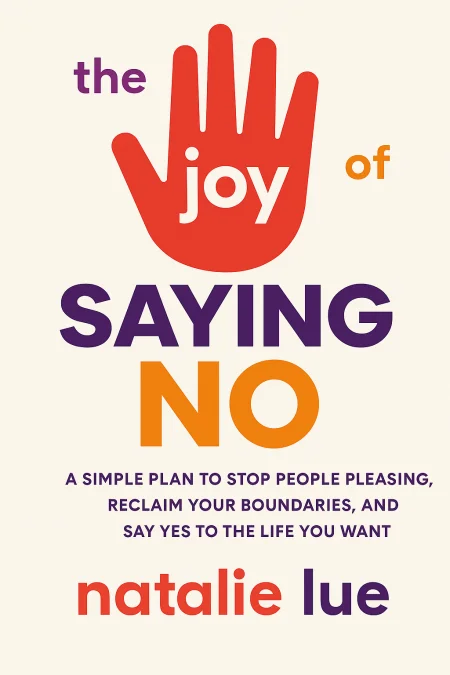
The Joy of Saying No
A Simple Plan to Stop People-Pleasing, Reclaim Your Boundaries, and Say Yes to the Life You Want
Book Edition Details
Summary
In a world where "yes" is often the default setting, the art of refusal can feel like a lost skill. "The Joy of Saying No" is a groundbreaking guide that shines a light on the hidden epidemic of people-pleasing. Are you trapped in a role that stifles your true self, like the ever-accommodating Helper or the tireless Overachiever? This book offers a lifeline, introducing a liberating six-step framework to help you break free from these self-imposed shackles. By embracing the power of "no," you can forge authentic connections, cultivate healthier boundaries, and rediscover your core values. Transform your life with this empowering manifesto and find freedom in living authentically.
Introduction
Sarah stared at her phone, watching another text request light up the screen. Her colleague needed "just a quick favor" with weekend project work. Her stomach churned with that familiar mixture of dread and obligation. She wanted to say no—desperately needed to say no—but found herself typing "Of course, happy to help!" instead. As she hit send, that sinking feeling washed over her again: the weight of another commitment she didn't want, another piece of herself given away. This scenario plays out millions of times daily across the world. We live in a culture that has taught us to equate our worth with our willingness to please others, to view "no" as a selfish word that damages relationships and marks us as difficult or uncaring. Yet the irony runs deep: in our desperate attempts to keep everyone happy, we often become the unhappiest people in our own lives. The journey toward reclaiming your authentic voice begins with understanding a fundamental truth that challenges everything we've been taught about kindness and connection. What we call being "nice" is often a prison of our own making, built from childhood conditioning that taught us compliance equals love and boundaries equal selfishness. But there exists another way—a path where saying no becomes not an act of cruelty, but one of profound self-respect and, ultimately, deeper love for both ourselves and others.
Breaking Free from the Pleasing Prison
Marcus knew something was fundamentally wrong with his life, but couldn't quite name it. At fifty-three, he was the dependable one everyone turned to—the colleague who stayed late to help with others' projects, the friend who always said yes to weekend plans even when exhausted, the son who never questioned his mother's demands. On paper, his life looked successful: good job, nice home, surrounded by people who appreciated his reliability. Yet he felt hollow inside, going through the motions of a life that felt increasingly foreign to him. The wake-up call came during a routine team meeting when his manager casually mentioned redistributing Marcus's project to someone who "had better boundaries around their time." The comment stung not because it was cruel, but because it was true. Marcus realized he had become so automatic in his yeses that colleagues had started to assume he would always be available, always willing to absorb extra work, always ready to sacrifice his own priorities for theirs. That evening, Marcus sat in his car in the office parking lot and experienced what he later described as a moment of clarity so sharp it felt like emerging from underwater. He recognized that his lifelong pattern of people-pleasing wasn't kindness—it was a sophisticated form of hiding. By constantly anticipating and meeting others' needs, he had avoided the vulnerable work of discovering and expressing his own. His people-pleasing had become a barrier to authentic connection, not a bridge to it. This recognition represents the first crucial step in breaking free from what many describe as the "pleasing prison." The bars of this prison aren't made of external force, but of internalized beliefs about what makes us worthy of love and acceptance. Breaking free requires us to examine these beliefs with courage and compassion, understanding that the very qualities that make us caring human beings have been weaponized against our own wellbeing.
Understanding Your People-Pleasing Style and Origins
When Elena first heard about people-pleasing styles, she felt resistant. "I'm not trying to please anyone," she insisted. "I just naturally want to help." But as she began tracking her daily decisions, a pattern emerged that surprised her. Every morning started with checking her phone for others' needs before considering her own. Every lunch break was offered to colleagues who needed "just five minutes" of her time. Every evening ended with her exhausted, wondering where her own time had gone. Elena's resistance melted as she recognized herself in the "Saver" profile—someone who derives worth from being needed, who steps in to solve others' problems while leaving their own unaddressed. She traced this pattern back to childhood, remembering how proud her parents were when she helped with her younger siblings, how much attention and affection came when she took care of others' needs. The eight-year-old Elena had learned that being helpful meant being loved, and the thirty-five-year-old Elena was still operating from that childhood logic. Through careful self-observation, Elena began to distinguish between authentic helpfulness and compulsive saving. Authentic helping felt energizing and came from genuine care, while her people-pleasing left her drained and resentful. She noticed that her "helping" often involved taking responsibility for things that weren't actually her problem, stepping in before others could even try to handle their own challenges. The revelation that changed everything came when Elena realized her people-pleasing wasn't actually serving anyone well. By constantly rescuing others, she was preventing them from developing their own problem-solving skills and creating relationships based on inequality rather than mutual support. Her identity as "the helper" had become a cage for everyone involved, limiting their growth and her own authentic self-expression. Understanding our people-pleasing origins isn't about blame or shame—it's about recognition and choice. When we see how these patterns developed as childhood survival strategies, we can appreciate their original purpose while acknowledging they no longer serve us. This awareness becomes the foundation for creating new patterns that honor both our caring nature and our individual needs.
The Six-Step Journey to Authentic Boundaries
David's transformation began with what seemed like a small experiment: for one week, he would pause before automatically saying yes to any request. This simple practice revealed something startling. In just seven days, he caught himself about to agree to twelve things that he genuinely didn't want to do, from covering a colleague's weekend shift to attending a social event that filled him with dread. The pause became his gateway to choice. Instead of operating on autopilot, David learned to ask himself: "Am I saying yes from genuine desire, or from fear, guilt, or obligation?" This question exposed the difference between conscious consent and unconscious compliance. When he said yes from desire, even to challenging tasks, he felt energized and present. When he said yes from fear or guilt, he felt resentful before he'd even begun. As David practiced this new awareness, he discovered that saying no didn't require elaborate justifications or apologies. A simple "That doesn't work for me" or "I'm not available" was often sufficient. The guilt he feared would accompany these nos did arise initially, but it faded much faster than the resentment that followed his inauthentic yeses. More surprisingly, most people accepted his nos without drama, and those who didn't revealed themselves as individuals who had been taking advantage of his inability to refuse. The final piece of David's transformation came through what he called "reparenting" his inner people-pleaser. He recognized that his automatic compliance came from a child-self who had learned that love was conditional on being agreeable. By offering himself the unconditional acceptance he'd always sought from others, David began to make choices from his adult wisdom rather than his childhood fears. This six-step journey—awareness, tracking patterns, understanding origins, practicing nos, building authentic relationships, and reparenting the inner child—creates a foundation for lasting change. Each step builds on the previous ones, creating a robust framework for living authentically while maintaining genuine care for others. The path isn't always smooth, but it leads to something precious: a life that feels genuinely yours.
Summary
The journey from people-pleasing to authentic living reveals one of life's most profound paradoxes: we must learn to disappoint others in small ways to avoid disappointing ourselves in big ways. Through the stories of Marcus, Elena, David, and countless others, we see that what masquerades as kindness is often fear in disguise, and what we've been taught to see as selfishness—honoring our own needs and boundaries—is actually the foundation of genuine generosity. The transformation from automatic yes to conscious choice doesn't happen overnight, but it begins the moment we recognize that our people-pleasing patterns are symptoms of deeper needs for acceptance, safety, and love. When we learn to give ourselves these gifts rather than endlessly seeking them from others, we paradoxically become more available for authentic connection and service. We discover that saying no to what drains us creates space to say yes to what energizes us, and that boundaries don't divide us from others—they create the safety necessary for genuine intimacy. Perhaps most importantly, this journey teaches us that our worth isn't contingent on our usefulness to others, and our right to have needs, preferences, and limits doesn't have to be earned through endless service. When we embrace this truth, we give others permission to do the same, contributing to a world where relationships are built on mutual respect rather than hidden resentment, and where "no" and "yes" both become expressions of love rather than fear.
Related Books
Download PDF & EPUB
To save this Black List summary for later, download the free PDF and EPUB. You can print it out, or read offline at your convenience.
By Natalie Lue
