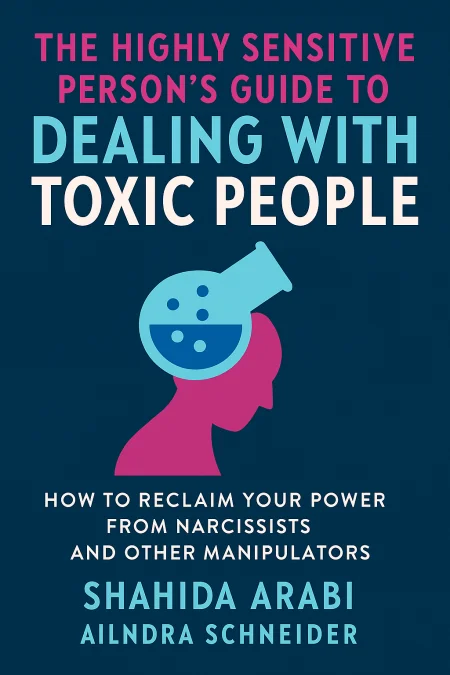
The Highly Sensitive Person's Guide to Dealing with Toxic People
How to Reclaim Your Power from Narcissists and Other Manipulators
byShahida Arabi, Andrea Schneider
Book Edition Details
Summary
Ever felt like you're caught in a whirlwind of emotional chaos, where manipulative personalities drain your spirit dry? "The Highly Sensitive Person's Survival Guide to Dealing with Toxic People" holds the keys to reclaiming your serenity and strength. This transformative guide empowers empaths and highly sensitive souls with robust techniques drawn from cognitive-behavioral and dialectical behavior therapies. Uncover the art of countering gaslighting, overcoming stonewalling, and dismantling the charms of emotional vampires and narcissists. With wisdom tailored to shield you from boundary-busting crazymakers and attention-seeking predators, you'll forge unbreakable boundaries and nurture a resilient sense of self. For those seeking freedom from toxicity's grip, this book lights the path to healing and thriving in your own radiant power.
Introduction
Highly sensitive individuals often find themselves trapped in cycles of toxic relationships, wondering why their empathy seems to attract the very people who exploit it. This compelling exploration challenges the conventional wisdom that sensitivity is merely a character flaw to overcome, instead revealing it as both a neurobiological reality and a potential superpower when properly understood and managed. The investigation delves deep into the psychological mechanisms that create what appears to be an almost magnetic attraction between empathetic personalities and manipulative predators. The analysis employs a multidisciplinary approach, weaving together neuroscience research, psychological theory, and extensive survivor testimonies to construct a comprehensive understanding of this dangerous dynamic. Rather than simply cataloging toxic behaviors, the work systematically examines how the very traits that make highly sensitive people valuable contributors to society—deep empathy, conscientiousness, and emotional responsiveness—become weaponized against them in the hands of narcissists, sociopaths, and other manipulative personalities. Through careful examination of brain chemistry, trauma bonding, and manipulation tactics, readers will discover why their past attempts at boundary-setting may have failed and how to transform their sensitivity from a vulnerability into a shield. The journey ahead requires confronting uncomfortable truths about predatory behavior while simultaneously reclaiming the power that lies dormant within heightened emotional awareness.
The Neurobiological Reality of High Sensitivity
Scientific research has definitively established that high sensitivity is not a personality quirk or emotional weakness, but a measurable neurobiological trait affecting approximately 15-20% of the population. Brain imaging studies reveal that highly sensitive individuals show dramatically different neural activity patterns, particularly in regions associated with empathy, sensory processing, and environmental awareness. The insula, responsible for integrating bodily sensations with emotional experiences, demonstrates heightened activity that creates what researchers term "global emotional moments"—comprehensive processing of environmental stimuli that most people simply filter out. The mirror neuron system, crucial for empathetic responses, operates at significantly elevated levels in sensitive individuals. This neurological configuration enables them to literally feel what others experience, creating an almost psychic-like ability to detect emotional states and environmental changes. However, this same system becomes a liability when encountering individuals who lack reciprocal empathy. The enhanced processing comes with a cost: sensitive brains require substantially more recovery time from social interactions and environmental stimuli, making them particularly vulnerable during periods of emotional depletion. Early childhood experiences interact powerfully with these neurological predispositions. Sensitive individuals who experienced adverse childhood conditions show greater susceptibility to anxiety and depression, yet those raised in supportive environments often develop exceptional leadership abilities and emotional intelligence. This neuroplasticity explains why some highly sensitive people become resilient leaders while others remain trapped in patterns of exploitation—the same biological foundation yields drastically different outcomes depending on environmental influences and learned coping strategies. Understanding this neurobiological reality reframes sensitivity from a character flaw requiring correction to a complex trait system requiring strategic management. The challenge lies not in suppressing natural empathetic responses, but in learning to channel them effectively while developing protective mechanisms against those who would exploit these neural gifts for harmful purposes.
Why HSPs Become Magnets for Manipulation
The intersection of high sensitivity with predatory personalities creates a perfect storm of exploitation that operates through predictable psychological mechanisms. Manipulative individuals possess an uncanny ability to identify and target the specific traits that make highly sensitive people valuable in healthy relationships—deep empathy, conscientiousness, and strong moral compasses. These qualities, which serve as strengths in reciprocal relationships, become vectors for manipulation when encountered by individuals who lack empathy themselves. The biochemical basis of this attraction involves the same neurochemical systems that create healthy bonding. When sensitive individuals encounter love bombing—excessive attention and affection designed to create rapid attachment—their enhanced dopamine and oxytocin responses create unusually strong biochemical bonds. The intermittent reinforcement that follows, alternating between affection and withdrawal, triggers addiction-like responses in the sensitive person's reward system. This creates a neurochemical dependency that has little to do with the manipulator's actual value as a partner or friend. Highly sensitive people often project their own moral framework onto others, assuming that everyone operates from similar ethical foundations. This cognitive error becomes catastrophic when dealing with individuals who genuinely lack conscience or empathy. The sensitive person's attempts to understand and excuse toxic behavior through their own lens of emotional complexity provides manipulators with endless opportunities for exploitation. Each rationalization of abuse becomes another link in the chain of psychological bondage. The trauma bonding that develops in these relationships hijacks the sensitive person's emotional processing centers, creating states of hypervigilance and anxiety that actually impair their normally acute perceptual abilities. Chronic exposure to gaslighting and emotional invalidation gradually erodes their trust in their own observations, making them increasingly dependent on their manipulator's version of reality for emotional stability.
The Spectrum of Toxicity: From Boundary-Steppers to Predators
Not all toxic individuals operate with the same level of malicious intent or psychological damage, requiring different strategic responses based on their position along the toxicity spectrum. Garden-variety boundary-steppers often lack awareness of their impact and may respond positively to clear, consistent limit-setting. These individuals might monopolize conversations, offer unwanted advice, or drain energy through emotional neediness, but they typically retain enough empathy to modify their behavior when confronted respectfully. Attention-seekers and emotional vampires represent a more challenging category, as their behavior serves specific psychological needs that drive persistent boundary violations. While they may possess empathy, their compulsive need for validation or emotional discharge overrides their consideration for others. These individuals often respond to systematic withdrawal of attention and energy, but require vigilant consistency in boundary enforcement to prevent manipulation through guilt or dramatic escalation. At the malignant end of the spectrum lie narcissistic, sociopathic, and psychopathic personalities who represent genuine danger to sensitive individuals. These predatory types lack the neurological capacity for authentic empathy and view others primarily as sources of supply or obstacles to their desires. Their manipulation operates through calculated exploitation rather than emotional dysregulation, making traditional boundary-setting not only ineffective but potentially dangerous by providing them with additional ammunition for psychological warfare. The distinction between these categories requires careful observation of patterns over time rather than isolated incidents. Benign toxic individuals typically show genuine remorse when confronted and make sustained efforts to change, while malignant types may temporarily modify their behavior to maintain access while fundamentally remaining unchanged. Understanding these differences prevents highly sensitive people from wasting energy on rehabilitation efforts with individuals incapable of authentic transformation while ensuring appropriate protective measures are implemented based on actual threat levels.
Breaking Free: Strategic Self-Protection for Sensitive Minds
Liberation from toxic relationship patterns requires a comprehensive approach that addresses both the neurobiological vulnerabilities of high sensitivity and the strategic deployment of protective mechanisms. The journey begins with radical acceptance of one's sensitive nature as an unchangeable and valuable trait that requires protection rather than elimination. This fundamental shift in perspective transforms the relationship with sensitivity from shame-based suppression to strategic management and enhancement. No-contact or minimal-contact protocols become essential tools for breaking biochemical addiction to toxic individuals. The withdrawal process mirrors other addiction recoveries, requiring replacement activities that provide healthy neurochemical stimulation. Exercise, creative pursuits, novel experiences, and meaningful social connections can provide alternative sources of dopamine and serotonin while the sensitive person's nervous system recalibrates away from trauma-bonding patterns. Strategic boundary implementation demands a sophisticated understanding of different toxic personality types and their likely responses to various protective measures. With garden-variety toxic individuals, clear communication followed by consistent consequences often proves effective. However, with malignant personalities, boundaries must be implemented silently and absolutely, as any negotiation provides opportunities for further manipulation and potential retaliation. The development of what could be termed "empathic intelligence" represents the ultimate protective evolution for highly sensitive people. This involves maintaining full access to empathetic abilities while developing cognitive frameworks that prevent projection of one's own moral system onto others lacking similar ethical foundations. Sensitive individuals can learn to observe and catalog behavior patterns without emotional investment, using their enhanced perceptual abilities as early warning systems rather than sources of false hope for toxic individuals' potential transformation.
Summary
The fundamental insight emerging from this comprehensive analysis reveals that high sensitivity, far from being a liability to overcome, represents a sophisticated neurobiological adaptation that becomes dangerous only when its wielder lacks the strategic knowledge to protect and channel its power effectively. The vulnerability experienced by sensitive individuals in toxic relationships stems not from inherent weakness but from the exploitation of their greatest strengths by individuals who operate from fundamentally different neurological and ethical frameworks. True protection comes not through emotional numbing or empathy suppression, but through the development of discernment skills that preserve the sensitive person's gifts while creating impenetrable barriers against those who would exploit them. This transformation requires accepting that some individuals genuinely lack the capacity for reciprocal empathy and that attempts at rehabilitation often serve only to provide further opportunities for exploitation, making strategic withdrawal the most compassionate choice for all parties involved.
Related Books
Download PDF & EPUB
To save this Black List summary for later, download the free PDF and EPUB. You can print it out, or read offline at your convenience.
By Shahida Arabi
