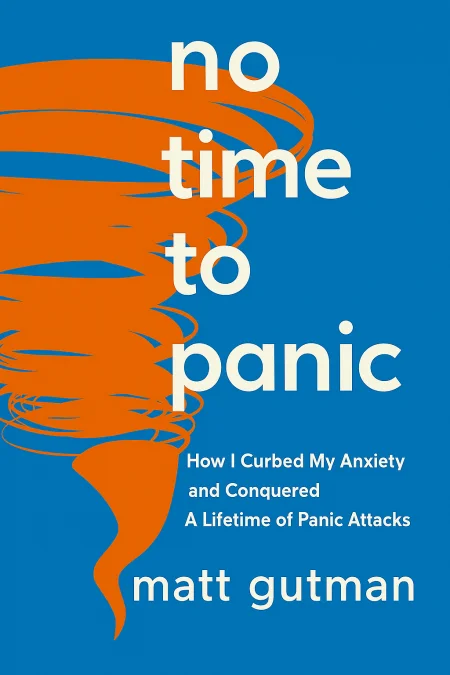
No Time to Panic
How I Curbed My Anxiety and Conquered a Lifetime of Panic Attacks
Book Edition Details
Summary
In the high-stakes world of live television reporting, Matt Gutman's unyielding pursuit of truth collides with the silent turmoil of panic attacks. His gripping narrative begins on a fateful January day in 2020, when the relentless grip of anxiety disrupted not just a broadcast, but the trajectory of his career. With unparalleled candor, Gutman embarks on a quest to understand and confront the chaos within his mind. Through encounters with leading experts and unconventional healers, he unravels the complex tapestry of fear and resilience. No Time to Panic offers a candid exploration of vulnerability and recovery, illuminating a path toward self-acceptance and clarity. This book is a beacon of hope for those navigating the stormy seas of panic, a testament to the power of perseverance, and a guide toward finding peace amidst chaos.
Introduction
Matt Gutman appeared to have it all—a successful career as ABC News' Chief National Correspondent, reporting from war zones and natural disasters with apparent fearlessness. Yet beneath this polished exterior lay a devastating secret that had plagued him for over two decades: crippling panic attacks that struck at the most crucial moments of his professional life. Standing before cameras with millions watching, Gutman would feel his heart race, his mind fog, and his carefully constructed persona threaten to crumble. His journey from hidden suffering to hard-won understanding offers a raw and deeply human exploration of anxiety in our modern world. This remarkable account illuminates three transformative aspects of the human experience. Readers will discover how evolutionary biology explains our deepest fears and why panic, rather than being a personal failure, represents our ancient survival mechanisms gone awry in contemporary life. The narrative reveals how shame and secrecy amplify mental health struggles, while vulnerability and honest disclosure can become pathways to healing. Most profoundly, Gutman's willingness to experiment with everything from cognitive behavioral therapy to psychedelic healing demonstrates that recovery is possible, though it rarely follows the neat, prescribed paths we might expect or desire.
The Secret Struggle: Twenty Years of Hidden Panic
For twenty years, Matt Gutman lived a double life that would have impressed any method actor. By day, he projected the image of an unflappable war correspondent, someone who thrived under pressure and delivered flawless reports from the world's most dangerous locations. By night, and in the quiet moments before going live on television, he battled an invisible enemy that left him drenched in sweat, gasping for air, and convinced that his carefully constructed career would crumble with his next broadcast. The irony was almost comical in its cruelty. Gutman could stand in a war zone, bullets flying overhead, and feel perfectly calm. He could interview grieving families, navigate hostile territories, and report from natural disasters with professional composure. But ask him to deliver a thirty-second live report from a safe location, with nothing more threatening than a camera lens pointed his way, and his nervous system would revolt. His heart would pound so violently he was certain viewers could see it through his shirt. Words that had flowed effortlessly during rehearsal would vanish from his memory as if erased by some malicious force. What made this internal warfare particularly insidious was Gutman's complete isolation in his suffering. He developed an elaborate system of coping mechanisms that he hoped would remain invisible to colleagues and viewers alike. There were the "lucky" underwear purchased during coverage of the Paris terrorist attacks, the pre-broadcast cigarettes smoked in secret, the frantic push-ups performed behind news trucks. He would show up to live shots at the last possible moment to avoid the psychological torture of waiting, then gulp air like a drowning man before the cameras rolled. Each successful broadcast felt like a narrow escape rather than professional competence. The most devastating aspect of Gutman's hidden struggle was how it transformed his relationship with work he genuinely loved. Journalism, particularly the kind that gives voice to the voiceless and brings important stories to light, had always been his calling. Yet panic attacks turned each assignment into a potential minefield. The anticipation of failure became almost as debilitating as the attacks themselves, creating a cycle where fear of panic would often trigger the very episodes he desperately sought to avoid. In a profession where credibility and composure are everything, admitting weakness felt tantamount to career suicide.
Breaking Point: Crisis and the Quest for Healing
The facade that Gutman had maintained for two decades finally cracked on January 26, 2020, during what should have been a routine live report about Kobe Bryant's tragic death. In the midst of his panic, struggling to form coherent thoughts while millions watched, he made a fundamental journalistic error that would reverberate through his career and personal life. The mistake wasn't just about getting facts wrong—it was the collision of his private hell with his public persona, finally exposing the fault lines that had been building for years. The aftermath was swift and brutal. Within hours, news of his error had spread across the internet, spawning hundreds of headlines and thousands of social media comments calling for his firing or worse. Gutman found himself suspended from work, his name trending for all the wrong reasons, his professional reputation hanging by a thread. For someone whose greatest fear was social rejection and professional humiliation, this represented a complete catastrophic failure of the very systems he had spent years trying to protect. Yet paradoxically, this public failure became the catalyst for private healing. Stripped of the need to maintain his perfect facade, Gutman was finally forced to confront the demons he had been running from for decades. The suspension gave him something he hadn't had in twenty years: time to think, to research, and to understand what had been happening to him. He discovered that panic disorder affects millions of people, that his symptoms had names and explanations, and most importantly, that he wasn't alone in his suffering. This period of forced reflection led Gutman on a journey that would take him from the remote wilderness of Alaska to the Amazon rainforest of Peru. He began to understand that his panic attacks weren't a personal failing or a sign of weakness, but rather the misfiring of ancient survival mechanisms in modern contexts. The same fight-or-flight response that had kept his ancestors alive when facing genuine physical threats was now being triggered by the psychological threat of social rejection—a response that made perfect evolutionary sense even as it wreaked havoc on his professional life. This realization marked the beginning of his transformation from victim to student of his own condition.
Into the Unknown: Psychedelics and Self-Discovery
Frustrated by the limitations of conventional treatments and driven by a desperate need for relief, Gutman ventured into territories that most people associate more with counterculture than mental health care. His exploration of psychedelic therapy began with breathwork sessions that left him sobbing on yoga mats, releasing decades of buried emotion in ways that traditional therapy had never accomplished. These experiences opened doorways to parts of himself that he had long kept locked away, revealing reservoirs of grief and trauma that he hadn't even realized existed. The journey took him to guided psilocybin sessions in the San Francisco Bay Area, where he consumed what practitioners call "heroic doses" of magic mushrooms while lying blindfolded on couches, accompanied by trained facilitators who helped him navigate the alien landscapes of his own consciousness. These sessions didn't always go as planned—Gutman proved remarkably resistant to certain substances, requiring doses that would have overwhelmed most people just to achieve mild effects. Yet even these challenging experiences provided insights, showing him that healing doesn't always follow predictable patterns or respond to conventional approaches. Perhaps most dramatically, his quest led him to the Sacred Valley of Peru for a week-long ayahuasca retreat. This ancient plant medicine, used by indigenous peoples for centuries, promised profound healing through what participants often describe as spiritual rebirth. Gutman found himself in ceremonies lasting all night, drinking bitter plant brews that induced violent purging while shamans sang haunting songs in languages he couldn't understand. While others in his group reported transcendent visions of gods and deceased relatives, Gutman mostly experienced the medicine's punishing physical effects, vomiting repeatedly and battling intense intestinal distress. The psychedelic experiences taught Gutman that healing isn't always pleasant or predictable, and that sometimes the most profound changes happen not during moments of transcendence but in the integration that follows. Even when the substances didn't produce the dramatic revelations he had hoped for, they helped him develop a different relationship with discomfort and uncertainty. He learned to sit with difficult emotions rather than fleeing from them, to see his panic attacks as information rather than personal failures. Most importantly, these experiences began to dissolve the shame that had surrounded his condition for decades, replacing self-judgment with curiosity and compassion.
Finding Balance: Integration and the Path Forward
The path out of panic proved to be less about finding a single cure and more about developing a comprehensive approach to mental health that honored both ancient wisdom and modern science. Gutman's experiments with ketamine therapy in luxury resort settings showed him that healing could happen in clinical contexts as well as ceremonial ones. These legal psychedelic sessions provided some of his most profound breakthrough moments, including experiences of ego dissolution that helped him understand the arbitrary nature of the thoughts and fears that had controlled him for so long. Equally important was his growing understanding of the evolutionary purpose behind anxiety and panic. Working with researchers who study the biological origins of fear, Gutman learned that his nervous system wasn't broken—it was working exactly as designed. The same hypervigilance that made him an excellent journalist, capable of sensing danger and reacting quickly in crisis situations, was also what made him vulnerable to panic in social situations where his status or reputation felt threatened. This knowledge transformed his relationship with his symptoms from one of warfare to something approaching partnership. The integration process involved learning to work with his nervous system rather than against it. Gutman discovered that eliminating the "safety behaviors" he had developed over the years—the rituals, superstitions, and avoidance patterns—actually reduced rather than increased his panic episodes. He began to practice radical honesty about his condition, first with strangers, then with colleagues, and finally with viewers. This transparency, rather than destroying his career as he had long feared, actually strengthened his connections with others and reduced the social rejection he had spent decades trying to avoid. Perhaps most significantly, Gutman learned to see his journey with panic as part of a larger story about what it means to be human in the modern world. His experiences connected him with millions of others who struggle with anxiety, depression, and the challenges of maintaining mental health in a society that often prioritizes performance over wellbeing. Through support groups, honest conversations, and continued therapeutic work, he built a community around healing that proved far more sustainable than any individual treatment or quick fix he had previously pursued.
Summary
Matt Gutman's journey from hidden panic to public healing reveals a fundamental truth about human courage: it isn't the absence of fear, but the willingness to face our deepest vulnerabilities and transform them into sources of strength and connection. His story demonstrates that the very traits that make us successful—ambition, perfectionism, sensitivity to social dynamics—can also become the sources of our greatest suffering when left unexamined and untreated. Most powerfully, his willingness to share his struggles publicly challenges the stigma that still surrounds mental health issues, particularly for those in high-profile careers where showing weakness feels impossible. For anyone wrestling with anxiety, panic, or the pressure to maintain perfect facades, Gutman's experience offers both validation and hope. His journey suggests that healing is possible even when conventional treatments fail, that community and honesty can be as powerful as any medication, and that our deepest struggles often contain the seeds of our most meaningful contributions to others. Rather than seeing mental health challenges as personal failings, his story encourages us to view them as invitations to develop greater self-compassion, authentic relationships, and ultimately, a more honest way of being human in an increasingly demanding world.
Related Books
Download PDF & EPUB
To save this Black List summary for later, download the free PDF and EPUB. You can print it out, or read offline at your convenience.
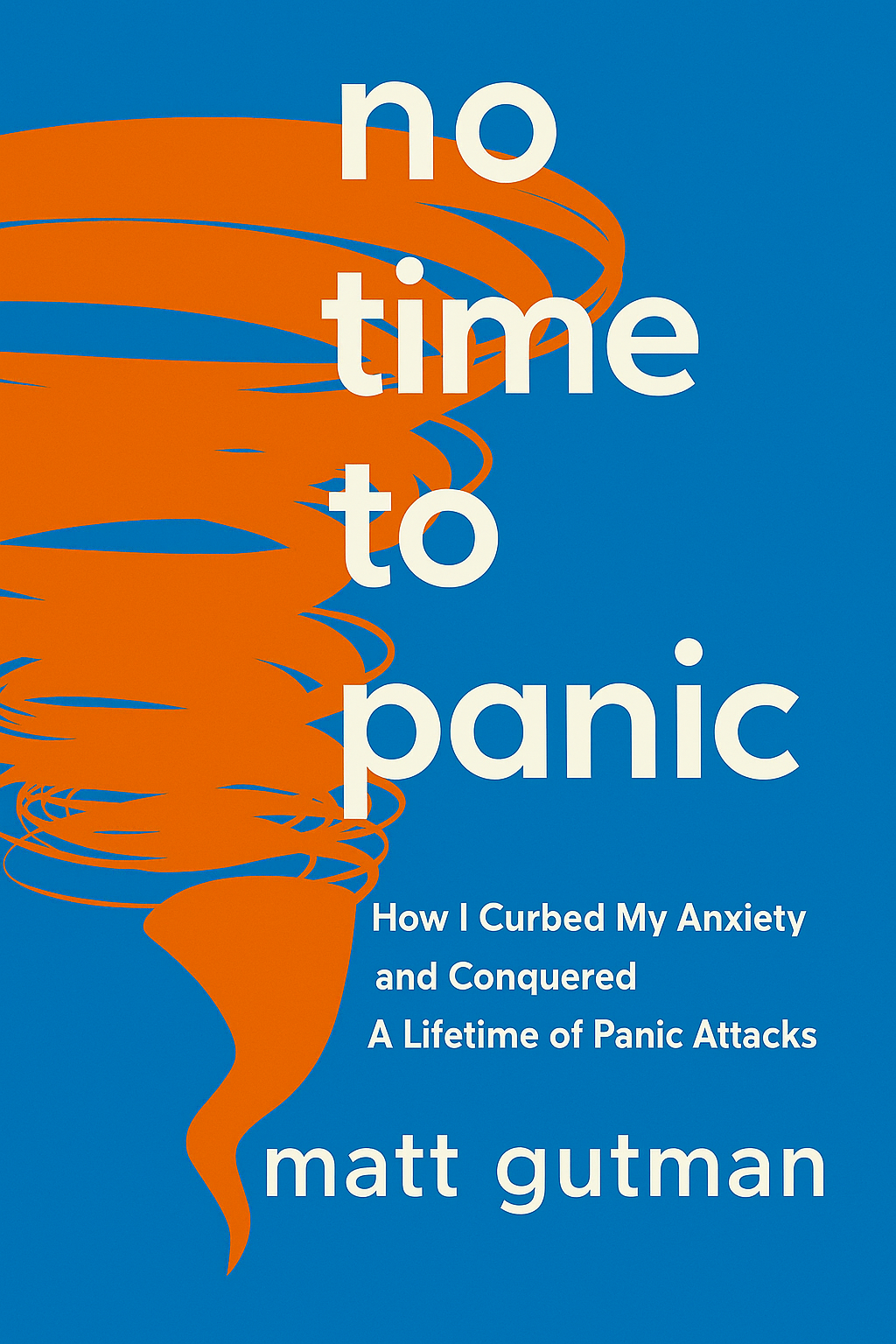
By Matt Gutman
