
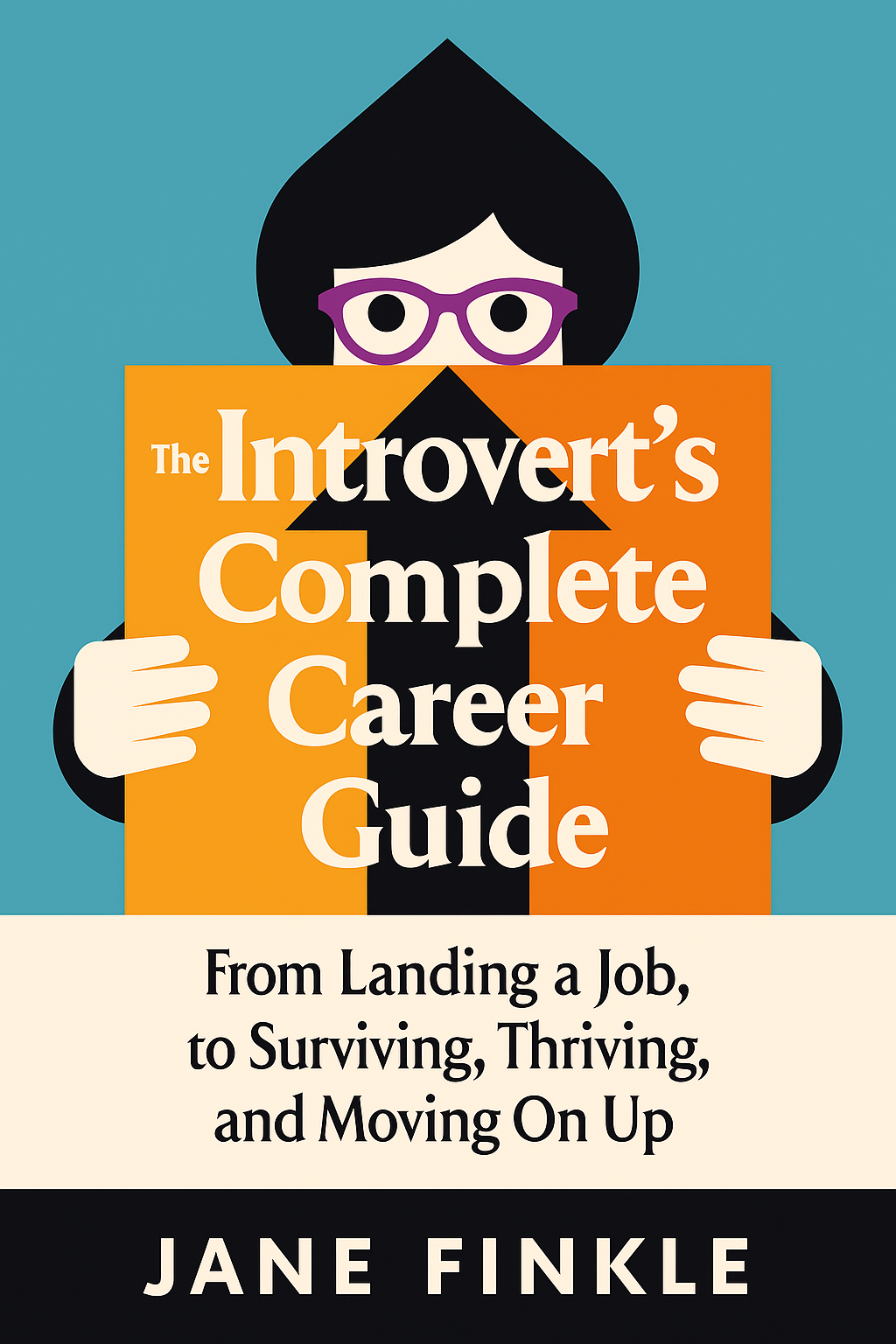
The Introvert’s Complete Career Guide
From Landing a Job, to Surviving, Thriving and Moving on Up
Book Edition Details
Summary
In a world where the loudest voices often seize the spotlight, The Introvert's Complete Career Guide offers a sanctuary of strategies for those who thrive in quieter spaces. Jane Finkle unravels the myth that introversion is a barrier to professional success, presenting it instead as a powerhouse of potential. This transformative guide empowers introverts to harness their innate strengths while seamlessly incorporating extroverted skills. Whether you're crafting a compelling LinkedIn profile or navigating the complexities of workplace dynamics, Finkle equips you with tools to flourish at every career stage. Here, introverts learn not just to survive, but to redefine the rules, turning perceived limitations into a career-defining advantage.
Introduction
In today's fast-paced, increasingly extroverted work environment, those who prefer thoughtful reflection over quick responses, deep preparation over spontaneous networking, and meaningful one-on-one conversations over large group presentations often feel invisible. Yet these very qualities represent profound strengths that the modern workplace desperately needs. The challenge isn't changing who you are, but learning to showcase your unique value while honoring your natural working style. This journey toward authentic career success requires specific strategies, practical tools, and most importantly, the confidence to recognize that your quieter approach to leadership and problem-solving isn't a limitation to overcome, but a competitive advantage to leverage. The path forward isn't about becoming someone else, but about discovering how to let your authentic professional voice emerge with power and purpose.
Discover Your Authentic Professional Voice
Your authentic professional voice emerges when you deeply understand and can articulate your unique combination of values, skills, and achievements. This isn't about creating a false persona for the workplace, but rather uncovering the compelling story that already exists within your experiences and translating it into language that resonates with employers and colleagues. Consider Joan, a successful business owner who had stepped away from traditional employment for ten years to care for her elderly parents. When she decided to return to the workforce in fundraising, she initially downplayed her experiences, viewing her volunteer work and caregiving responsibilities as gaps rather than valuable experience. Through a systematic self-assessment process, Joan discovered that her volunteer fundraising efforts had earned her recognition for bold and innovative approaches. She had successfully organized major community events, cultivated donor relationships, and managed complex projects. Her personal characteristics assessment revealed qualities like ambitious, decisive, creative, and intelligent, words she had never associated with her professional identity. The transformation occurred when Joan learned to weave these elements together into a cohesive professional narrative. Her resume profile evolved to read: "Dynamic business professional with substantial experience in management and fundraising. Expertise in event planning, researching and soliciting donors, proposal writing, and project management. Talent for cultivating and maintaining strong relationships with colleagues and donors. Ambitious, creative, and decisive." This wasn't fabrication, it was recognition and articulation of her existing strengths. Begin by conducting a thorough inventory of your achievements, starting with at least three accomplishments that make you proud, regardless of whether they occurred in professional or personal contexts. For each achievement, identify the specific skills you demonstrated and the underlying values they represent. Next, complete an honest assessment of your personal characteristics, selecting adjectives that truly describe you. Finally, clarify your core work values by identifying what makes work meaningful and energizing for you. This foundation becomes your professional compass, guiding how you present yourself in resumes, interviews, and networking situations. Your authentic voice isn't about perfection, it's about genuine self-awareness combined with the courage to claim your value. When you can confidently articulate who you are and what you bring to the table, others will recognize and respect that clarity.
Master Strategic Career Communications
Strategic career communication transforms your natural tendency for thoughtful preparation into a powerful professional advantage. Rather than viewing your preference for reflection as a limitation, you can leverage it to create more impactful resumes, compelling LinkedIn profiles, and memorable interview responses. The modern resume must tell a story of results and impact, not just responsibilities. Take Eduardo, an IT senior manager who consistently received feedback that interviewers didn't understand his value despite his technical expertise. His initial interview responses were generic: "I am a good problem-solver and I have substantial experience in IT and process solutions." This conveyed competence but not distinction. Using the SMART formula (Situation, Motivation, Action, Results, Transformation), Eduardo learned to present specific examples. His improved response highlighted how he led a team of twenty to develop and implement a model that reduced cycle time by over 9,000 hours per year, a solution that was adopted company-wide. Eduardo's transformation demonstrates how strategic communication amplifies your achievements. He didn't acquire new skills or accomplishments, he learned to present his existing value in a way that resonated with employers. His methodical approach to problem-solving, previously hidden behind modest language, became the centerpiece of his professional brand. Develop your strategic communications by first identifying 3-5 signature achievements that demonstrate measurable results. For each accomplishment, craft a narrative that includes the context, your specific actions, and the quantifiable outcomes. Practice articulating these stories until they feel natural and compelling. Create multiple versions, from 30-second elevator pitch summaries to detailed interview responses. Ensure your LinkedIn profile, resume, and interview preparation all reinforce the same consistent narrative about your professional value. Remember that strategic communication isn't about bragging, it's about providing the information others need to understand and advocate for your capabilities. When you communicate strategically, you make it easy for others to recognize your contributions and recommend you for opportunities.
Navigate Networks and Build Meaningful Connections
Networking for introverts isn't about collecting business cards at crowded events, but about leveraging your natural strengths for deep, meaningful professional relationships. Your ability to listen carefully, ask thoughtful questions, and create genuine connections actually provides significant advantages in building a professional network that supports long-term career success. Robert, a reserved but competent professional, initially created a minimal LinkedIn profile and avoided networking events entirely. When encouraged to expand his professional connections, he discovered the power of authentic relationship building. A simple LinkedIn invitation to a former colleague, Suzanne, led to a phone conversation about industry trends. During that call, Suzanne mentioned an upcoming conference presentation and invited Robert to co-lead the workshop. This opportunity arose not from aggressive self-promotion, but from Robert's genuine interest in staying connected and his thoughtful approach to professional relationships. Robert's experience illustrates how introverted networking often produces more substantial results than traditional approaches. Instead of surface-level interactions with dozens of contacts, he focused on cultivating fewer but deeper professional relationships. His natural inclination toward meaningful conversation and follow-through created connections that led to concrete opportunities. The workshop collaboration enhanced both his professional reputation and his confidence in networking situations. Transform your approach to networking by focusing on quality over quantity. Identify 5-10 professionals you genuinely respect or would like to learn from, including former colleagues, industry leaders, or alumni from your school. Reach out with specific, thoughtful requests for informational meetings, offering to meet at their convenience and clearly stating your learning objectives. Prepare thoughtful questions that demonstrate your genuine interest in their expertise and career path. After each interaction, follow up with a personalized thank-you note that references specific insights you gained. Consider networking as an ongoing practice of professional curiosity rather than a transactional activity. When you approach networking as an opportunity to learn and contribute rather than simply to ask for help, you create relationships that naturally evolve into mutual support systems throughout your career.
Thrive in Your Chosen Career Path
Thriving in your career requires intentionally managing your professional development while honoring your need for sustainable work practices. Success isn't about constant self-promotion or never-ending availability, but about strategic visibility, continuous learning, and maintaining the energy to do your best work consistently. Consider Kendra, a talented graphic artist who successfully transitioned from a small agency to a major corporate advertising firm. Initially, she felt overwhelmed by the fast-paced, outgoing culture and found herself freezing up in meetings. Rather than forcing herself to become someone else, Kendra learned to contribute in ways that felt authentic while gradually expanding her comfort zone. She began by asking thoughtful questions during brainstorming sessions, using her natural listening skills to understand project requirements deeply. This approach allowed her to contribute meaningfully without pressure to generate immediate ideas. Kendra's breakthrough came when she used her reflective time after meetings to develop innovative design concepts. She presented a creative digital presentation that told a story about her graphic design approach, tailored specifically to the client's goals. The presentation was enthusiastically received, establishing her reputation as both a skilled designer and strategic thinker. Her success came not from abandoning her introverted nature, but from finding ways to let her creativity shine through methods that felt natural and sustainable. Create a sustainable approach to career advancement by setting specific, measurable goals with clear timelines. Write down your objectives, as research shows this significantly increases your likelihood of achievement. Focus on developing expertise in emerging areas relevant to your field, positioning yourself as someone who brings valuable perspective to organizational challenges. Look for problems you can solve using your natural observational skills and thoughtful analysis. Balance your professional growth with intentional practices for maintaining your energy and well-being. Create "restorative niches" throughout your workday where you can recharge, whether that's closing your office door for focused work time, taking walking breaks, or scheduling buffer time between meetings. Establish boundaries around after-hours communication to protect your personal time and prevent burnout.
Summary
The path to authentic career success lies not in changing your fundamental nature, but in recognizing and strategically leveraging the unique strengths that come with your thoughtful, reflective approach to work. As this guide demonstrates, your preference for deep preparation, meaningful relationships, and careful observation represents exactly the kind of leadership and problem-solving skills that organizations need most. The key insight is beautifully captured in one professional's realization: "I discovered that my quiet manner of listening carefully allowed me to observe problems in a deep and focused way, and because I needed time to arrange my thoughts, I found that I possessed a deeper understanding that translated to strong analytical ability and effective problem-solving." Your success strategy moving forward should focus on one immediate, powerful action: identify your top three professional achievements this week, craft compelling stories about the specific value you created, and begin sharing these narratives confidently in your next professional interaction, whether that's updating your LinkedIn profile, preparing for a performance review, or engaging in a networking conversation.
Related Books
Download PDF & EPUB
To save this Black List summary for later, download the free PDF and EPUB. You can print it out, or read offline at your convenience.
By Jane Finkle
