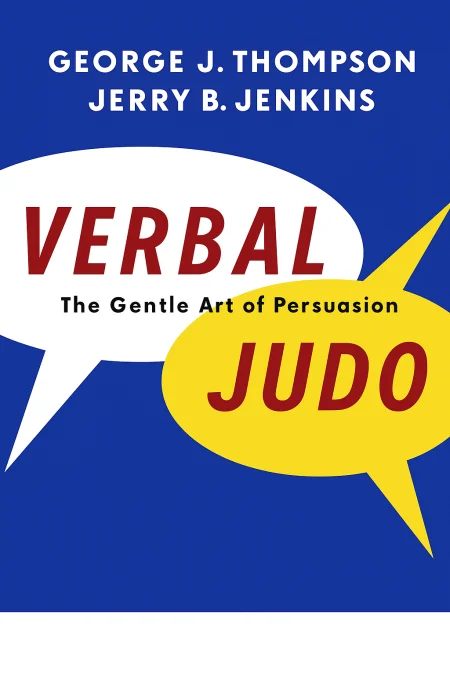
Verbal Judo
The Gentle Art of Persuasion
byGeorge J. Thompson, Jerry B. Jenkins
Book Edition Details
Summary
In the realm of conversation, victory isn't merely about winning the debate—it's about mastering the art of influence. "Verbal Judo" unfolds a strategic blueprint for transforming everyday interactions into opportunities for success. Penned by a seasoned officer, this guide goes beyond mere words, teaching you how to wield empathy as your secret weapon and craft responses that keep you in the driver's seat. Instead of falling into reactive traps, you'll learn to navigate discussions with finesse, sidestepping pitfalls that often derail dialogue. Whether you're navigating tense boardroom negotiations, defusing domestic disputes, or simply striving for effective communication, this book equips you with a powerful arsenal to command your conversations and reshape your relationships.
Introduction
Every day, we face moments where the right words could transform conflict into cooperation, yet we often find ourselves stumbling through conversations that matter most. Whether you're dealing with a difficult colleague, trying to connect with your teenager, or navigating a tense situation with a customer, the ability to communicate skillfully under pressure isn't just helpful—it's essential. The gentle art of verbal redirection offers a revolutionary approach that turns resistance into willing compliance, transforms adversaries into allies, and replaces force with finesse. This isn't about manipulation or control; it's about mastering the profound power of words to create understanding, preserve dignity, and achieve results that benefit everyone involved. When you learn to use language as a tool of connection rather than confrontation, you discover that even the most challenging encounters can become opportunities for breakthrough communication.
Transform Conflict into Cooperation
True communication mastery begins with understanding that conflict is not your enemy—it's your greatest teacher. The essence of verbal redirection lies in moving with resistance rather than against it, using the energy of disagreement to create something entirely new. This approach transforms the very nature of difficult conversations from battles to be won into puzzles to be solved together. Consider the story of Officer Bruce Fair, who encountered a violently arguing couple in a tenement apartment at two in the morning. Instead of following standard procedure—taking control with authority and separating the combatants—he did something extraordinary. He walked past the shouting couple, sat down on their couch, took off his cap, and began casually reading their newspaper. When he found a classified ad for a 1950 Dodge, he asked to use their phone, explaining he didn't want to miss out on this great deal. The fighting couple stood there dumbfounded as this officer treated their home like a friendly visit from a neighbor. What happened next was remarkable. The argument evaporated completely. The couple's anger dissolved into confusion, then curiosity, then cooperation. By the time Officer Fair politely asked if there was anything he could help them with, they quietly shook their heads and thanked him. He had transformed their hostile energy into willing compliance without a single command or threat. To apply this principle, start by recognizing that when people resist, they're often protecting something valuable—their dignity, their autonomy, their sense of being heard. Instead of pushing against this natural protective instinct, redirect their energy by giving them what they actually need. Listen first, empathize genuinely, and find creative ways to make cooperation feel like their choice rather than your demand. The key is to become so skilled at reading situations that you can offer people exactly what serves both your goals and their deepest needs. Remember that every difficult person is simply someone whose expectations haven't been met in a way that preserves their sense of worth. When you master the art of redirection, you transform every potential conflict into an opportunity for connection and mutual success.
The Five-Step Method for Difficult People
When faced with someone who simply won't cooperate, most people resort to threats, repetition, or force. The five-step approach offers a systematic pathway that honors both your objectives and their dignity while creating natural momentum toward voluntary compliance. This method works because it follows the psychological progression of how people actually change their minds when given proper respect and motivation. Dr. Thompson discovered this method during his early days as a police officer when he stopped a speeding driver who refused to exit his vehicle. Instead of escalating with commands, Thompson tried a different approach. First, he asked politely: "Sir, would you step out of the vehicle for me?" When the man refused, Thompson moved to setting context: "There's a whiskey bottle by your right leg, which constitutes an open-bottle charge under the law. Department policy requires me to inspect it for your safety and mine." Still resistant, the driver needed to hear his options presented in terms of his own interests. Thompson continued, "You can step out now, let me check that bottle, and discuss why I stopped you. That way, you'll likely be eating dinner at your own table tonight, sleeping in your own bed with your woman. Or the law gives you another option—you can come with us, eat our food, sleep on our steel cot downtown. That's called an arrest, which means paperwork for me, towing your car, and they'll put dents in it at the impound yard." The specificity of these options made the choice crystal clear, and the man laughed, saying he didn't need that kind of trouble. The five steps work in sequence: Ask with genuine respect, Set context by explaining why, Present options that highlight their benefits, Confirm their willingness to cooperate by asking "Is there anything I can say or do to earn your cooperation?", and finally Act if necessary. Each step builds on the previous one, creating natural momentum toward agreement. Practice this method by starting with small requests in low-stakes situations. When asking your teenager to clean their room, explain why it matters, offer them choices in how they accomplish it, and always leave them a face-saving way to comply. The magic lies not in any single step, but in the respectful progression that allows people to choose cooperation while maintaining their dignity. The most powerful aspect of this approach is that it turns resistance into partnership, making even difficult people feel like they've won something valuable by choosing to work with you instead of against you.
Essential Skills for Professional Communication
Professional communication transcends mere information exchange—it's the art of creating connection, trust, and influence through every interaction. The foundation rests on three critical skills that separate true professionals from those who merely go through the motions: representation, translation, and mediation. These skills work together to ensure your words not only convey meaning but also build relationships and achieve results. A seasoned officer named Ron demonstrated these skills perfectly during a tense arrest situation. When he arrested a sixteen-year-old boy at 3 AM, the mother emerged from her house screaming obscenities while angry neighbors gathered around the patrol car. Instead of rushing away from the volatile scene, Ron did something remarkable. He removed his cap, tucked it under his arm, approached the distraught mother with a business card, and spoke with genuine empathy: "Ma'am, my name is Officer Ron, and I have a son about your boy's age. I'd be upset too. This is a minor warrant—he'll be out in the morning. Don't stand out here tonight worrying. Come to the station in the morning, bring friends or a lawyer if you want." He continued with practical care: "If anyone gives you trouble down there, call my number and I'll take care of it. You don't deserve any more problems." By the time they drove away, the mother was thanking him despite her son being arrested. The hostile crowd had dispersed peacefully. Ron had transformed a dangerous situation into community trust. Representation means speaking for your organization's values while keeping your ego completely out of the interaction. Translation involves putting your message into words that resonate with your specific audience's needs and concerns. Mediation helps others see their situation from a new perspective that serves everyone's interests. Practice these by first mastering your own emotions and biases, then learning to read your audience so deeply that you can speak their language while advancing your professional goals. The secret lies in making your expertise invisible while making your care obvious. When people feel genuinely understood and respected, they naturally become more cooperative, turning every professional interaction into an opportunity to build lasting positive relationships that serve both immediate objectives and long-term success.
Summary
Mastering powerful communication is ultimately about choosing connection over control, understanding over being understood, and service over self-interest. As Dr. Thompson learned through years of high-stakes encounters, "The most dangerous weapon you carry is the cocked tongue"—words spoken in haste can destroy relationships, opportunities, and trust in ways that take years to repair. Yet when we learn to use language with skill and compassion, we discover that our words become bridges rather than barriers, creating pathways to cooperation that seemed impossible just moments before. The gentle art lies not in avoiding conflict but in transforming it into something that serves everyone involved. Whether you're dealing with a resistant teenager, a difficult customer, or a hostile colleague, remember that every person wants to be treated with dignity, asked rather than told, informed about why, given options rather than threats, and offered a second chance when they make mistakes. When you honor these universal human needs through your communication, you tap into a power that transcends technique—the power of genuine respect and understanding. Start today by choosing one difficult relationship in your life and applying just one principle from this approach. Listen with the intent to understand rather than to respond, redirect resistance with empathy, and watch how quickly the dynamic begins to shift toward cooperation and mutual respect.
Related Books
Download PDF & EPUB
To save this Black List summary for later, download the free PDF and EPUB. You can print it out, or read offline at your convenience.
By George J. Thompson
