
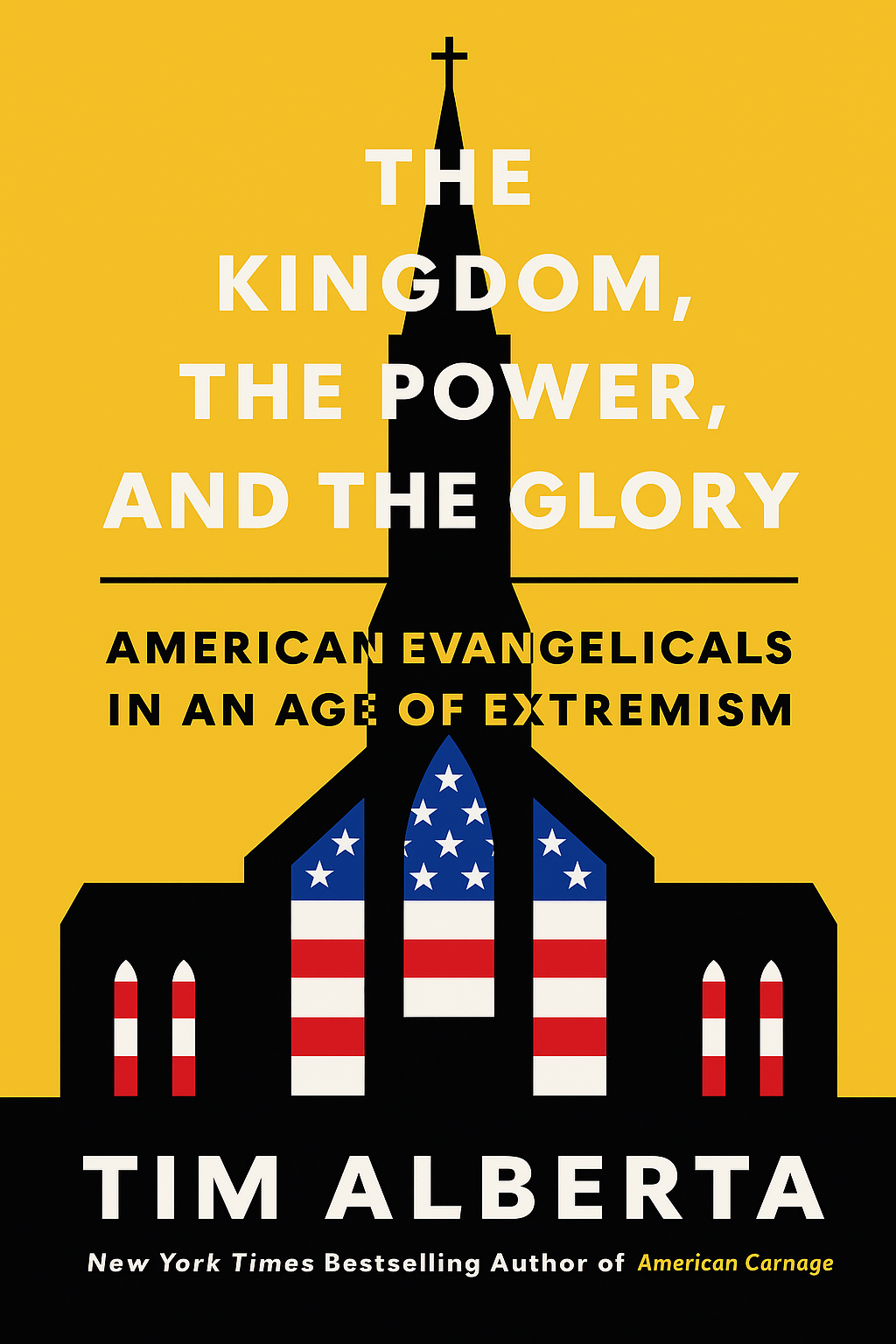
The Kingdom, the Power, and the Glory
American Evangelicals in an Age of Extremism
Book Edition Details
Summary
Tim Alberta's "The Kingdom, the Power, and the Glory" pulls back the curtain on a seismic shift within American evangelicalism, revealing a spiritual crossroads fraught with ideological battles and identity crises. As an insider with an outsider's perspective, Alberta—son of a pastor and a journalist—charts the turbulent waters of a faith embroiled in political entanglements and cultural upheavals. This compelling narrative takes readers from the echoing halls of megachurches to intimate gatherings of disillusioned believers, illustrating a movement wrestling with its own contradictions. The book examines how the thirst for earthly power has overshadowed spiritual pursuits, leaving a community in search of redemption amid scandal and secularization. With a gripping and unflinching lens, Alberta questions the very essence of a faith at odds with its foundational tenets, inviting readers to ponder the true meaning of spiritual integrity in a polarized world.
Introduction
American evangelicalism faces an unprecedented crisis that strikes at the heart of its spiritual identity and public witness. What began as a religious movement centered on personal transformation through the Gospel of Jesus Christ has increasingly morphed into a political force driven by cultural grievance, nationalist fervor, and the pursuit of temporal power. This transformation represents more than mere partisan alignment; it constitutes a fundamental corruption of Christian principles that threatens both the integrity of the faith and the health of American democracy. The crisis manifests in multiple dimensions: the conflation of American nationalism with Christian identity, the subordination of gospel mission to political ambition, and the systematic failure of evangelical institutions to maintain basic standards of accountability and moral leadership. Through careful examination of specific congregations, influential leaders, and pivotal moments in recent evangelical history, a disturbing pattern emerges of how fear-based messaging, conspiracy theories, and the promise of cultural dominance have gradually displaced the radical love ethic that originally defined Christian discipleship. This analysis employs both theological critique and journalistic investigation to trace how a movement that once emphasized being "in the world but not of the world" has become so thoroughly entangled with worldly power structures that distinguishing between religious conviction and political ideology has become nearly impossible. The evidence presented challenges readers to confront uncomfortable truths about the current state of American Christianity while pointing toward possibilities for genuine renewal and reform.
The False Kingdom: Nationalism Corrupting Christian Identity
The fundamental theological error plaguing contemporary evangelicalism stems from the dangerous conflation of God's kingdom with American national identity. This confusion represents more than political overreach; it constitutes a form of idolatry that transforms patriotism into religious obligation and national success into divine validation. When believers begin viewing their country as uniquely blessed by God and specially chosen for divine purposes, they inevitably compromise their ability to maintain the prophetic distance necessary for authentic Christian witness. This nationalist corruption manifests practically in congregations where American flags share sacred space with crosses, where political candidates receive quasi-religious endorsements from pulpits, and where criticism of national policies is treated as spiritual apostasy. The theological framework underlying this confusion draws heavily on a misappropriated covenant theology that treats America as a "new Israel," inheriting divine promises originally made to the Jewish people. Such thinking fundamentally misunderstands the nature of God's relationship with nations in the post-Christ era, where His kingdom transcends all earthly boundaries and political systems. The consequences extend far beyond mere political polarization. When Christians stake their spiritual identity on their nation's cultural dominance, they inevitably lose the ability to love enemies, welcome strangers, and embody the radical inclusivity that Jesus modeled. The kingdom of God becomes subordinated to the kingdoms of this world, reversing the proper order established by Christ himself. This theological confusion creates a form of Christianity that serves national interests rather than divine purposes, producing believers who are more committed to cultural victory than spiritual transformation. The nationalist corruption also undermines the global nature of Christian faith, creating an insular movement that views other cultures and nations primarily as threats to be resisted rather than communities to be served. This parochialism contradicts the universal scope of the gospel message and reduces the church's mission from global reconciliation to tribal preservation.
Power Over Principle: Political Ambition Undermining Gospel Mission
The evangelical pursuit of political influence has systematically corrupted the movement's priorities, methods, and moral framework. What began as legitimate civic engagement has evolved into an all-consuming quest for power that routinely contradicts the very values Christians claim to uphold. This transformation reveals itself most clearly in the willingness to compromise moral standards for electoral victories and the adoption of secular political tactics that undermine Christian witness. The evidence for this corruption appears throughout evangelical institutions: pastors who spend more time analyzing election results than expounding scripture, churches that function primarily as voter mobilization centers, and Christian leaders who excuse or defend behavior they would condemn in any other context. The "ends justify the means" mentality has infected evangelical thinking to such a degree that lying, personal attacks, and divisive rhetoric are rationalized as necessary tools in the battle for America's soul. This political obsession has created a profound crisis of credibility for the evangelical movement. When the same leaders who demanded moral accountability from previous politicians suddenly embrace candidates of questionable character, the watching world notices the inconsistency. The gospel message becomes tainted by association with partisan politics, making it increasingly difficult for genuine seekers to separate eternal truths from temporal concerns. The church's moral authority, built over generations of consistent witness, has been squandered for short-term political gains. Most damaging is how this power corruption has redefined success for Christian institutions. Churches measure their effectiveness by their political influence rather than their spiritual fruit. Leaders gain prominence through media appearances and political connections rather than theological depth or pastoral care. The mission of making disciples has been overshadowed by the mission of making voters, fundamentally altering the nature and purpose of Christian ministry.
Institutional Failures: Accountability Crisis in Evangelical Leadership
The crisis within American evangelicalism has exposed systematic institutional failures that extend far beyond political alignment to encompass fundamental questions of governance, transparency, and moral accountability. Major evangelical organizations, from megachurches to denominations to Christian universities, have repeatedly demonstrated their inability to police themselves or maintain basic standards of integrity when faced with scandals involving their leadership. Sexual abuse cases have provided the most devastating illustration of these institutional failures. The pattern is consistent across multiple organizations: initial denial, defensive protection of institutional reputation, and eventual grudging acknowledgment only when external pressure becomes overwhelming. The Southern Baptist Convention's handling of abuse cases exemplifies how institutional self-preservation consistently trumped victim protection and gospel integrity. The systematic cover-ups, victim intimidation, and resistance to transparency exposed a culture more concerned with reputation management than biblical justice. The theological language of forgiveness and restoration has been weaponized to protect perpetrators while silencing victims, creating a systematic inversion of gospel priorities that shields the powerful at the expense of the vulnerable. The emphasis on pastoral authority and institutional loyalty, combined with weak accountability mechanisms, created environments where abuse could flourish unchecked. This represents a fundamental failure to embody the justice and compassion that Christianity claims to champion. Financial corruption has paralleled these moral failures, with evangelical leaders using ministry platforms for personal enrichment while maintaining tax-exempt status. The lack of financial transparency, combined with cultures of unquestioning loyalty to authority figures, has enabled widespread abuse of donor trust and ministry resources. These failures reveal deep structural problems in evangelical governance that prioritize loyalty over accountability and reputation over truth.
Redemption and Reform: Reclaiming Authentic Christian Witness
The restoration of evangelical credibility and spiritual vitality requires comprehensive reform that addresses both the symptoms and root causes of the current crisis. This transformation cannot be achieved through political victories or cultural dominance but only through a fundamental return to the principles and practices that originally defined authentic Christian discipleship. The path forward demands institutional courage, theological renewal, and a willingness to prioritize spiritual integrity over earthly success. Theological renewal must begin with disentangling Christian identity from American nationalism and political partisanship. This requires recovering a robust understanding of God's kingdom as transcending all earthly loyalties and political systems. Churches must rediscover their prophetic voice, speaking truth to power regardless of partisan considerations and maintaining independence from political movements that would co-opt their moral authority. The gospel's call to love enemies, welcome strangers, and serve the marginalized must be taken seriously even when it conflicts with political advantage. Institutional reform is equally crucial, requiring new structures of accountability that can prevent the kind of corruption and abuse that has plagued evangelical organizations. This includes implementing genuine transparency measures, independent oversight mechanisms, and meaningful consequences for leadership failures. The culture of unquestioning loyalty to authority figures must be replaced with biblical models of mutual accountability and servant leadership that distribute power more broadly and create space for dissent and correction. The ultimate goal is not merely to restore evangelical political influence but to recover the transformative power of authentic Christian witness. This means demonstrating through word and deed that Christianity offers a genuine alternative to the polarization and hatred that characterizes much of contemporary culture. Success must be measured not by political victories or institutional growth but by the church's ability to embody the love, grace, and truth of Jesus Christ in ways that draw people to faith rather than driving them away.
Summary
The crisis facing American evangelicalism reveals the profound dangers that arise when religious faith becomes subordinated to political ideology and the pursuit of temporal power, transforming a movement once characterized by spiritual transformation into a vehicle for cultural dominance and nationalist identity. Through systematic examination of how political ambition corrupted gospel mission, how institutional failures undermined moral accountability, and how nationalist theology displaced authentic Christian witness, the analysis demonstrates that recovery requires nothing less than comprehensive theological and institutional renewal. The core insight emerges with stark clarity: true Christian influence flows not from political power or cultural victory but from faithful embodiment of the radical love ethic modeled by Jesus Christ, and only by recovering this fundamental truth can American evangelicalism hope to reclaim its spiritual integrity and fulfill its calling as a transformative presence in contemporary society.
Related Books
Download PDF & EPUB
To save this Black List summary for later, download the free PDF and EPUB. You can print it out, or read offline at your convenience.
By Tim Alberta
