
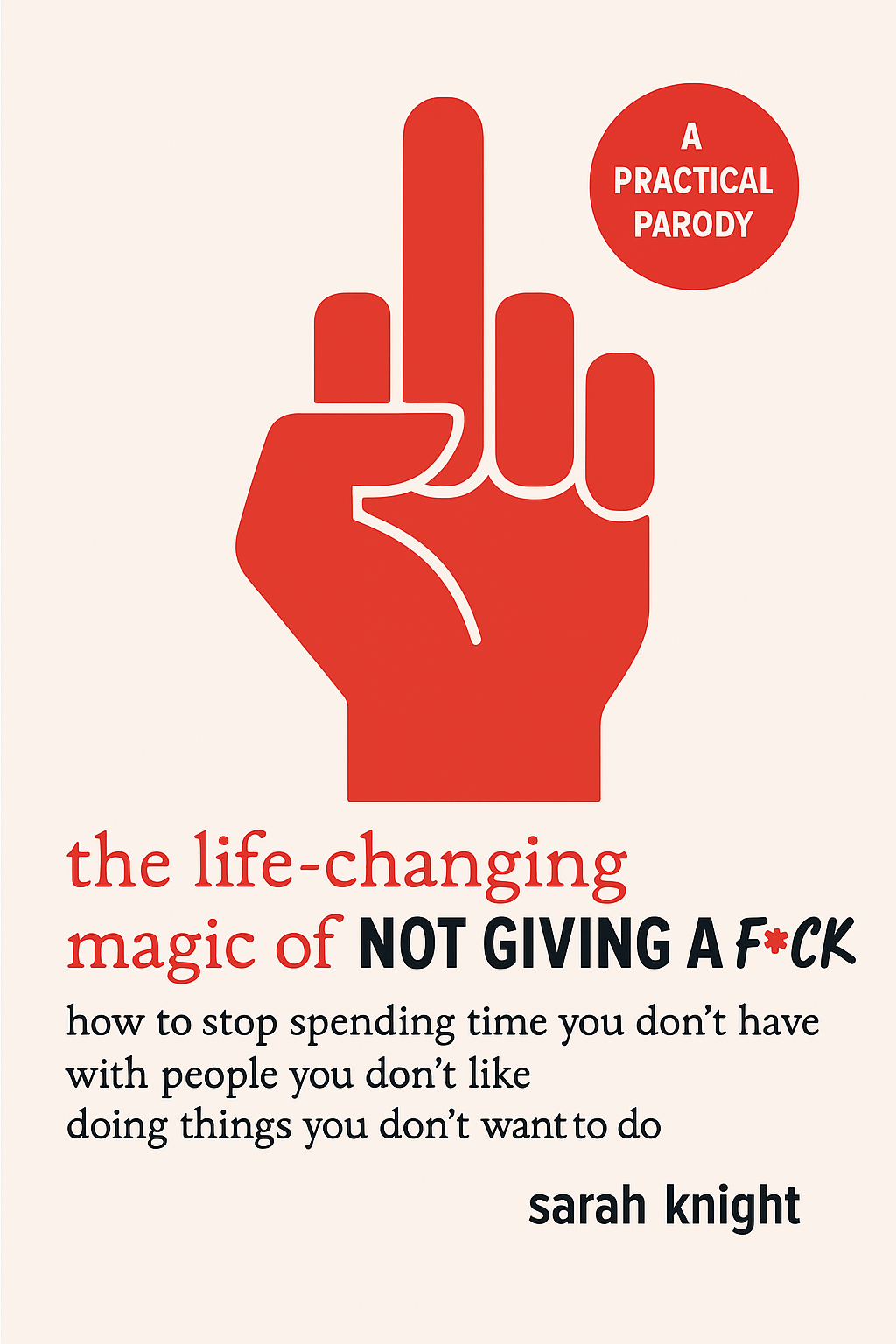
The Life-Changing Magic of Not Giving a F*ck
How to Stop Spending Time You Don’t Have with People You Don’t Like Doing Things You Don’t Want to Do
Book Edition Details
Summary
Ever felt smothered by the weight of expectations and trivialities? "The Life-Changing Magic of Not Giving a F*ck" offers a liberating escape route. With Sarah Knight's irreverent yet insightful guidance, discover how to reclaim your time and mental space by shedding unnecessary worries. This isn't about neglect—it's about intentional focus. Embrace the NotSorry Method, a refreshingly simple two-step approach to mental decluttering that invites you to unapologetically prioritize your happiness over societal pressures and superficial demands. Whether it's family feuds, unsolicited opinions, or unattainable standards, learn to shift your energy towards what truly sparks joy. Ready to abandon the chaos and embrace freedom? Your best life awaits when you stop caring about the noise and start cherishing what truly matters.
Introduction
Picture this: you're sitting in your car after yet another exhausting day, staring at your phone buzzing with notifications about events you don't want to attend, meetings that could have been emails, and social obligations that drain your soul. You feel trapped in a cycle of saying yes to everything while your own dreams and desires get pushed further into the background. Sound familiar? You're not alone in this overwhelming maze of modern expectations. The truth is, we've been conditioned to believe that caring about everything makes us good people, that saying yes to every request demonstrates our worth. But what if this approach is actually stealing our happiness, our energy, and our authentic selves? What if the secret to a fulfilling life isn't about doing more, but about strategically choosing what deserves your precious attention? This journey isn't about becoming cold or uncaring. Instead, it's about developing the wisdom to distinguish between what truly matters and what's simply noise. You'll discover how to reclaim your time, protect your energy, and redirect your focus toward the people and pursuits that genuinely light you up. The stories and insights ahead will show you that living authentically isn't selfish—it's essential. By the end, you'll have the tools to create boundaries that honor both your needs and your relationships, transforming overwhelming obligations into intentional choices.
From Corporate Burnout to Mental Decluttering Revolution
Sarah found herself trapped in the golden handcuffs of corporate success, spending her days in endless meetings that accomplished nothing, wearing clothes that felt like costumes, and commuting through underground tunnels that smelled like a mixture of desperation and overpriced coffee. For fifteen years, she climbed the ladder dutifully, giving her energy to supervisors who didn't appreciate her, projects that went nowhere, and office politics that made high school drama seem sophisticated. Every morning, her alarm clock felt like a prison guard announcing another day of sentence to be served. The breaking point came not with drama, but with quiet exhaustion. One summer morning, she realized she was more excited about her vacation days remaining than any actual work project. She was tracking her freedom like hash marks on a cell wall. That's when she made the radical decision to quit her job and start over as a freelancer. Walking out of that high-rise building felt like sliding down a fire pole away from everything that had been suffocating her spirit. But the real transformation began when she discovered Marie Kondo's approach to physical decluttering. As she organized her husband's sock drawer using the KonMari method, watching chaos transform into clarity, a profound realization struck her. The magic wasn't really about the socks at all. Her home became tidier, yes, but her mind became clearer. She had unknowingly begun the process of mental decluttering—questioning not just what objects deserved space in her drawers, but what obligations deserved space in her life. This revelation became the foundation for understanding that our minds, like our closets, can become cluttered with things that don't serve us. Just as we can choose which clothes spark joy and which ones need to go, we can choose which commitments, relationships, and concerns deserve our mental real estate. The art lies not in caring about nothing, but in caring strategically about what truly matters.
Sorting Life's Chaos: Things, Work, and Relationships
The journey of selective caring begins with honest inventory, much like surveying a barn that's been accumulating junk for decades. Sarah developed a systematic approach to categorizing the demands on our attention into four distinct areas: Things, Work, Friends and Acquaintances, and Family. Each category requires different strategies because each carries different emotional weights and social consequences. Starting with Things proved to be the safest training ground. Here, Sarah discovered freedom in admitting she simply didn't care about basketball, despite living in a sports-obsessed culture. She stopped pretending to be interested in morning routines when she was naturally a night owl, no longer feeling guilty about her inability to function before noon. The revelation that she could openly dislike popular music, trendy destinations, or social media platforms without losing her identity was liberating. These weren't personality defects to hide—they were preferences to honor. The Work category presented more complex challenges, involving paychecks and professional relationships. Sarah learned to distinguish between essential job functions and performative busy work. She began declining unnecessary meetings, stopped filling out reports that nobody read, and refused to participate in colleague's birthday celebrations that felt more like obligations than genuine gestures. The surprising discovery was that competent work performance mattered far more than social conformity, and that most workplace drama was optional participation. When it came to relationships, the stakes felt highest. Here, Sarah developed the crucial skill of separating people's feelings from their opinions. She could decline invitations to events she genuinely disliked while still caring about the person extending the invitation. The key was honest communication delivered with kindness, often using what she called "personal policies"—predetermined boundaries that removed the emotional burden from individual decisions. This systematic approach revealed that most of our daily stress comes from trying to care equally about everything, when in reality, our mental and emotional resources work best when focused strategically on what genuinely matters to us.
The Practical Magic of Saying No Without Being an Asshole
The wedding invitation seemed innocent enough, but it represented everything Sarah had learned about strategic boundary-setting. The ceremony was scheduled during a long weekend she traditionally reserved for personal retreat time, in a destination that would cost significant money, surrounded by people she barely knew celebrating a relationship she'd watched deteriorate and reconcile multiple times. The old Sarah would have said yes immediately, then spent months resenting the obligation and the expense. Instead, she applied her tested framework. First, she considered whether attending affected only her or others as well. While her absence might disappoint the couple, her presence wouldn't actually impact their marriage or happiness—they'd be too busy with two hundred other guests to notice her specifically. Second, she examined her motivations: was she considering going because she genuinely wanted to celebrate their union, or because she feared judgment for declining? The honest answer was fear-based, which immediately flagged the decision as inauthentic. Her response was masterfully crafted: warm congratulations, genuine well-wishes, and a beautifully chosen gift sent in advance. No elaborate excuses, no invented emergencies, no guilt-laden explanations. Just honest, kind communication that honored both her boundaries and their celebration. The couple responded graciously, and Sarah spent that weekend hiking in nature, returning refreshed rather than depleted. This approach worked because it balanced two essential elements: honesty and politeness. Being completely honest without consideration for others' feelings makes us cruel. Being excessively polite without any honesty makes us dishonest and ultimately resentful. The sweet spot lies in truthful communication delivered with genuine care for others' dignity. The magic isn't in becoming selfish or inconsiderate. It's in recognizing that authentic relationships thrive when people show up genuinely rather than out of obligation. When we stop saying yes to things we don't want to do, we have more energy and enthusiasm for the commitments we choose willingly, making us better friends, colleagues, and family members in the process.
Summary
The art of strategic not giving a damn isn't about becoming cold or uncaring—it's about becoming intentional with our most precious resources: time, energy, and attention. Through stories of corporate escape, systematic life audit, and relationship navigation, we see that the path to authentic living requires courage to disappoint some people in order to show up fully for what truly matters. The revolution begins with a simple recognition: we cannot care deeply about everything without caring deeply about nothing. When we spread our emotional investment too thin, we become exhausted, resentful, and unable to bring our best selves to the people and pursuits that deserve our genuine attention. The solution lies not in caring less, but in caring more strategically, creating space for what lights us up by releasing what drains us. This approach transforms not just our own lives but our relationships with others. When we show up authentically rather than out of obligation, when we communicate honest boundaries with kindness, and when we invest our energy in what genuinely matters to us, we model permission for others to do the same. The ripple effect creates a world where genuine connection replaces performative caring, where quality trumps quantity, and where everyone has permission to honor their authentic selves while treating others with respect and consideration.
Related Books
Download PDF & EPUB
To save this Black List summary for later, download the free PDF and EPUB. You can print it out, or read offline at your convenience.
By Sarah Knight
