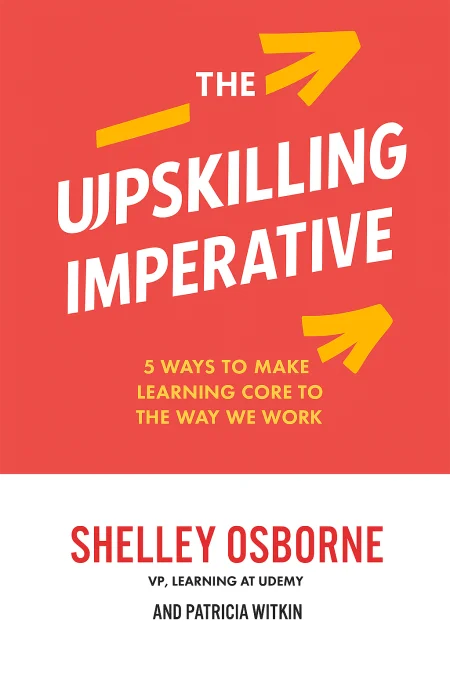
The Upskilling Imperative
5 Ways to Make Learning Core to the Way We Work
Book Edition Details
Summary
The workplace is evolving at lightning speed, and those who adapt, thrive. In "The Upskilling Imperative," Shelley Osborne, Udemy's Vice President of Learning, unveils a transformative blueprint for embedding perpetual learning into the very fabric of your organization. By harnessing cutting-edge learning science, Osborne illuminates five pivotal strategies that have empowered giants like Adidas and PayPal to foster environments where education is as natural as breathing. Imagine a team that greets change with enthusiasm rather than fear—equipped and ready for tomorrow's challenges. This isn't just about staying relevant; it's about forging a resilient, forward-thinking culture where growth is the constant, not the exception.
Introduction
The ground beneath our professional feet is shifting faster than ever before. In today's rapidly evolving workplace, the skills that got us hired may become obsolete within just five years, while our careers could span five decades or more. This creates an unprecedented challenge: how do we stay relevant, engaged, and valuable in a world where change is the only constant? The answer lies not in working harder, but in learning smarter. Organizations and individuals who embrace continuous learning as a core capability will thrive, while those who cling to outdated approaches will struggle to keep pace. The time has come to transform how we think about learning at work, moving from sporadic training events to an integrated culture where growth and development become as natural as breathing.
Make Learning Core to How We Work
At the heart of every thriving organization lies a simple yet powerful truth: learning cannot be an afterthought or an interruption to work. It must become the very foundation upon which all work is built. This means fundamentally reimagining how we approach professional development, moving from the traditional model of mandatory training sessions to a dynamic ecosystem where learning flows naturally through every aspect of our daily routines. The shift begins with recognizing that agile learners are not born, they are cultivated. Take Chip Conley, who at age 52 joined Airbnb as their "modern elder." Despite his decades of hospitality experience, Conley quickly realized he had as much to learn from the young CEO Brian Chesky as he had to teach. This mutual mentorship exemplified what happens when we embrace the mindset that everyone, regardless of age or experience, has something valuable to both offer and receive. Conley's experience at Airbnb transformed not only his own perspective but also sparked the Modern Elder movement, demonstrating how openness to learning can create ripple effects throughout an organization. His willingness to be vulnerable and admit what he didn't know actually strengthened his leadership and opened doors to innovation he never could have achieved alone. To cultivate this mindset across your organization, encourage employees to regularly ask themselves three fundamental questions: What have I learned before? What did I learn today? What do I need to learn next? These simple inquiries create a disciplined approach to continuous growth that transforms learning from an event into a way of being. Remember that the goal is not perfection but progress. When learning becomes as integrated into work as checking email or attending meetings, your organization develops the muscle memory for adaptation that will serve it well in any future challenge.
Think Like a Marketer to Drive Development
Learning programs have suffered from a reputation problem for far too long. Years of boring, mandatory training have conditioned employees to view professional development as a necessary evil rather than an exciting opportunity for growth. To overcome this resistance, learning leaders must adopt the mindset of skilled marketers who understand how to capture attention, create desire, and inspire action. Consider how Shelley Osborne and her team at Udemy completely reimagined their employee onboarding process. Instead of subjecting new hires to eight hours of passive presentations, they drew inspiration from the wildly popular Pokémon Go mobile game. This led to the creation of Udemy GO, an augmented reality scavenger hunt that transformed orientation into an engaging adventure where employees could explore company culture at their own pace while building meaningful connections with colleagues. The transformation didn't happen overnight. The team followed a systematic creativity framework: they consumed diverse media to spark ideas, flipped the script on traditional approaches, gave their concepts time to percolate, connected the dots between technology and learning objectives, and then followed through with implementation and feedback collection. The result was not just higher engagement scores, but genuine excitement about the learning experience. The key insight here is that effective learning marketing requires the same customer-centric approach that drives successful product launches. Segment your audience based on their specific needs and motivations. Create compelling teasers that build anticipation. Leverage storytelling to show real transformation. Use scarcity and urgency to drive action when appropriate. Most importantly, remember that your employees are your customers, and like all customers, they have choices about how to spend their time and attention. Respect that choice by creating learning experiences that are genuinely valuable, relevant, and engaging rather than simply mandating participation.
Signal the Value Through Leadership Action
The most powerful catalyst for creating a learning culture is not a program or policy, but the authentic behavior of leaders throughout the organization. When executives and managers demonstrate their own commitment to continuous learning, they send an unmistakable signal that growth and development are not just encouraged but essential to success. At PCL Construction, this principle has been lived out for decades. Mike Olsson, the company's vice president of human resources and professional development, explains how their learning culture is driven from the top because the majority of senior operations people and executives are graduates of internal leadership development programs. They have personally experienced the transformation that comes from committed learning, which makes their advocacy genuine and compelling. The authenticity of leadership commitment shows up in countless small but meaningful ways. Leaders share stories about their own learning struggles and breakthroughs. They openly discuss what they don't know and what they're working to improve. They allocate real budget and time for learning activities, not just lip service. They celebrate learning achievements with the same enthusiasm they show for sales wins or product launches. Perhaps most importantly, these leaders create psychological safety around learning by normalizing failure and framing setbacks as essential components of growth rather than reasons for punishment. When leaders model vulnerability and continuous improvement, they give permission for everyone else to do the same. To signal the true value of learning in your organization, examine not just what leaders say but what they do. Do they protect time for learning activities when schedules get tight? Do they share their own development goals openly? Do they ask curious questions rather than just giving directive answers? These behaviors speak far louder than any policy manual. The transformation begins with leaders who understand that in a world of constant change, their willingness to keep learning may be the most valuable skill they can model for their teams.
Sustain Your Learning Culture for Success
Building a learning culture is not a destination but a journey that requires ongoing attention, adaptation, and renewal. Like any living system, a learning culture needs continuous care and feeding to remain vibrant and effective over time. This means staying vigilant about the signals you send, the opportunities you create, and the barriers you remove. The sustainability challenge becomes particularly acute as organizations grow and change. New employees cycle in who may not immediately understand or embrace the learning mindset. Long-term employees may become complacent with successful programs. The skills landscape continues to evolve, making yesterday's training obsolete and demanding fresh approaches to emerging challenges. At successful learning organizations, sustainability is built on several key principles. First, they establish clear accountability for learning at every level, from individual contributors who own their development paths to executives who champion the strategic importance of continuous growth. Second, they regularly audit and refresh their programs, recognizing that even the best content can become stale without periodic renewal. Most importantly, they understand that sustainability requires embedding learning so deeply into the organizational DNA that it becomes invisible infrastructure rather than a conscious choice. When learning is as natural and expected as any other business process, it survives leadership changes, budget pressures, and strategic shifts. The key is to create systems that support learning while maintaining the flexibility to evolve with changing needs. This might mean rotating learning champions across departments, establishing mentorship networks that span generations and functions, or building technology platforms that can adapt to new content and delivery methods. Remember that the goal is not to create perfect learners but to foster an environment where imperfect humans can grow together, support each other through challenges, and collectively build the capabilities needed for whatever comes next.
Summary
The future belongs to organizations and individuals who understand that learning is not something we do in addition to work, but the very essence of how we work in a rapidly changing world. As Marshall Goldsmith wisely observed, "What got you here won't get you there," reminding us that continuous growth is not optional but essential for sustained success. The most successful organizations recognize that their competitive advantage lies not in what they know today, but in how quickly they can learn what they need to know tomorrow. This requires leaders who model curiosity and vulnerability, systems that make learning accessible and engaging, and cultures that celebrate both successes and the failures that fuel growth. Start today by asking yourself what you learned yesterday, what you're learning right now, and what you need to learn next, then take one concrete step toward answering that third question.
Related Books
Download PDF & EPUB
To save this Black List summary for later, download the free PDF and EPUB. You can print it out, or read offline at your convenience.
By Shelley Osborne
