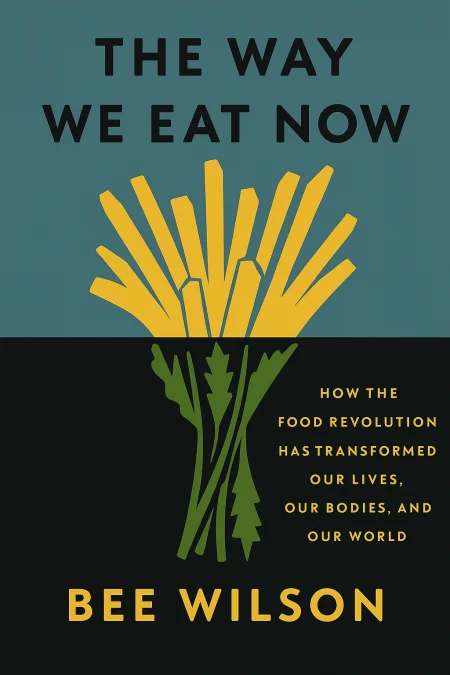
The Way We Eat Now
How the Food Revolution Has Transformed Our Lives, Our Bodies, and Our World
Book Edition Details
Summary
In a world overflowing with culinary choices, "The Way We Eat Now" takes you on an insightful journey through the labyrinth of modern food culture. Bee Wilson, an acclaimed food writer, unravels the complex web of global eating habits and their profound impact on our bodies and societies. From the rise of veganism to the popularity of meal replacements, she examines the seismic shifts that have shaped our dining tables, sparking a revolution in how we consume. This book is more than just a reflection on current trends; it’s a visionary glimpse into our nutritional future, challenging us to rethink our relationship with food. With wit and wisdom, Wilson invites us to ponder the potential for transformation in our eating practices, offering a fresh perspective on what it means to nourish ourselves in today's world.
Introduction
Imagine walking into a grocery store in 1960 with your grandmother, where she could identify nearly every item on the shelves from her own childhood memories. Now picture that same woman transported to today's supermarket, confronted by aisles of products that would seem as foreign as artifacts from another planet. This dramatic transformation represents one of the most profound yet overlooked revolutions in human history: the complete reinvention of how our species nourishes itself. This remarkable shift touches every corner of our daily existence, from the morning coffee drink containing more sugar than our ancestors consumed in weeks, to the late-night snacks that would have been unimaginable luxuries just decades ago. The story of modern food is simultaneously humanity's greatest triumph over hunger and its most unexpected stumble into new forms of malnutrition, where the same innovations that liberated us from scarcity have trapped us in abundance. The journey reveals how economic forces, technological breakthroughs, and cultural upheavals have conspired to reshape not merely what we consume, but when, where, and why we eat. It spans from post-war agricultural miracles to the rise of ultra-processed foods, from the collapse of traditional meal rhythms to the emergence of a global food culture that somehow leaves us more disconnected from nourishment than ever before. This exploration speaks to anyone who has wondered why eating well feels so complicated in our modern world, why ancient food traditions are vanishing even in their birthplaces, and what the future holds for human nutrition in an age of unprecedented choice and confusion.
The Great Transition: Eliminating Famine and Creating Abundance (1947-2000)
The modern food story begins with one of humanity's most remarkable achievements: the near-elimination of famine from vast portions of the globe. In 1947, half of all people on Earth lived with chronic hunger. By 2000, that figure had plummeted to one in nine, even as global population had more than doubled. This transformation, powered by innovations like the Haber-Bosch process for nitrogen fertilizer and Norman Borlaug's miracle wheat varieties, fundamentally rewrote the human relationship with sustenance. Yet this victory over ancient hunger carried an unexpected twist. As nations progressed through what researchers termed the "nutrition transition," they didn't simply gain access to more traditional foods. Instead, they adopted an entirely new way of eating centered around what became known as the Global Standard Diet. From the favelas of Rio to the markets of Lagos, from Mumbai's streets to Mexico City's neighborhoods, people began consuming remarkably similar combinations of wheat, rice, sugar, vegetable oil, and meat, regardless of their ancestral food wisdom. The speed of this transformation was breathtaking. In South Korea, meat consumption increased tenfold between 1969 and 1995 as the nation vaulted from poverty to prosperity. In Mexico, cheap American corn flooding in after NAFTA displaced traditional varieties cultivated for millennia, while ultra-processed foods expanded at rates of five to ten percent annually. These weren't gradual cultural evolutions but rapid economic earthquakes that left entire populations eating completely differently within a single generation. This transition revealed a profound paradox that would define our era: the same decades that witnessed the greatest expansion of food security in human history also saw the emergence of diet-related diseases as leading killers worldwide. The foods that had saved us from starvation began making us sick in entirely new ways, creating a world where malnutrition no longer meant too little food, but too much of the wrong kinds.
Economic Forces and the Rise of Global Standard Diet
Behind every food choice lies an intricate web of economic forces that most consumers never glimpse. The rise of soybean oil as the world's seventh-most-consumed food perfectly illustrates how supply-side economics can reshape global diets without anyone consciously choosing the change. Brazilian government policies in the 1960s and 1990s, designed to boost agricultural exports, flooded world markets with cheap vegetable oil that infiltrated everything from restaurant fryers to processed snack foods. This hidden transformation reveals a broader pattern that defines our food landscape: our diets are increasingly shaped not by what we desire to eat, but by what agricultural and food processing systems find most profitable to produce. The economics of modern food production have created a world where ultra-processed foods, with their fifteen percent profit margins, systematically crowd out whole foods that generate only three to six percent profits. The result is a food environment that actively promotes consumption of products contributing to chronic disease. Foreign direct investment accelerated these changes in developing countries, where multinational food corporations invested billions in creating new markets for processed foods. From 1990 to 2000, such investment in developing nations grew sixfold, with most food-related capital flowing toward companies producing snacks, sugary beverages, and other ultra-processed items. This wasn't accidental but represented a deliberate strategy to expand markets as Western appetites for these products reached saturation points. The economic devaluation of basic foods like bread reveals how prosperity can paradoxically lead to declining food quality. As bread became a smaller portion of household budgets, consumers stopped caring about its quality, accepting industrial loaves filled with additives and preservatives. Meanwhile, the relative cost of fruits and vegetables rose dramatically compared to processed alternatives, creating economic incentives that push even well-intentioned consumers toward less healthy choices, regardless of their knowledge or preferences.
Cultural Disruption: The Death of Traditional Meal Rhythms
The transformation of when and how we eat represents as profound a change as what we consume. Time-use studies across Europe reveal a stark divide between countries like France and Spain, where distinct peaks of eating activity still structure the day, and places like Britain and Sweden, where eating has become a continuous ribbon of activity with no clear communal rhythm. This shift from synchronized meals to individualized grazing has fundamentally altered the social and psychological experience of nourishment. The death of the lunch hour exemplifies this broader transformation. Where workers in 1920s Germany could count on seventy-five to ninety minutes for midday meals, today's employees often struggle to find even brief moments to eat properly. Healthcare workers, the very people responsible for promoting health, find themselves trapped in schedules that make healthy eating nearly impossible, leading to higher obesity rates among nurses than in the general population. This temporal disruption gave birth to modern snacking culture, where a third of American calories now come from snacks rather than traditional meals. The food industry responded by creating an endless array of portable, shelf-stable products designed for consumption anywhere, anytime. These "convenience foods" promise to save time but often consume more of it, as families find themselves managing multiple individual eating schedules rather than sharing single meals. The cultural implications extend far beyond mere convenience. The loss of commensality, the practice of eating together at the same table, represents the breakdown of one of humanity's most fundamental social rituals. When families can no longer synchronize their eating, they lose not just shared nutrition but shared time, conversation, and the subtle negotiations of taste and preference that help bind communities together. The result is a more individualistic but also more isolated relationship with food, where eating becomes a private act of consumption rather than a communal expression of culture and care.
Biological Mismatch: Ancient Bodies in Modern Food Environments
The human body, sculpted by millions of years of evolution in environments of scarcity, suddenly found itself thrust into a world of perpetual abundance. This biological mismatch manifests most dramatically in the phenomenon of "thin-fat babies" discovered by researcher Chittaranjan Yajnik in India. These infants, born to malnourished mothers, developed metabolic programming that prepared them for a harsh world of limited food, only to mature in an environment of increasing prosperity and plenty. The consequences of this evolutionary mismatch extend far beyond individual health outcomes. Our ancient hunger and thirst mechanisms, designed for a world where calories were precious and water was the only beverage, prove woefully inadequate for navigating modern food environments. The average American now consumes 450 calories daily from beverages alone, yet these liquid calories barely register in our satiety systems, leaving us perpetually vulnerable to overconsumption without awareness. Perhaps most tragically, our cultural responses to these biological mismatches have often exacerbated the problem. Weight stigma, rather than motivating healthy behavior, creates stress and shame that actually promote further weight gain. The very people most affected by our changing food environment find themselves blamed for personal failures of willpower, when the real issue is a fundamental incompatibility between human biology and modern food systems designed for profit rather than health. The psychological dimension of this mismatch proves equally profound. We retain our ancestors' excitement about energy-dense foods like sugar and fat, treats that were once rare and precious. But when these foods become available everywhere, all the time, our evolved responses transform from survival assets into health liabilities. The result is a global population struggling to adapt ancient instincts to an entirely new nutritional reality, where our biological programming actively works against our long-term wellbeing in environments of abundance.
Summary
The central paradox of modern eating lies in this stark contradiction: we have solved humanity's ancient problem of hunger only to create entirely new forms of malnutrition and food-related suffering. The same economic and technological forces that liberated us from scarcity have trapped us in abundance, leaving populations worldwide struggling with bodies and cultures unprepared for perpetual plenty. This transformation reveals that food is never merely about nutrition but always about power, economics, and social relationships. The homogenization of global diets represents not just a loss of culinary diversity but a fundamental shift in how societies organize themselves around the most basic human need. When traditional meal rhythms collapse and eating becomes individualized, we lose more than shared flavors; we lose shared time and the social bonds that meals have always helped forge. Yet understanding this history also points toward hope and human agency. Recognizing that our current food environment is neither natural nor inevitable but the product of specific economic and political choices opens possibilities for different choices. The emerging signs of resistance, from revival of heritage grains to growing demand for food production transparency, suggest that change remains possible when consumers understand the forces shaping their plates. The future of eating will depend not on returning to an imagined past but on creating new food cultures that honor both human health and human community in our interconnected modern world.
Related Books
Download PDF & EPUB
To save this Black List summary for later, download the free PDF and EPUB. You can print it out, or read offline at your convenience.
By Bee Wilson
