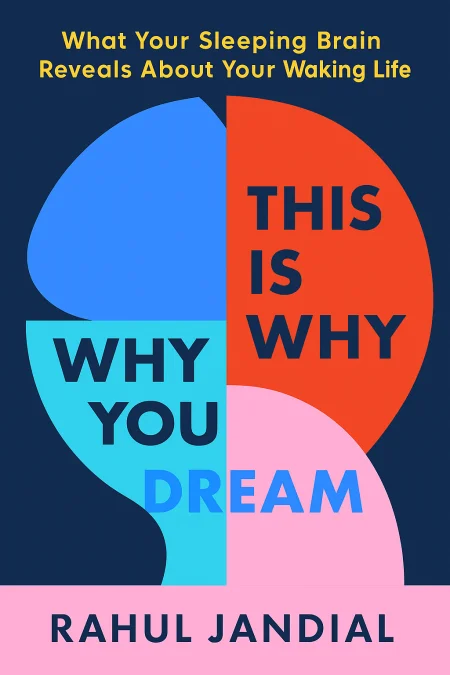
This Is Why You Dream
What Your Sleeping Brain Reveals About Your Waking Life
Book Edition Details
Summary
In the enigmatic realm of slumber lies a kaleidoscope of untapped potential, waiting to redefine our waking world. "This Is Why You Dream" by Dr. Rahul Jandial invites you to venture into the subconscious, where dreams are not mere whims of the mind but powerful tools for transformation. With the precision of a neuroscientist and the insight of a seasoned neurosurgeon, Jandial unravels how dreaming serves as a cornerstone of emotional resilience, a vault for memories, and a wellspring of creativity. Beyond mere whimsy, dreams hold the power to forewarn us of lurking health issues and offer a playground for perfecting real-world skills. Through the latest breakthroughs in dream research, this book illuminates the path to harnessing your dreams' potential, making the mysterious world of sleep a frontier of personal growth and self-discovery.
Introduction
Every night, as you drift off to sleep, something extraordinary happens. Your eyes close, your body becomes still, yet your brain launches into one of its most remarkable performances. You find yourself in impossible places, meeting people who shouldn't exist, experiencing emotions more intense than anything your waking life could produce. You might fly through the air, speak with long-dead relatives, or find yourself naked in your high school classroom taking an exam you never studied for. These nocturnal adventures aren't random neurological noise or meaningless brain static. They're dreams, and they represent one of the most fascinating and purposeful activities your mind engages in. For too long, dreams have been dismissed as the brain's way of taking out the trash, random firings of neurons during sleep's downtime. But cutting-edge neuroscience reveals a far more intriguing reality. Dreams are actually highly organized, deeply meaningful experiences that serve crucial functions for our mental and emotional well-being. They help us process memories, solve problems, and rehearse for future challenges in ways that our conscious minds simply cannot achieve. Through dreams, we gain access to a unique form of thinking that's more creative, more emotionally rich, and more socially sophisticated than our waking thoughts. Understanding why we dream opens a window into the very nature of consciousness itself and reveals how our sleeping minds work tirelessly to make us more adaptive, creative, and emotionally intelligent human beings.
The Neuroscience of Dreams: How Your Brain Creates Nighttime Stories
When you dream, your brain transforms into a master storyteller, crafting vivid narratives from the raw materials of memory, emotion, and imagination. This remarkable process involves a complex orchestration of neural networks that operate very differently from your waking mind. During dreams, your brain essentially rewires itself, shutting down some systems while supercharging others to create an entirely unique form of consciousness. The key to understanding dreams lies in recognizing that they emerge from two major brain networks working in opposition. Your Executive Network, responsible for logic, reasoning, and reality-testing, essentially goes offline during dreaming sleep. This is why you can accept the most bizarre dream scenarios without question, like finding yourself in a conversation with a talking elephant in your childhood bedroom. Meanwhile, your Imagination Network becomes hyperactive, weaving together memories, emotions, and sensory experiences in novel and often surprising ways. This network operates without the constraints of logic or physics, allowing your mind to explore possibilities that would be immediately dismissed during waking hours. What makes dreams feel so real is that your brain treats them as actual experiences. When you run in a dream, the same motor cortex areas activate as if you were really running. When you feel fear, your amygdala responds with the same intensity as it would to a genuine threat. Your brain can even amplify emotional experiences beyond what's possible when awake, which explains why dreams can feel more terrifying, joyful, or heartbreaking than real life. This neurological reality means that dreams aren't just passive entertainment but active experiences that can influence your mood, memories, and even your behavior the following day. The visual richness of dreams comes from your brain's remarkable ability to generate detailed sensory experiences without any external input. Your visual cortex creates entire worlds from memory fragments and imaginative constructions, while your auditory centers might conjure conversations or music. This process demonstrates one of the most extraordinary capabilities of the human brain: the power to create stimulus-independent experiences that feel completely real to the dreamer.
Dreams as Evolutionary Tools: Memory, Creativity, and Problem-Solving
Dreams aren't just nighttime entertainment but sophisticated evolutionary tools that have helped humans survive and thrive for millennia. From an evolutionary perspective, the fact that we spend roughly a third of our lives in this vulnerable state suggests that dreaming must provide significant survival advantages. Recent research reveals that dreams serve multiple crucial functions, from consolidating memories to enhancing creativity and preparing us for future challenges. One of dreams' most important roles involves memory processing and emotional regulation. During sleep, your brain essentially sorts through the day's experiences, determining what to remember, what to forget, and how to integrate new information with existing knowledge. Dreams provide a unique cognitive space where your mind can make connections between seemingly unrelated experiences, often leading to insights that wouldn't emerge during conscious thought. Many scientific breakthroughs, artistic innovations, and creative solutions have famously emerged from dreams, including the structure of DNA, the periodic table, and countless musical compositions. Dreams also function as a kind of rehearsal system for real-world scenarios. Through dreams, you can practice responses to various situations, from social interactions to potential threats, without any actual risk. This rehearsal function is particularly evident in nightmares, which often involve scenarios where survival or social status is at stake. While unpleasant, nightmares may actually help prepare your mind to respond effectively to genuine challenges. Studies have shown that people who dream about upcoming stressful events, like exams or public presentations, often perform better than those who don't. The social and emotional focus of most dreams serves another crucial evolutionary function. Dreams frequently center on relationships, social dynamics, and emotional conflicts, providing a safe space to explore different social strategies and responses. Your dreaming mind can experiment with various ways of handling interpersonal situations, from confronting a difficult boss to reconciling with a friend. This social simulation function helps develop emotional intelligence and social skills that are essential for thriving in human communities. The hyperactivated emotional centers during dreams mean that these social rehearsals can be particularly impactful, helping you develop more nuanced and effective approaches to real-world relationships.
When Dreams Meet Reality: Health, Lucid Dreaming, and Future Applications
The boundary between dreams and waking life is more porous than most people realize, with fascinating implications for health, consciousness, and human potential. Dreams can serve as early warning systems for physical and mental health issues, sometimes detecting problems years before conventional medical tests. Certain types of dreams, particularly those involving acting out violent scenarios during sleep, can predict neurodegenerative diseases like Parkinson's with remarkable accuracy, sometimes decades before other symptoms appear. Dreams also play a crucial role in emotional and psychological well-being. They help process trauma, regulate mood, and provide insights into our deepest concerns and desires. The emotional intensity possible in dreams, often exceeding what we experience when awake, allows for a kind of emotional processing that can be genuinely therapeutic. People going through major life transitions, from divorce to bereavement, often find that their dreams help them work through complex emotions and adapt to new circumstances. This therapeutic function of dreams suggests that paying attention to our dream life could be an important component of mental health maintenance. Perhaps the most intriguing frontier in dream research involves lucid dreaming, the ability to become aware that you're dreaming while still asleep. Lucid dreamers can sometimes control their dream narratives, choosing to fly, change scenery, or confront fears in a safe dream environment. This conscious control over the dream state opens up extraordinary possibilities for personal growth, skill development, and psychological healing. Athletes have used lucid dreaming to practice complex movements, artists have explored new creative possibilities, and people with nightmares have learned to transform terrifying dreams into positive experiences. The future of dream research promises even more remarkable applications. Scientists are developing technologies that could allow us to record dreams, share dream experiences, or even engineer specific dream content. While these possibilities raise important ethical questions about mental privacy and authenticity, they also offer unprecedented opportunities for learning, healing, and human enhancement. As we better understand the mechanisms of dreaming, we may discover new ways to harness this natural state of consciousness to improve memory, enhance creativity, and promote psychological well-being in ways we're only beginning to imagine.
Summary
Dreams represent far more than random neural activity during sleep; they constitute a sophisticated biological system that has evolved to enhance human survival, creativity, and emotional intelligence. Through dreams, your brain creates a unique form of consciousness that operates beyond the constraints of logic and physics, allowing for the kind of innovative thinking and emotional processing that conscious thought cannot achieve. This nightly transformation of your mental landscape serves crucial functions, from consolidating memories and solving problems to rehearsing social interactions and processing complex emotions. Understanding dreams offers profound insights into the nature of consciousness itself and reveals how your sleeping mind works as an active partner in your psychological and creative development. As research continues to unveil the mechanisms and possibilities of dreaming, we're discovering that these nocturnal adventures may hold keys to unlocking human potential in ways we're only beginning to comprehend. What aspects of your own dream life might be serving similar functions, and how might paying closer attention to your dreams enhance your waking creativity and emotional well-being?
Related Books
Download PDF & EPUB
To save this Black List summary for later, download the free PDF and EPUB. You can print it out, or read offline at your convenience.
By Rahul Jandial
