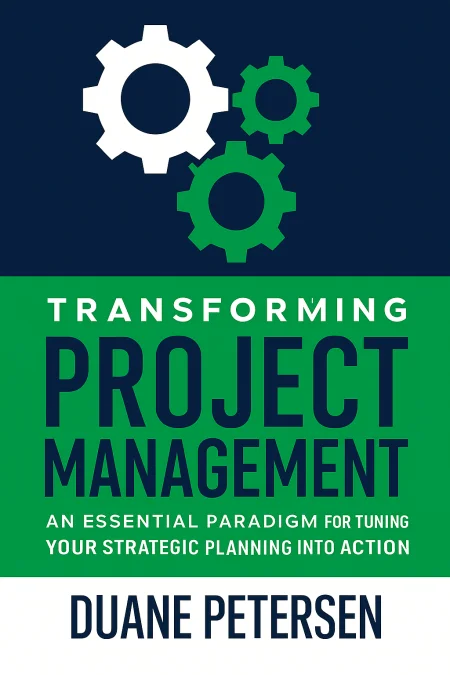
Transforming Project Management
An Essential Paradigm for Turning Your Strategic Planning Into Action
Book Edition Details
Summary
Can your business strategy leap from paper to reality without sinking under the weight of failed projects and blown budgets? Duane Petersen, the visionary behind UltiMentors, unveils the key to this transformation in "Transforming Project Management." This is not just a manual but a masterclass in dismantling strategic plans into actionable, successful projects. Petersen guides you through the art of evaluating your current position against your ambitions, crafting plans that move the needle, and leading teams with confidence and clarity. Embrace a system where precise cost predictions and real-time performance tracking are not aspirations but norms. It's time to turn your strategic dreams into tangible victories and propel your company to industry dominance.
Introduction
Picture this: your organization has crafted an inspiring strategic vision, stakeholders are excited, and resources have been allocated. Yet months later, you find yourself staring at cost overruns, missed deadlines, and deliverables that somehow miss the mark entirely. Sound familiar? This painful scenario plays out in boardrooms worldwide, costing trillions of dollars annually and crushing countless dreams. The culprit isn't lack of vision or inadequate funding—it's the dangerous gap between strategic dreaming and tactical execution. Too many organizations excel at painting compelling pictures of the future but stumble when it comes to building the bridge that actually gets them there. The solution lies in fundamentally transforming how we approach project management, not as a separate discipline, but as the vital heartbeat that pumps life into every strategic aspiration. When we master this integration, something magical happens: dreams stop being mere wishes and become inevitable realities.
Build Rock-Solid Budgets That Actually Work
Traditional budgeting approaches are built on wishful thinking and rough guesstimates that bear little resemblance to reality. Most project managers follow outdated methods that account for only about 40 percent of actual project costs, leaving massive blind spots that inevitably lead to budget disasters. Consider the bridge construction project where the project manager understood capacity planning principles. Rather than accepting the traditional estimate of months to complete, he recognized that people are only truly productive about 30 percent of their paid time—the rest is lost to breaks, meetings, personal tasks, and natural inefficiencies. Instead of fighting this reality, he worked with it brilliantly. When the state desperately needed the bridge completed on time for crucial toll revenue, this project manager offered the contractor $50,000 for each day the project finished ahead of schedule. The contractor wisely shared $35,000 of this daily bonus with all team members and vendors. Suddenly, the entire team became passionately invested in efficiency and speed, actively encouraging each other to work smarter and faster. The project completed 105 days early, benefiting everyone involved. This success came from understanding that realistic budgets must account for capacity planning, meeting costs, risk values, project management time, and recruitment expenses. Start by calculating your work breakdown structure, then adjust estimates by dividing by 0.3 to account for nonproductive time. Add specific line items for weekly meetings, project manager costs, and both monetary and time value of risks. Factor in recruitment and training expenses for required skills. Never accept rough order of magnitude estimates for critical decisions. Instead, invest in detailed analysis upfront—the cost of thorough planning is minimal compared to the price of project failure. Remember that earned value tracking only works when your budget reflects all true costs, not just the work activities themselves. Building rock-solid budgets requires courage to challenge traditional methods and discipline to include every real cost, but the result is unshakeable financial foundation for success.
Master Strategic Planning Through Project Excellence
Strategic planning fails not because organizations lack vision, but because they treat it as a separate activity disconnected from the tactical reality of execution. The gap between dreamers and doers creates a dangerous void where brilliant strategies die painful deaths. The Nalley's food company faced a classic strategic challenge—they couldn't compete with larger competitors like Lay's on potato chips, Dinty Moore on canned stew, or Hormel on canned chili due to higher production costs per unit. Rather than accepting defeat, they executed a masterful strategic plan that transformed their entire business model. Nalley's invested heavily in production equipment capable of producing three to five times more of each product than they could sell under their own brand. This massive increase in volume dramatically reduced their per-unit costs through economies of scale. The brilliance came in what they did with the excess production—they sold it to major grocery chains like Safeway and Albertsons to package under store brand names. Suddenly, Nalley's was profiting from every sale while their competitors faced new price pressure from these store brands. This strategic triumph required seamless integration of vision with tactical execution. The planning team included not just visionaries but project management experts who could break down the strategic objective into manageable portfolios—equipment procurement, facility upgrades, marketing campaigns to grocery chains, and supply chain reorganization. Begin your strategic planning by assembling teams that blend strategic thinking with tactical expertise. Include project management subject-matter experts from the beginning, not after plans are set. Break each strategic objective into specific project portfolios with realistic budgets and timelines. Create monitoring dashboards that roll up project performance to strategic objective levels, giving you real-time visibility into whether your dreams are becoming reality. The most powerful strategic plans aren't just inspiring documents—they're executable roadmaps with clear accountability and measurable progress toward transformation.
Lead Teams to Extraordinary Success
Leadership in project environments demands a completely different approach than traditional management—you must inspire excellence from people who may not report directly to you while navigating complex stakeholder relationships and tight deadlines. Douglas McGregor identified two fundamental management philosophies that determine team performance. Theory X managers believe employees are naturally lazy and require constant supervision and threats to perform adequately. Theory Y managers trust that people want to do good work and will excel when given proper conditions and support. The difference in results is staggering. At one organization, the CEO would literally scream profanities inches from employees' faces in front of hundreds of colleagues, believing this intimidation would motivate better performance. Instead, this approach created toxic morale, massive turnover, and plummeting productivity. Talented people fled to competitors, while those who remained worked at minimum acceptable levels out of fear and resentment. The organization's reputation became so damaged that even taxi drivers recognized it as "the company famous for treating people like crap." Contrast this with leaders who adopt Faruk Sahin's LMX theory, developing unique relationships with each team member based on mutual respect and individual strengths. These leaders demonstrate genuine care for people both professionally and personally, ask about their goals and challenges, and actively remove obstacles that prevent peak performance. They delegate praise freely while taking responsibility for failures. Start by hiring smart people and trusting them to tell you what needs to be done, rather than micromanaging their every move. Develop individual relationships with each team member, understanding their motivations and career aspirations. Create financial incentives when possible—shared success breeds extraordinary effort. Remove bureaucratic obstacles that frustrate your team and waste their valuable time. Most importantly, remember that 93 percent of communication impact comes from body language and vocal tone, not your actual words. Practice aligning your physical presence with your verbal message to ensure your team receives clear, consistent signals about expectations and support. When you treat people as your most valuable assets and empower them to solve problems creatively, you unlock performance levels that seemed impossible under traditional management approaches.
Summary
Project management transformation isn't just about better processes or tools—it's about fundamentally changing how organizations bridge the gap between strategic vision and tactical reality. As this approach demonstrates, "satisfactory completion of all work necessary within the budget and schedule as agreed without requiring the addition of any time or money to make up for failure" becomes achievable when we integrate strategic planning with disciplined project execution and authentic leadership. The path forward is clear and immediately actionable: start your next strategic planning session by including a project management subject-matter expert, build your next project budget using capacity planning principles, and lead your next team meeting with genuine curiosity about how to remove obstacles from their path to success. These aren't revolutionary concepts requiring years of study—they're practical steps you can implement tomorrow to begin transforming dreams into measurable results.
Related Books
Download PDF & EPUB
To save this Black List summary for later, download the free PDF and EPUB. You can print it out, or read offline at your convenience.
By Duane Petersen
