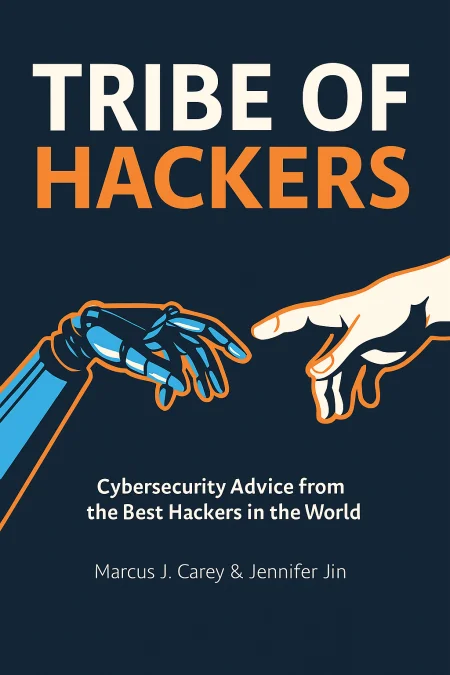
Tribe of Hackers
Cybersecurity Advice from the Best Hackers in the World
byMarcus J. Carey, Jennifer Jin
Book Edition Details
Summary
Seventy trailblazers in the world of cybersecurity stand ready to ignite your curiosity and challenge the status quo. In "Tribe of Hackers," luminaries such as Lesley Carhart and Robert M. Lee unveil the secrets behind their success, while demystifying the path to excellence in an ever-evolving field. From launching groundbreaking firms like Dragos, Inc. to navigating the industry's gender dynamics, this collection offers a treasure trove of insights. Whether you're a novice stepping into this digital frontier or a veteran seeking fresh perspectives, this book promises to be your catalyst for transformation. And with every purchase, you're not just investing in knowledge—you're supporting causes like Bunker Labs and the Rainforest Partnership. Dive into this unparalleled compendium of wisdom and let the hackers' spirit inspire your next move.
Introduction
The cybersecurity industry stands at a crossroads where traditional barriers to entry are crumbling, creating unprecedented opportunities for passionate individuals from all backgrounds. Unlike fields that demand specific degrees or years of formal training, cybersecurity rewards curiosity, practical skills, and genuine commitment to protecting others. This transformation opens doors for career changers, self-taught learners, and anyone willing to embrace continuous learning in one of today's most critical and rewarding professions. Your unique perspective and diverse experience aren't obstacles to overcome but assets that can strengthen cybersecurity teams and drive innovation in an industry hungry for fresh thinking and collaborative problem-solving.
Building Your Foundation Without Formal Requirements
The cybersecurity field breaks conventional career rules by valuing demonstrated ability over formal credentials, creating pathways for individuals who might never have imagined themselves in technology roles. This accessibility stems from the industry's recognition that diverse backgrounds bring unique strengths to complex security challenges that purely technical approaches cannot solve. Tracy Maleeff's transformation from librarian to cybersecurity analyst perfectly illustrates this principle. After fifteen years organizing legal information in law firms, she discovered cybersecurity through a professional development article about future-proofing careers. Rather than pursuing another degree, she immersed herself in the community by attending every tech meetup and workshop available. When cybersecurity captured her interest, she boldly quit her library position and launched her own consulting company, focusing on research and social media projects with an information security perspective. Her research training from library science became an unexpected asset in threat intelligence work, demonstrating how transferable skills create value in cybersecurity contexts. Within months of this career pivot, Maleeff secured interviews for security operations center positions by emphasizing her analytical abilities and genuine passion for learning. Today, she works as a cyber analyst, proving that diverse professional backgrounds enhance rather than hinder cybersecurity effectiveness. Start building your foundation by identifying local cybersecurity meetups, online communities, and hands-on learning opportunities that welcome newcomers. Engage actively on social media platforms like Twitter, where professionals share knowledge and job opportunities. Focus on demonstrating problem-solving abilities, attention to detail, and genuine curiosity about technology rather than worrying about formal qualifications. Most importantly, begin practicing with free tools and resources to build practical experience that complements your existing skill set.
Developing Essential Skills Through Strategic Practice
Cybersecurity mastery emerges through hands-on experimentation and systematic skill building rather than passive study, allowing newcomers to demonstrate competence quickly while building confidence in their technical abilities. The most successful professionals combine curiosity-driven exploration with deliberate practice, creating foundations that adapt to the industry's rapid technological evolution. Ben Donnelly's breakthrough exemplifies this practical learning philosophy. As a university sophomore, he created an algorithm that superseded traditional password hashing methods, not through magical talent but because his youth and inexperience meant he hadn't yet learned to accept existing solutions as permanent. His secret weapons were hope and an open mind, allowing him to see possibilities where others saw insurmountable technical challenges. This innovation emerged from experimenting with code and questioning accepted paradigms rather than memorizing textbook solutions. Donnelly's success continued as he developed numerous security technologies across various cybersecurity domains, each breakthrough teaching him something new about system vulnerabilities and defensive strategies. His approach centered on breaking things and rebuilding them repeatedly, with each iteration deepening his understanding of how systems actually work versus how they theoretically should function. He emphasized that seemingly impossible challenges can be overcome through the right combination of curiosity, persistence, and practical experimentation. Begin your skill development by setting up a home laboratory where you can safely experiment with different technologies using virtual machines to create isolated testing environments. Participate in capture-the-flag competitions that provide structured challenges building both technical skills and problem-solving confidence. Focus on understanding fundamental system operations before attempting to secure them, and document your learning journey through blog posts or social media updates, as teaching others reinforces your own understanding while building professional reputation.
Networking Your Way to Career Opportunities
Professional relationships form the backbone of cybersecurity career advancement, often proving more valuable than formal qualifications or technical certifications in opening doors to meaningful opportunities. The industry's collaborative culture means that personal recommendations and community involvement frequently create pathways that traditional application processes cannot match. Michelle Klinger's career trajectory demonstrates networking's transformative power. After years as a network and system administrator, she transitioned into security consulting when colleagues from a previous security vendor started their own company. Rather than applying through traditional channels, her existing relationships provided direct access to opportunities that aligned with her interests and growth objectives. Throughout her career, she estimates that ninety-five percent of her positions came through people she knew, with only two jobs requiring cold interviews and applications. Klinger's networking success stemmed largely from her engagement on Twitter, where she connected with cybersecurity professionals and participated in industry conversations that showcased her passion and expertise. She emphasized that networking in cybersecurity often determines hiring outcomes, as professionals tend to recommend people they know and trust for critical security roles. Her approach focused on demonstrating genuine enthusiasm for security rather than simply seeking higher salaries, which resonated with hiring managers looking for authentic commitment to protecting organizational assets. Start building your network by joining local cybersecurity meetups and attending conferences like BSides events, which are typically affordable and welcoming to newcomers. Engage actively on social media platforms by sharing interesting articles, participating in discussions, and offering help to others rather than immediately seeking job opportunities. Volunteer at conferences or local security groups to meet people while contributing meaningfully to the community, remembering that networking succeeds through mutual benefit and long-term relationship building rather than transactional exchanges.
Leading Through Innovation and Community Impact
True cybersecurity leadership emerges when professionals move beyond individual contribution to enabling others' success while driving meaningful change throughout the broader security community. The most impactful leaders combine technical excellence with the ability to inspire teams, influence organizational culture, and contribute innovations that benefit the entire industry. Marcus Carey's evolution from National Security Agency analyst to industry thought leader demonstrates this transition from individual contributor to systems thinker. With over twenty-five years of experience protecting sensitive data, he discovered that sophisticated attacks leave detectable traces through lateral movement, registry manipulation, and network communications that mature practitioners can identify. This revelation shaped his understanding that attackers' tactics don't change as dramatically as the industry believes, leading him to focus on building solid defensive foundations rather than chasing every emerging threat. Carey's leadership philosophy extends beyond technical innovation to developing others' potential through mentoring and knowledge sharing. He emphasizes that cybersecurity's greatest challenges require hope and open-minded thinking rather than resignation to current limitations. His work on applying military least privilege principles to corporate environments demonstrates how individual insights can scale to industry-wide impact when shared effectively. By maintaining both technical credibility and visionary thinking, he influences how others approach seemingly intractable security problems. Lead through innovation by first mastering your technical domain, then questioning fundamental assumptions about how security "must" be implemented. Invest in developing others through mentoring, teaching, and knowledge sharing, understanding that your impact multiplies through the people you influence and inspire. Take calculated risks on projects that others consider impossible, recognizing that breakthrough innovations often emerge from challenging conventional wisdom and persistent experimentation.
Summary
The cybersecurity field offers extraordinary opportunities for those willing to embrace continuous learning, community engagement, and the courage to start before feeling completely ready. As these industry veterans consistently demonstrate, success stems from genuine passion, persistent effort, and building authentic relationships rather than achieving perfect credentials or technical mastery. Marcus Carey's wisdom that "cybersecurity is ultimately about protecting people and enabling business success, not just implementing technical controls" captures the human-centered nature of this critical profession. Begin your cybersecurity journey today by identifying one specific area that genuinely interests you, then find a local meetup or online community where you can introduce yourself, ask questions, and start building the relationships that will support your career transformation.
Related Books
Download PDF & EPUB
To save this Black List summary for later, download the free PDF and EPUB. You can print it out, or read offline at your convenience.
By Marcus J. Carey
