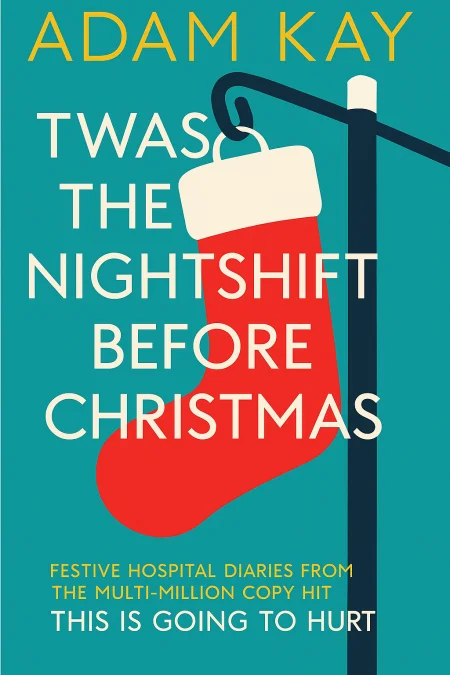
Twas The Nightshift Before Christmas
Festive hospital diaries
byAdam Kay
Book Edition Details
Summary
In the chaotic heart of the holiday season, where tinsel meets trauma, "Twas The Nightshift Before Christmas" unwraps the rollicking, heart-rending chronicles of a junior doctor battling the festive frenzy within the NHS. Adam Kay serves a dose of laughter intertwined with sobering reality, illuminating the bizarre tapestry of Christmas emergencies that punctuate his shifts. From the absurd to the awe-inspiring, these 25 stories not only spotlight the unyielding spirit of healthcare heroes but also invite readers to step into their clogs, facing the extraordinary sacrifices made while the world revels. A book as visually delightful as it is emotionally resonant, it offers a uniquely candid window into the tumultuous yuletide underbelly of British hospitals.
Introduction
In the sterile corridors of Britain's National Health Service, where life and death decisions unfold daily against a backdrop of Christmas decorations and festive chaos, one junior doctor discovered that healing others often came at the cost of losing pieces of himself. Adam Kay's journey through the medical profession during the 2000s offers an unflinching glimpse into a world where humor becomes both shield and sword, where compassion battles exhaustion, and where the weight of responsibility can crush even the most dedicated souls. Through seven Christmas shifts across different hospitals, Kay's story illuminates the profound humanity that exists within the clinical walls of modern medicine. His experiences reveal the complex interplay between professional duty and personal sacrifice, the dark humor that sustains healthcare workers through impossible circumstances, and ultimately, the courage required to recognize when the cost of saving others becomes too high. From this remarkable physician's candid reflections, we gain insight into the resilience of the human spirit, the importance of finding one's authentic voice, and the transformative power of storytelling as a means of processing trauma and connecting with others who share similar struggles.
Early Years: The Making of a Junior Doctor
The transformation from medical student to practicing physician represents one of the most jarring transitions in professional life, and Kay's early experiences illuminate the brutal reality of this metamorphosis. Thrust into the hierarchical world of hospital medicine, he quickly learned that the pristine theoretical knowledge of medical school bore little resemblance to the messy, unpredictable reality of patient care. His initial posting introduced him to the peculiar ecosystem of hospital life, where consultants reigned like distant monarchs while junior doctors scrambled through twelve-hour shifts managing everything from routine procedures to life-threatening emergencies. The learning curve proved merciless, with each day presenting scenarios that textbooks never covered. From patients who arrived with bizarre injuries sustained during holiday festivities to the delicate art of delivering devastating news to families, Kay discovered that medicine demanded not just clinical knowledge but emotional intelligence, quick thinking, and an almost superhuman capacity for multitasking. The weight of responsibility settled heavily on his young shoulders as he realized that every decision, every missed detail, could have profound consequences for the human beings under his care. Perhaps most challenging was navigating the unspoken expectations of medical culture, where showing vulnerability or uncertainty was often viewed as weakness rather than honest self-awareness. Kay's early experiences reveal how junior doctors learn to develop protective mechanisms, using humor as both a coping strategy and a way to build camaraderie with colleagues who shared similar struggles. These formative years shaped not only his medical skills but his understanding of human nature, teaching him lessons about resilience, empathy, and the complex relationship between professional competence and personal well-being.
Christmas Shifts: Life, Death, and Dark Humor on the Wards
Working Christmas shifts in Britain's hospitals provided Kay with a unique vantage point into the intersection of human celebration and medical crisis. These holiday experiences revealed the peculiar rhythm of healthcare during times when most of the world pauses for festive reflection, yet hospitals continue their relentless cycle of treating everything from champagne cork injuries to domestic violence escalations. Kay's Christmas memories paint vivid pictures of delivery rooms where babies arrived as carols played in the background, emergency departments filled with alcohol-related incidents, and the bittersweet reality of patients who had nowhere else to go during the season of family gatherings. The dark humor that permeated these shifts served as both survival mechanism and bonding agent among staff members who found themselves working while others celebrated. Kay's anecdotes reveal how medical professionals develop a particular form of gallows humor, finding laughter in the absurd situations that arise when human behavior intersects with medical emergencies. Whether dealing with patients who had made questionable choices involving household objects or delivering babies with seasonally appropriate names, these moments of levity provided essential relief from the emotional weight of more serious cases. Yet beneath the humor lay deeper currents of sacrifice and dedication. Kay's Christmas experiences highlight the profound commitment required of healthcare workers who miss family gatherings, holiday traditions, and personal milestones to ensure that others receive care during their most vulnerable moments. These shifts also exposed the emotional toll of being present for both miraculous births and heartbreaking deaths, often within the same evening, requiring rapid emotional transitions that few other professions demand.
Breaking Point: When Medicine Takes Its Toll
The accumulation of emotional trauma, physical exhaustion, and moral distress eventually revealed the unsustainable nature of Kay's medical career. His honest account of reaching his breaking point illuminates how the healthcare system's demands can overwhelm even the most dedicated practitioners, leading to a crisis of professional identity and personal well-being. The relentless pace of hospital life, combined with inadequate support systems and a culture that often discouraged expressions of vulnerability, created conditions where burnout became almost inevitable. Kay's breaking point manifested not as a single dramatic moment but as a gradual erosion of his ability to cope with the daily realities of medical practice. The cumulative effect of difficult procedures, patient deaths, system failures, and personal sacrifices slowly depleted his emotional reserves until the joy and purpose that initially drew him to medicine began to fade. His candid exploration of this decline challenges romanticized notions of medical calling, revealing instead the very human limitations that affect even the most compassionate caregivers. The decision to leave medicine required tremendous courage, as it meant abandoning not only years of training and professional identity but also confronting societal expectations about medical careers. Kay's experience reflects broader issues within healthcare systems that struggle to support their workers' mental health and well-being. His journey toward recognizing his limits and choosing a different path demonstrates that sometimes the most healing act a doctor can perform is knowing when to step away, both for their own sake and for the patients they serve.
Beyond the Hospital: From Doctor to Storyteller
Kay's transition from medicine to writing represents a profound transformation that allowed him to channel his medical experiences into a powerful new form of service. Through storytelling, he found a way to process the trauma and complexity of his hospital years while simultaneously educating the public about the realities of healthcare work. His writing career emerged not as an escape from his medical identity but as an evolution of it, using narrative as a tool for healing both himself and his readers. The skills that made Kay an effective doctor translated remarkably well to his role as a storyteller. His ability to observe human nature with clinical precision, his capacity for empathy developed through years of patient care, and his understanding of life's fragility all informed his writing with authenticity and emotional depth. By sharing his experiences with honesty and humor, he created a bridge between the medical world and public understanding, helping readers appreciate both the humanity and the expertise of healthcare workers. Through his storytelling, Kay discovered that vulnerability could be a source of strength rather than weakness. By openly discussing his struggles, failures, and ultimate decision to leave medicine, he provided validation for others facing similar challenges while also advocating for better support systems within healthcare. His journey demonstrates how personal crisis can become the catalyst for broader social awareness and change, showing that sometimes the greatest impact comes not from continuing in a role that no longer serves us, but from having the courage to share our truth and inspire others to examine their own paths with similar honesty.
Summary
Adam Kay's journey from dedicated junior doctor to acclaimed storyteller reveals that true healing sometimes requires the courage to acknowledge our own limitations and choose authenticity over expectation. His experience illuminates the profound humanity within medical practice while also exposing the systemic issues that can overwhelm even the most committed healthcare workers. From Kay's transformation, we learn that professional identity need not define our entire worth, and that sometimes the most courageous act is stepping away from a path that no longer serves our well-being or allows us to contribute our best to the world. His story encourages us to examine our own relationships with work, sacrifice, and purpose, reminding us that seeking help and making difficult life changes are signs of wisdom rather than failure. For anyone struggling with professional burnout, career transitions, or the challenge of balancing service to others with self-care, Kay's journey offers both validation and hope, demonstrating that our most painful experiences can become the foundation for meaningful contribution to society in ways we never anticipated.
Related Books
Download PDF & EPUB
To save this Black List summary for later, download the free PDF and EPUB. You can print it out, or read offline at your convenience.
By Adam Kay
