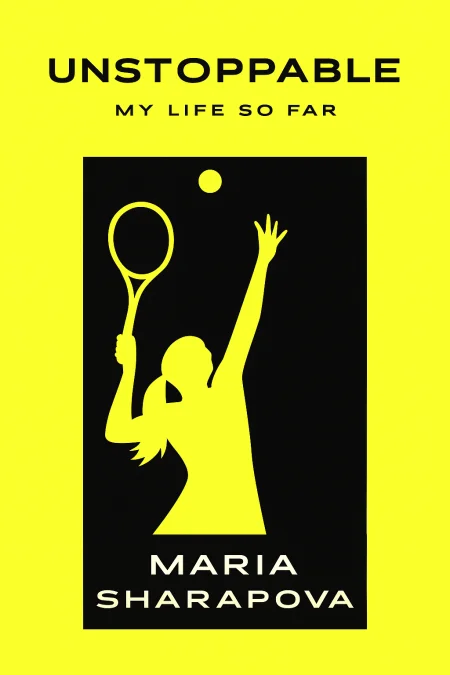
Unstoppable
My Life So Far
Book Edition Details
Summary
In the electrifying arena of tennis, Maria Sharapova carved out a legacy defined by relentless ambition and unyielding resilience. Her memoir, "Unstoppable," offers an insider’s glimpse into the mind of a sports icon who emerged from obscurity to capture the world’s attention with a Wimbledon victory at just seventeen. Raised on gritty Russian courts and propelled by her father's daring dream, Sharapova recounts her extraordinary journey to the pinnacle of the sport. Facing formidable challenges—including a controversial suspension—Sharapova’s narrative is a testament to the power of grit and perseverance. With candor and intensity, she delves into the pivotal relationships and personal battles that shaped her, crafting a story that resonates with anyone who understands the thrill of triumph against all odds.
Introduction
In 2004, a seventeen-year-old Russian girl with fierce green eyes and an uncompromising game face stepped onto Centre Court at Wimbledon and shocked the tennis world by defeating Serena Williams in straight sets. That moment marked not just the arrival of Maria Sharapova as a tennis champion, but the beginning of one of sport's most compelling stories of triumph, adversity, and resilience. Born in a small Siberian town in the shadow of the Chernobyl disaster, Sharapova's journey from practicing on cracked clay courts in Sochi to becoming the world's highest-paid female athlete embodies the power of unwavering determination and the complexity of modern athletic stardom. Her story transcends tennis, offering profound insights into the psychology of elite performance and the price of excellence. Through her meteoric rise, devastating injury, and controversial ban that threatened to end her career, Sharapova's experiences reveal the mental fortitude required to compete at the highest level and the courage needed to rebuild when everything falls apart. Her journey illuminates the delicate balance between vulnerability and strength, showing how champions are forged not just in moments of victory, but in the crucible of setbacks and comebacks.
From Sochi to Stardom: Early Years and Breakthrough
Maria Sharapova's path to tennis greatness began in the most unlikely of circumstances. Born in Nyagan, Siberia, in 1987, her early life was shaped by the aftermath of the Chernobyl nuclear disaster, which forced her pregnant mother to flee to safety in the remote Arctic town. When Maria was two, her father Yuri, a former smokestack maintenance worker with no tennis background, moved the family to Sochi, a Black Sea resort town where tennis was part of the local culture. The defining moment came when four-year-old Maria picked up a racket at the local courts where her father played recreationally. Her natural ability to hit the ball with remarkable focus and consistency immediately caught attention. Local coach Yuri Yudkin, a vodka-soaked maestro of the clay courts, recognized something extraordinary in the young girl. He told her father that Maria had the potential to be among the world's best, but warned that achieving such greatness would require sacrificing everything they knew. Yuri Sharapov made a decision that would alter their lives forever. He quit his job, abandoned his pension, and dedicated himself entirely to his daughter's tennis development. The family's entire existence became centered around Maria's potential, with Yuri transforming from a working-class laborer into a strategic tennis parent who would research coaches, plan tournaments, and manage every aspect of his daughter's career. This complete commitment to excellence, though demanding enormous sacrifice, established the foundation for Maria's unwavering work ethic and mental toughness. The early signs of greatness were unmistakable. Maria possessed an unusual ability to concentrate for hours, hitting the same shot repeatedly without losing focus. More importantly, she displayed the rare combination of technical skill and psychological resilience that separates champions from merely talented players. Even at age six, she approached tennis with the intensity of a professional, never satisfied with merely good enough.
Champion at Seventeen: Wimbledon Glory and Rising Fame
The 2004 Wimbledon tournament transformed Maria Sharapova from a promising teenager into a global superstar overnight. Entering as a wild card ranked forty-seventh in the world, she carried herself with the quiet confidence of someone destined for greatness. Her preparation had been meticulous, working with coach Robert Lansdorp to develop devastating flat groundstrokes that could overpower opponents and practicing relentlessly to perfect her powerful serve. The championship run itself was a masterclass in mental fortitude and tactical precision. Sharapova dispatched experienced players with ruthless efficiency, her hard-hitting baseline game and penetrating serves proving too much for opponents to handle. But it was her semifinal victory over Lindsay Davenport that truly announced her arrival. After losing the first set and falling behind in the second, a rain delay provided the reset she needed. Her father's prophetic words during the break proved transformational: he told her he had dreamed of her victory and that it had already happened. The final against Serena Williams showcased Sharapova's greatest strength: her refusal to be intimidated. Despite facing the defending champion and world number one, the seventeen-year-old played with fearless aggression, using her flat groundstrokes to dictate play and her serve to control crucial points. When she fell to her knees after the final point, having defeated Williams 6-1, 6-4, she became the third-youngest Wimbledon champion in the Open Era. The victory's impact extended far beyond tennis. Sharapova's combination of athletic excellence and marketable appeal attracted major sponsors, with companies like Nike and Motorola building campaigns around her success. However, the sudden fame and fortune also brought new pressures and expectations that would test her psychological resilience. The transition from promising prospect to global celebrity required adapting not just her game, but her entire approach to life in the public eye.
Shoulder Surgery and the Long Road Back
In 2008, at the height of her powers and fresh off winning her third Grand Slam at the Australian Open, Maria Sharapova faced the greatest challenge of her career. The serve that had been her weapon of choice, with its dramatic windup and explosive power, had been putting tremendous stress on her right shoulder. What began as occasional pain during matches evolved into constant agony that made playing nearly impossible. The diagnosis was devastating: a torn rotator cuff tendon that required immediate surgery. For a tennis player, shoulder surgery represents a potentially career-ending crisis, as the complex mechanics of serving and hitting high volleys demand perfect coordination and strength. Dr. David Altchek, who performed the operation, was brutally honest about the prognosis: several players had undergone similar procedures, but none had returned to their previous level of excellence. The rehabilitation process tested Sharapova's mental resilience as much as her physical capabilities. Months of painful exercises with half-pound weights, endless stretching routines, and the gradual rebuilding of strength and mobility required the same obsessive dedication that had made her a champion. During the darkest moments, when progress seemed minimal and a return to competitive tennis felt impossible, she turned to journaling as a form of psychological therapy, documenting her struggles while reinforcing positive thoughts through repetitive affirmations. The comeback was neither quick nor complete. When Sharapova returned to competition in 2009, she possessed a fundamentally different game. Her serve, once her most fearsome weapon, had lost much of its power and precision. She was forced to reconstruct her playing style, relying more heavily on return of serve and baseline rallies. The transformation from a power player to a more strategic competitor ultimately made her more complete, but the journey required accepting that greatness could be achieved through adaptation rather than simply restoring what had been lost.
Meldonium Crisis and Fighting for Redemption
The final chapter of Maria Sharapova's active career began with a shocking announcement at a Los Angeles press conference in March 2016. Standing before a room full of reporters, she revealed that she had failed a drug test at the Australian Open for meldonium, a supplement she had been taking legally for ten years under the brand name Mildronate. The substance, prescribed by her family doctor for heart irregularities and other health issues, had been added to the World Anti-Doping Agency's banned list on January 1, 2016, but Sharapova claimed she was unaware of the change. The revelation triggered an immediate firestorm of criticism and condemnation. Major sponsors, including Nike, suspended their relationships with her, and the tennis world largely assumed she was guilty of intentional doping. The irony was particularly bitter for Sharapova, who had always been meticulous about following anti-doping rules and had never sought performance enhancement through illegal means. The meldonium she took was as common in Russia as aspirin is in America, used by millions including her grandmother. The legal battle that followed tested every aspect of Sharapova's character. The initial hearing before an ITF-selected panel resulted in a two-year ban and a scathing report that, while acknowledging no intent to cheat, portrayed her as reckless and deserving of punishment. The decision seemed to validate the worst assumptions about her case, but Sharapova refused to accept defeat. She appealed to the Court of Arbitration for Sport, maintaining her innocence while enduring months of public vilification. The final vindication came in October 2016, when CAS reduced her ban to fifteen months and issued a report that largely cleared her name. The court acknowledged that she had taken meldonium for legitimate medical reasons, that anti-doping authorities had failed to properly notify athletes of the substance's new banned status, and that she was "not an intentional doper." Though the damage to her reputation had been severe, Sharapova's willingness to fight for the truth demonstrated the same unwavering determination that had defined her entire career. Her return to competition in 2017, while brief, represented a final triumph of character over circumstance.
Summary
Maria Sharapova's extraordinary journey from a small Russian town to global tennis stardom embodies the transformative power of absolute commitment to excellence, even when faced with seemingly insurmountable obstacles. Her story reveals that true champions are not defined solely by their victories, but by their capacity to endure, adapt, and persevere through the inevitable setbacks that test their resolve. From her early years of sacrifice alongside her devoted father to her triumphant return from shoulder surgery and her ultimate vindication in the meldonium case, Sharapova consistently demonstrated that greatness requires not just talent, but an unshakeable belief in one's ability to overcome any challenge. Her legacy offers profound lessons for anyone pursuing ambitious goals: success demands total dedication from both the individual and their support system, setbacks are opportunities for growth and reinvention rather than reasons for surrender, and maintaining integrity while fighting for the truth is more important than any temporary victory or defeat. Sharapova's willingness to share her complete story, including its most difficult chapters, provides invaluable insights for athletes, entrepreneurs, and anyone seeking to achieve excellence while navigating the complexities of public life and personal adversity.
Related Books
Download PDF & EPUB
To save this Black List summary for later, download the free PDF and EPUB. You can print it out, or read offline at your convenience.
By Maria Sharapova
