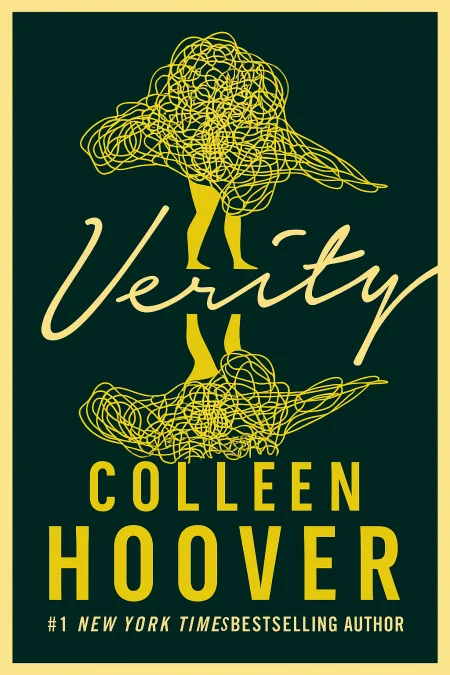
Verity
A #1 Bestselling Psychological Thriller With Bone-Chilling Twists
Book Edition Details
Summary
When opportunity knocks, it often brings with it a dark secret. Lowen Ashleigh, a writer teetering on the edge of obscurity, is summoned to the opulent home of Jeremy Crawford, the devoted husband of incapacitated bestselling author Verity Crawford. Tasked with completing Verity's series, Lowen stumbles upon a hidden manuscript that reveals chilling truths about Verity's past, including a harrowing account of her daughter's tragic death. Torn between her growing attraction to Jeremy and the explosive nature of the manuscript, Lowen grapples with a moral dilemma: expose Verity's haunting confessions or protect Jeremy from heartbreak? As tension mounts, Lowen must navigate a web of deceit where love, loyalty, and truth collide in a thrilling crescendo. "Verity" is a gripping psychological thriller that keeps readers guessing until the final, breathtaking revelation.
Introduction
Picture yourself in a quiet coffee shop, observing a woman hunched over her laptop, typing frantically. Her fingers dance across the keys with an urgency that suggests she's pouring her soul onto the screen. But what if I told you that every word she writes is a calculated lie, designed to manipulate everyone who reads it? What if the story she's crafting isn't fiction, but a twisted autobiography disguised as creative exercise? This scenario captures the unsettling reality explored in this psychological thriller—a story that forces us to confront uncomfortable truths about the masks we wear and the stories we tell ourselves. The human psyche is a labyrinth of contradictions, where love and obsession intertwine, where protection and control blur into indistinguishable impulses. In our digital age, where we curate our lives through carefully crafted narratives on social media, the line between authentic self-expression and performative deception has never been more fragile. This exploration of psychological manipulation, literary deception, and the dangerous power of written words reveals how easily we can be fooled—not just by others, but by ourselves. Through examining the twisted relationship between truth and fiction, we discover that sometimes the most convincing lies are the ones wrapped in the guise of brutal honesty.
The Manuscript Discovery: Peeling Back Layers of Truth
When Lowen Ashleigh first discovered the manuscript hidden in Verity Crawford's office, she believed she had stumbled upon the raw, unfiltered truth of a disturbed mind. The pages detailed horrific thoughts about motherhood, describing how Verity allegedly despised her twin daughters from conception and later attempted to murder them. The manuscript painted Verity as a calculating psychopath who manipulated her devoted husband Jeremy while harboring murderous intentions toward their children. Each page seemed to confirm Lowen's worst suspicions about the woman lying motionless upstairs, supposedly brain-damaged from a car accident. The autobiography read like a confession, filled with disturbing details about attempted infanticide, maternal jealousy, and cold manipulation of a loving husband. Verity's supposed inner monologue revealed a woman consumed by narcissistic rage, someone who viewed her children as obstacles to her husband's affection rather than precious beings to nurture and protect. The manuscript described scenes of deliberate neglect, emotional abuse, and ultimately, the calculated murder of young Harper during what appeared to be an innocent canoe trip. Yet the very existence of this manuscript raised profound questions about the nature of truth itself. Why would someone document their own criminal acts in such vivid detail? Was this genuine confession or elaborate fiction? The power of written words to shape perception became evident as Lowen found herself believing every disturbing revelation, allowing the manuscript to poison her view of Verity and justify increasingly dangerous actions. This discovery illustrates how we often accept written accounts as truth simply because someone took the time to document them, overlooking the possibility that the most convincing lies are those told with unflinching detail and apparent honesty.
A House of Horrors: Domestic Violence and Psychological Terror
The Crawford household became a stage for escalating psychological warfare, where reality and perception twisted into an indistinguishable maze of fear and paranoia. Lowen found herself questioning every shadow, every sound, every seemingly innocent detail as she grew convinced that Verity was faking her injuries and orchestrating a campaign of subtle terror. Strange incidents accumulated like storm clouds—doors mysteriously locking, objects appearing where they shouldn't be, and the unsettling feeling of being watched by someone presumed incapable of conscious thought. Jeremy, meanwhile, lived as a prisoner in his own home, caring for a wife he suspected of murdering their daughter while trying to protect his surviving son from further trauma. The weight of unspoken suspicions and unprocessed grief created an atmosphere thick with tension, where love and duty warred against growing disgust and fear. His devotion to his marriage vows trapped him in a cycle of caregiving that felt more like penance than compassion, as he bathed and fed someone he could no longer trust or even recognize as the woman he once loved. The house itself seemed to absorb this toxic energy, transforming from a family home into something resembling a psychological torture chamber. Every room held memories that had been corrupted by suspicion and doubt, every family photograph now viewed through the lens of potential deception. The very act of living in this space became an exercise in sustained trauma, where the boundaries between victim and perpetrator blurred beyond recognition. This domestic nightmare reveals how quickly a home can become a prison when trust erodes and fear takes root. The psychological violence that permeated every interaction proved as destructive as any physical assault, demonstrating that sometimes the most devastating wounds are invisible and that the people closest to us can become strangers wearing familiar faces.
The Final Revelation: When Truth Becomes Subjective
The climactic revelation arrived in the form of a hidden letter, buried beneath floorboards like a secret too dangerous to expose to light. Verity's final message claimed that everything Lowen had read was fiction—an elaborate writing exercise designed to help her craft more authentic villainous characters for her novels. The manuscript that had seemed like a confession was actually a creative technique called "antagonistic journaling," where authors write about real events while adopting the inner voice of an evil character. According to this letter, Jeremy had already discovered and read the manuscript after Harper's accidental death, mistaking his wife's creative exercise for genuine confession. In his grief and rage, he had attempted to murder Verity, staging a car accident that left her genuinely brain-damaged and trapped in a nightmare of her own making. She had then been forced to fake the extent of her injuries to survive, living in constant fear that her husband would finish what he started if he discovered she retained any consciousness. Yet this revelation only deepened the mystery rather than resolving it. Was the letter itself another manipulation, a final attempt at psychological control from beyond the grave? Had Verity orchestrated her own death by leaving evidence that could be interpreted multiple ways, ensuring that the truth would remain forever unknowable? The very existence of two contradictory accounts—the manuscript and the letter—created a labyrinth of doubt where certainty became impossible. This final twist demonstrates the terrifying power of narrative to reshape reality itself. When presented with competing versions of truth, we must confront the possibility that objective reality may be less important than the stories we choose to believe. Sometimes the most honest answer is acknowledging that we may never know what really happened, and that our desperate need for closure can blind us to the complexity of human nature and the ambiguous nature of truth itself.
Summary
The journey through this psychological labyrinth reveals that truth is often more fragile and subjective than we dare to admit. The power of written words to shape perception, manipulate emotions, and justify extreme actions serves as a chilling reminder of how easily we can be deceived—especially when we want to believe a particular narrative. Whether examining a manuscript that might be confession or fiction, or a letter that could be revelation or final manipulation, we discover that the human mind's capacity for self-deception rivals even the most elaborate external deceptions. The story ultimately teaches us that love without trust becomes a form of prison, that secrets fester into poison when left unspoken, and that our desperate need to assign blame and find meaning in tragedy can lead us to embrace lies that feel more comfortable than ambiguous truth. In our relationships, we must learn to communicate openly before suspicion takes root, to separate our fears from facts, and to remember that the people we love are capable of both incredible goodness and shocking betrayal—sometimes simultaneously. Perhaps most importantly, we must accept that some questions have no satisfying answers, and that learning to live with uncertainty is often more honest than clinging to false certainties that make us feel safe.
Related Books
Download PDF & EPUB
To save this Black List summary for later, download the free PDF and EPUB. You can print it out, or read offline at your convenience.
By Colleen Hoover
