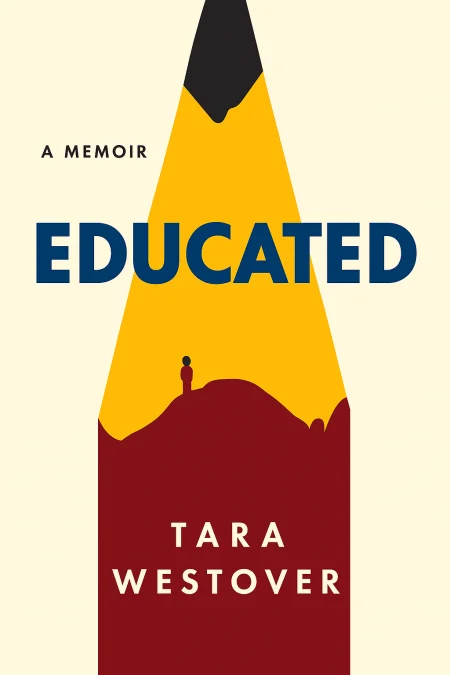
Educated
A Memoir
Book Edition Details
Summary
In the remote mountains of Idaho, Tara Westover's life was a tapestry of wilderness and isolation, woven with threads of survivalism and family loyalty. Her world was one without formal schooling, where gashes and burns were healed with her mother's herbs, and the impending apocalypse was as real as the peaches they canned. Yet, within this rugged upbringing, a fierce spark of curiosity ignited. With sheer determination, Tara embarked on a self-taught journey that carried her from a junkyard to the storied halls of Cambridge University. "Educated" is her haunting memoir of transformation and loss, a vivid testament to the power of education to reshape destiny, even as it fractures the bonds of family. Tara's story is a haunting reminder of the cost of knowledge and the strength required to forge one's path amidst profound sacrifice.
Introduction
In the rugged mountains of rural Idaho, a young girl grew up in a world where hospitals were forbidden, schools were viewed as government propaganda, and survival meant preparing for the end times. Born into a survivalist Mormon family that lived entirely off the grid, she spent her childhood working in her father's junkyard and learning herbal medicine from her mother, never setting foot in a classroom until she was seventeen years old. Yet from this isolated beginning emerged one of the most powerful stories of self-transformation in modern literature, as she eventually earned a PhD from Cambridge University and became a renowned scholar. Her extraordinary journey reveals the profound tension between family loyalty and personal growth, between the security of belonging and the courage to question everything you've been taught. Through her experience, readers witness the transformative power of education not merely as academic achievement, but as the development of critical thinking and intellectual independence. Her story illuminates how the pursuit of knowledge can become both liberation and exile, offering freedom at the cost of the relationships that once defined everything. Most powerfully, it demonstrates that while we cannot choose our origins, we possess the remarkable capacity to choose who we become, even when that choice requires sacrificing the very foundations of our identity.
Mountain Life: Growing Up in Isolation
Life on Buck's Peak operated according to rules that existed nowhere else in the modern world. The family lived without birth certificates, medical records, or school enrollment, existing in a parallel universe where the outside world was viewed with deep suspicion and hostility. Her father, a charismatic but increasingly paranoid man, preached that the government was controlled by shadowy forces and that the End of Days was imminent. Hospitals were tools of a socialist conspiracy, public schools were government indoctrination centers, and only by remaining completely self-sufficient could the family maintain their spiritual purity and physical survival. Daily life revolved around preparing for the apocalypse and working in the family's various enterprises. She spent countless hours in her father's junkyard, learning to operate heavy machinery and salvage scrap metal, often in conditions that would horrify safety inspectors. When not working with twisted metal and dangerous equipment, she assisted her mother, a self-taught herbalist and midwife who treated everything from broken bones to serious burns with homemade tinctures and essential oils. The mountain provided both sanctuary and prison, a place where the family's extreme beliefs could flourish unchallenged by outside perspectives. Education, as the outside world understood it, was strictly forbidden. Instead of textbooks, she had the Bible and Mormon scriptures. Instead of teachers, she had her parents' interpretations of history and science, filtered through their apocalyptic worldview. Yet even in this isolated environment, seeds of curiosity were planted. She learned to read voraciously, devouring any books she could find, and began to sense that there might be a larger world beyond the mountain's shadow, one that held knowledge and possibilities her family had never acknowledged. The family's isolation was both physical and ideological, creating a closed system where questioning was discouraged and conformity was survival. This environment shaped her early understanding of reality, but it also inadvertently fostered the very qualities that would eventually lead her away from it: resilience, intellectual hunger, and an almost supernatural ability to adapt and learn under the most challenging circumstances.
First Steps: The Path to Formal Education
The first crack in her isolated world came through her brother Tyler, who shocked the family by deciding to attend college despite their father's fierce opposition. His departure created a seismic shift in the household dynamics and planted the radical idea that formal education might be possible, even for someone who had never attended school. Despite warnings about the corrupting influence of universities and threats of spiritual damnation, she began to dream of following Tyler's path, though she had no idea how someone without any academic credentials could possibly succeed in the outside world. Her journey toward education began with an almost impossible challenge: teaching herself enough mathematics, science, and writing to pass the ACT college entrance exam. Working entirely alone, using outdated textbooks and sheer determination, she struggled to master concepts that most students learn over years of formal schooling. The process was often overwhelming and frequently discouraging, as she discovered the vast gaps in her knowledge and the sophisticated thinking skills she had never developed. Simple concepts like algebra felt like foreign languages, and she had to learn not just facts but entirely new ways of processing information. The first time she took the ACT, the experience was both humiliating and enlightening. She had never seen a standardized test or used a bubble sheet, and her scores reflected her academic inexperience. But rather than giving up, she threw herself into studying with an intensity born of desperation and hope. She knew that education represented her only chance of escape from a life that felt increasingly suffocating, even as it meant potentially losing her family forever. When she finally achieved a score high enough for admission to Brigham Young University, it felt like a miracle. Yet arriving on campus brought new challenges that went far beyond academics. She had to learn not just how to write essays and solve equations, but how to navigate social interactions, understand cultural references, and function in a world whose basic assumptions differed radically from everything she had been taught. Every day brought fresh evidence of how different she was from her classmates, and how much she still had to learn about the world beyond Buck's Peak.
Confronting Truth: Family Conflict and Personal Growth
As her education progressed, the growing distance between her expanding worldview and her family's rigid beliefs created increasingly painful conflicts. Each semester brought new knowledge that contradicted her father's teachings, from learning about the Holocaust to understanding the civil rights movement, revelations that forced her to confront the possibility that much of what she had been taught was not just wrong, but harmfully so. These discoveries were not merely academic; they struck at the very foundation of her identity and her relationship with her family, creating a crisis that threatened to destroy everything she had once held sacred. The tension reached a breaking point when she began to acknowledge and speak about the violence and abuse that had long been present in her family but never named or addressed. Her attempts to seek support from her parents met with denial, manipulation, and ultimately rejection. She found herself caught between two impossible choices: accepting her family's version of reality, which required her to deny her own experiences and perceptions, or maintaining her sanity and integrity at the cost of losing everyone she had ever loved. The family that had once been her entire world now seemed determined to keep her trapped in old patterns of thinking and being. The psychological toll of this conflict was devastating. She experienced panic attacks, depression, and a profound sense of displacement that manifested in both academic struggles and personal relationships. The very education that was supposed to liberate her seemed to be destroying her connection to everything familiar and meaningful. She began to question not just her memories and perceptions, but her fundamental sense of self and belonging, wondering if the price of knowledge was simply too high to pay. Yet this period of crisis also marked a crucial turning point in her development. Through therapy, supportive relationships, and her own fierce determination, she began to understand that healing required accepting the complexity of her situation rather than seeking simple resolution. She learned that loving her family did not require accepting their version of truth, and that education's greatest gift was not just knowledge, but the capacity for independent thought and the courage to trust her own mind even when everyone else insisted she was wrong.
Finding Voice: Education as Transformation
The transformation from an isolated mountain girl to a Cambridge scholar was not just about acquiring knowledge, but about developing the confidence to trust her own mind and voice. At Cambridge, surrounded by some of the world's brightest students and most distinguished professors, she initially felt like an imposter who would be exposed at any moment. Yet gradually, she discovered that her unique background and perspective, rather than being liabilities, were actually sources of strength and insight that enriched her academic work and contributed to scholarly discussions in ways that more conventional students could not. Her doctoral research on family obligation and individual autonomy became deeply personal, as she used the tools of historical scholarship to examine the very questions that had torn her own life apart. Through studying how nineteenth-century thinkers grappled with the tension between loyalty to family and loyalty to broader moral principles, she found a framework for understanding her own struggles. The academic work became a form of therapy, allowing her to process her experiences through the lens of intellectual inquiry and to transform personal pain into scholarly insight. The process of writing and defending her dissertation represented the culmination of her educational journey, but also a profound act of self-creation. She had literally written herself into existence as a scholar and intellectual, proving that identity is not fixed by birth or upbringing but can be consciously constructed through choice and effort. The girl who had once known only the narrow world of Buck's Peak had become a woman capable of engaging with the greatest minds in human history and contributing her own voice to ongoing intellectual conversations. Yet education's ultimate gift was not professional success or academic recognition, but the development of what she came to understand as mental sovereignty. She learned that true education is not about accumulating facts or credentials, but about developing the capacity to think critically, to question assumptions, and to construct meaning from experience. This intellectual independence came at a tremendous cost, requiring her to sacrifice the family relationships that had once defined her entire world, but it also gave her something invaluable: the freedom to become herself on her own terms.
Summary
Her journey from an isolated mountain childhood to academic achievement at the world's most prestigious universities demonstrates that education, in its truest sense, is not about formal schooling but about the courage to question, learn, and grow beyond the limitations of one's origins. Her story reveals that the most profound education often comes through confronting painful truths about ourselves and our families, and that intellectual freedom sometimes requires sacrificing the very relationships we hold most dear. The transformation she underwent illustrates both the redemptive power of learning and its potential costs, showing how education can simultaneously liberate and isolate, heal and wound. From her experience, we can learn that true education requires not just the acquisition of knowledge, but the development of mental courage and the willingness to construct our own understanding of reality, even when it conflicts with everything we have been taught. Her journey suggests that while we cannot choose our beginnings, we can choose who we become, and that this process of self-creation, though often painful, represents one of the most fundamentally human acts possible. For anyone struggling to break free from limiting circumstances or toxic relationships, her story offers both inspiration and a sobering reminder that growth often requires difficult choices and that the price of authenticity can be higher than we ever imagined, yet ultimately worth paying for the sake of living an examined and self-directed life.
Related Books
Download PDF & EPUB
To save this Black List summary for later, download the free PDF and EPUB. You can print it out, or read offline at your convenience.
By Tara Westover
