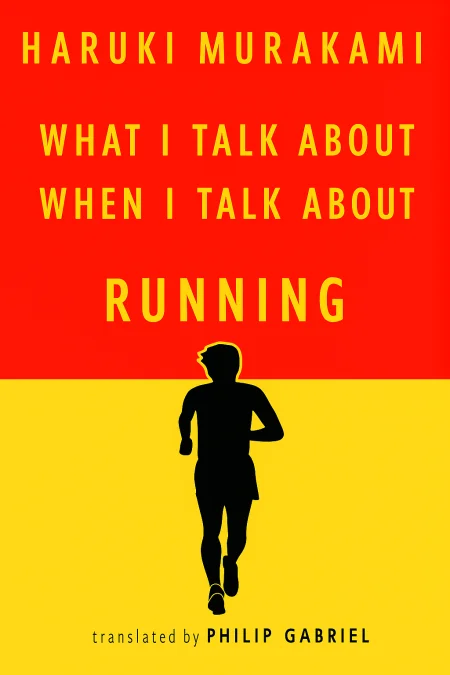
What I Talk About When I Talk About Running
A memoir about running and writing
byHaruki Murakami, Philip Gabriel
Book Edition Details
Summary
Running on the thread of life's solitary pursuits, Haruki Murakami weaves a memoir that strides between the pages of creativity and the pavements of personal endurance. In "What I Talk About When I Talk About Running," Murakami unveils how the rhythm of running courses through his veins and into his writing. From the verdant paths of Tokyo to the bustling banks of the Charles River, each footfall echoes a narrative of triumphs, trials, and the symphony of vintage LPs that accompany him. This isn't just a tale of marathons and manuscripts; it's an introspective journey where humor meets philosophy, capturing the ebb and flow of human spirit. For both the literary aficionado and the athlete at heart, Murakami offers a lens into a world where the physical and the intellectual dance in profound harmony.
Introduction
For over two decades, Haruki Murakami maintained a discipline that seemed as essential to his creative process as the act of writing itself: running. Each morning, before the world stirred to life, he would lace up his shoes and set out on roads that would carry him through cities, along rivers, and across continents. This wasn't merely exercise—it was a meditation in motion, a daily ritual that shaped both his physical endurance and his literary voice. Murakami discovered that the rhythms of long-distance running mirrored the demands of writing novels: both required patience, persistence, and the ability to endure when the body and mind protested. Through his journey from jazz club owner to internationally acclaimed novelist, from his first tentative steps as a runner to completing marathons and triathlons around the world, we witness how physical discipline became the foundation for creative achievement. His story reveals the profound connections between bodily strength and artistic vision, between the solitude of the long-distance runner and the solitary craft of the novelist. In following Murakami's footsteps along countless miles of pavement, readers discover not just the evolution of a writer's daily practice, but insights into how we might structure our own lives around the things that matter most, maintaining the stamina necessary for any long-term creative pursuit.
From Jazz Club Owner to Professional Writer
At thirty-three, Murakami experienced what he describes as a moment of perfect clarity while watching a baseball game at Jingu Stadium. As Dave Hilton's bat connected with the ball in a satisfying crack that echoed through the spring air, a thought struck him with startling simplicity: "You know what? I could try writing a novel." This wasn't the culmination of lifelong literary ambitions, but rather an unexpected epiphany that arrived like something falling from the sky—something he simply accepted without question. The path to that moment had been unconventional. For seven years, Murakami and his wife had operated a jazz club near Tokyo, working from dawn until the early morning hours, serving coffee by day and cocktails by night, hosting live performances on weekends. The work was physically demanding and all-consuming. He learned to mix drinks, manage inventory, deal with difficult customers, and keep the books—skills that taught him the practical realities of making a living, but offered little preparation for a literary career. Despite predictions from friends that a hobby business wouldn't survive, their club thrived. Yet as Murakami approached thirty, something began to shift. The daily grind of restaurant work had given him invaluable life experience, but a new hunger emerged. He began writing his first novel at the kitchen table after closing the club, often working until sunrise, catching fragments of time between exhaustion and sleep. The process felt natural, almost inevitable, as if he were uncovering something that had always been there. When his novel won a literary prize, Murakami faced a choice that would define his future. Against the advice of nearly everyone who knew him, he sold the thriving business to devote himself entirely to writing. "I'd just like to be free for two years to write," he told his wife. "If it doesn't work out we can always open up another little bar somewhere." That leap of faith, requiring him to abandon financial security for an uncertain artistic future, marked the true beginning of his transformation from businessman to novelist—a transformation that would soon demand an entirely new approach to sustaining both body and creative spirit.
Running as Creative Discipline and Life Philosophy
The decision to become a professional writer brought unexpected physical challenges. After years of demanding restaurant work that kept his body active, Murakami found himself spending long hours seated at a desk, his energy levels declining and his weight increasing. The sedentary nature of writing, combined with heavy smoking, began taking its toll. He realized that if he wanted a long career as a novelist, he needed to find a way to maintain his physical health. Running emerged not by design, but by practical necessity—it required no special equipment, no partners, no facilities beyond a decent pair of shoes and a road. What began as a simple solution to a physical problem gradually evolved into something far more profound. Murakami discovered that the mental discipline required for long-distance running closely paralleled the demands of writing novels. Both pursuits required the ability to maintain focus over extended periods, to push through moments of doubt and fatigue, to find a sustainable rhythm that could be maintained day after day, year after year. The patience needed to build up to longer distances mirrored the patience required to develop as a writer—both demanded consistent daily effort rather than sporadic bursts of intense activity. Running also provided Murakami with a form of meditation in motion, a time when his conscious mind could rest while his body maintained its steady rhythm. During these runs, his thoughts would settle into a peaceful state he described as "running in a void." Random memories would surface, occasional insights would emerge, but mostly he found himself in a state of calm awareness, his mind as rhythmically engaged as his breathing. This mental space proved essential for processing the complex emotions and themes that would later emerge in his fiction. Perhaps most importantly, running gave Murakami a framework for understanding the creative life. He learned that you could only improve by competing against yourself, not others—a lesson that freed him from the competitive pressures of the literary world. The discipline of daily training taught him about the relationship between input and output, about the need to build a strong foundation before attempting greater challenges. Through running, he developed a philosophy of gradual, persistent effort that would sustain him through decades of creative work, teaching him that the most meaningful achievements come not from bursts of inspiration, but from the accumulated power of consistent daily practice.
The Marathon Journey and Physical Limits
Murakami's first encounter with the full marathon distance came not on a race course, but on the ancient roads of Greece. In the blazing summer heat of 1983, he ran alone from Athens to Marathon, retracing the reverse route of the legendary messenger. The experience was brutal—scorching temperatures that locals warned him were insane to run in, dead animals littering the roadside, and a relentless sun that turned his body into a salt field. Yet completing that solo twenty-five mile journey gave him something invaluable: the knowledge that he could endure far more than he had imagined possible. This baptism by fire in Greece launched more than two decades of marathon running, with Murakami completing at least one full marathon every year. Each race taught him something new about the delicate relationship between ambition and limitation. He learned that the real marathon begins at mile twenty, when the body's stored energy is depleted and willpower must carry you the remaining distance. He discovered that no amount of experience eliminates the fundamental challenge—every marathon demands that you dig deep and find resources you're not sure you possess. As the years accumulated, Murakami began to confront the inevitable reality of aging. Times that had once come naturally began requiring greater effort to achieve. The body that had reliably responded to training started showing its own stubborn resistance to improvement. In his forties, he reached what he recognized as his physical peak, able to consistently run marathons in around three and a half hours. But eventually, despite maintaining the same training regimen, his times began to slow—not dramatically, but enough to serve as a reminder that time was undefeated in its relentless forward march. The lesson wasn't one of defeat, but of adaptation. Murakami learned to find satisfaction in different measures of success: the ability to finish strong, the joy of the running itself, the satisfaction of maintaining his health and discipline. He came to understand that competing against time was less important than competing against his own tendency toward inertia. The marathon taught him that the most meaningful victories aren't measured by the clock, but by the commitment to keep showing up, to keep putting one foot in front of the other, regardless of what the numbers might say. In accepting his physical limitations, he discovered a deeper form of strength—the resilience to continue pursuing what you love even when you can no longer do it as well as you once could.
Triathlon Challenges and Enduring Dedication
The ultramarathon at Lake Saroma marked both a pinnacle and a turning point in Murakami's running journey. Completing sixty-two miles in a single day pushed him beyond every previous limit, requiring him to essentially become a machine focused solely on forward motion. Around mile twenty-two, when exhaustion threatened to overwhelm him, he discovered a kind of transcendent state—his consciousness seemed to separate from his physical suffering, allowing him to continue almost automatically. Yet this achievement came with an unexpected cost: a peculiar melancholy he dubbed "runner's blues" that dimmed his enthusiasm for running for several years afterward. During this period, Murakami turned his attention to triathlons, drawn by the challenge of mastering three different disciplines. Swimming required him to overcome not just technical deficiencies in his self-taught stroke, but also a tendency to hyperventilate at race starts—a problem that took him years to diagnose and address. Cycling demanded a completely different kind of courage, navigating traffic and high-speed descents that could result in serious injury with a single mistake. The transition between sports within a single race created new complexities, requiring his body and mind to rapidly shift between entirely different movement patterns and energy systems. The triathlon became a metaphor for the multifaceted demands of the creative life. Just as a novelist must master not only the craft of writing but also the business of publishing, the discipline of daily work, and the emotional resilience to handle criticism and rejection, the triathlete must develop competence across multiple domains. Murakami found that his weakest discipline—cycling—determined his overall performance, teaching him that excellence requires addressing your limitations rather than simply leveraging your strengths. Through decades of races across different distances and disciplines, from local triathlons in Japan to the New York City Marathon, Murakami discovered that the deepest satisfaction came not from achieving specific times or placements, but from the commitment itself. The daily practice of training, the ritual of preparation, the community of fellow athletes who understood the peculiar satisfaction of voluntary suffering—these elements created a framework for living that extended far beyond athletics. At fifty-seven, still training and competing, he had learned that the goal was never really to win races, but to maintain the discipline and passion that made such challenges possible. The real victory was in never walking—metaphorically or literally—in always moving forward under your own power, regardless of the pace.
Summary
Haruki Murakami's quarter-century journey as a runner reveals a fundamental truth: the practices that sustain our bodies often become the very foundations that sustain our creative and spiritual lives. Through his disciplined approach to both running and writing, he demonstrated that excellence emerges not from bursts of inspiration, but from the accumulated power of consistent daily effort, maintained over years and decades. His story suggests that we might find our most reliable source of strength not in avoiding difficulty, but in deliberately choosing meaningful forms of challenge—whether that's the voluntary suffering of a marathon, the daily discipline of writing, or any pursuit that demands we show up consistently, especially when we don't feel like it. For anyone seeking to maintain long-term creative work or personal growth, Murakami's example offers a compelling alternative to the myth of effortless genius: the patient, humble, and deeply satisfying path of simply doing the work, day after day, trusting that the miles will add up to something significant.
Related Books
Download PDF & EPUB
To save this Black List summary for later, download the free PDF and EPUB. You can print it out, or read offline at your convenience.
By Haruki Murakami
