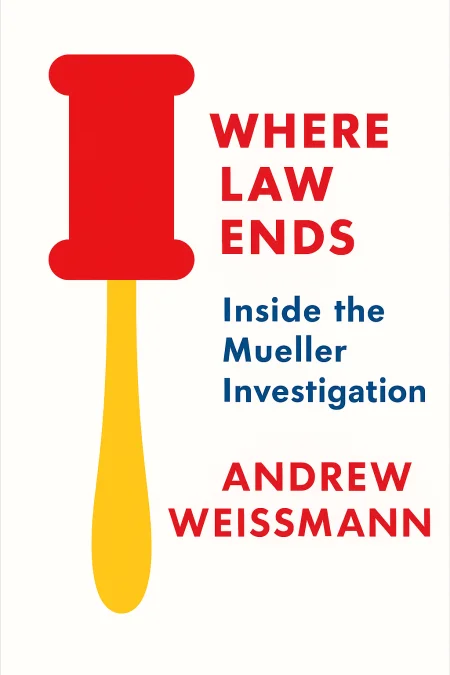
Where Law Ends
Inside the Mueller Investigation
Book Edition Details
Summary
A veil of secrecy shrouded the Mueller investigation, a landmark inquiry into election interference and justice obstruction, until now. Andrew Weissmann, a linchpin of Mueller's elite team, opens the door to the high-stakes world of truth-seeking under relentless pressure. "Where Law Ends" is not just an exposé; it’s a chronicle of dedication amidst political turbulence. As Weissmann narrates the tumultuous 22-month saga, he unveils the debates, missteps, and relentless pursuit of justice that defined the inquiry. The narrative doesn't just spotlight the inquiry's inner workings; it humanizes Robert Mueller, revealing the man behind the method. For those seeking a riveting dive into the mechanics of power, justice, and the human spirit under duress, this book offers a raw, candid exploration of a team challenged at every turn by the very forces they were tasked to investigate.
Introduction
The collision between executive power and legal accountability represents one of democracy's most perilous moments, when the very institutions designed to constrain authority face systematic assault from within. This investigation into Russian election interference and presidential obstruction reveals how democratic safeguards, long assumed to be self-enforcing, prove remarkably fragile when confronted by leaders willing to abandon constitutional norms entirely. The evidence uncovered demonstrates that traditional prosecutorial methods, developed for conventional criminal cases, become inadequate when investigating those who possess the power to fire investigators, pardon witnesses, and weaponize public opinion against the pursuit of justice itself. The analysis exposes fundamental vulnerabilities in American governance that extend far beyond partisan politics to the core mechanisms of democratic accountability. Through detailed examination of specific episodes of obstruction, witness tampering, and abuse of presidential authority, the investigation illuminated dangerous gaps between what prosecutors could prove and what existing institutional frameworks permitted them to conclude. The tension between prosecutorial independence and political pressure created an unprecedented laboratory for understanding how democratic institutions respond when basic assumptions about presidential conduct prove catastrophically inadequate.
Russian Interference and the Special Counsel's Constrained Mission
Russian interference in the 2016 election represented a comprehensive assault on American democratic processes that far exceeded initial public understanding. The Internet Research Agency deployed hundreds of operatives in a sophisticated information warfare campaign, creating thousands of fake American personas across social media platforms while spending over a million dollars monthly to amplify divisive content and suppress specific demographic voting patterns. This operation demonstrated unprecedented foreign manipulation of American political discourse, executed with remarkable precision and strategic coordination. The hacking component involved Russian military intelligence systematically penetrating Democratic Party networks, extracting thousands of emails and documents, then strategically releasing this material through WikiLeaks and other outlets. The timing of these releases, particularly the massive document dump within hours of the Access Hollywood tape's publication, revealed tactical coordination designed to maximize political impact. The operation extended beyond party organizations to target state election systems, exposing critical vulnerabilities in America's electoral infrastructure. The special counsel's mandate encompassed both documenting this foreign interference and investigating potential coordination with the Trump campaign, along with any obstruction of the investigation itself. However, the boundaries of this authority became contested terrain, with ongoing negotiations over what constituted legitimate investigative territory versus political overreach. The investigation operated under regulations designed to ensure independence while remaining within the Department of Justice framework, creating inherent tensions between autonomy and accountability that would prove decisive in shaping both scope and ultimate conclusions. The structural limitations became apparent as investigators discovered their independence existed within boundaries that could shift based on political calculations. The tension between thoroughness and expediency, between following every lead and avoiding the appearance of overreach, defined every major decision throughout the investigation's duration. These extraordinary circumstances forced investigators to develop new strategies for protecting evidence and maintaining investigative integrity while operating under constant threat of termination.
Presidential Obstruction: Systematic Abuse of Executive Power
The president's efforts to obstruct the investigation began before the special counsel's appointment and continued throughout the inquiry, revealing a systematic pattern of conduct designed to undermine the rule of law. The firing of FBI Director James Comey, initially attributed to his handling of the Clinton email investigation, was revealed through witness testimony and documentary evidence to be motivated by the Russia investigation. The president's own statements to Russian officials contradicted official justifications, demonstrating consciousness of improper motive and establishing a foundation for obstruction charges. Multiple episodes followed a consistent pattern of direct orders to subordinates to interfere with the investigation, followed by efforts to conceal those orders when they were refused. The president instructed White House Counsel Don McGahn to fire the special counsel, then later demanded McGahn create false records denying the instruction when it became public. Similar patterns emerged in attempts to limit the investigation's scope and influence witness testimony through public statements and private communications, creating a comprehensive scheme to impede justice. The president's use of pardon power as an obstruction tool represented a particularly insidious form of interference that exploited constitutional authority for corrupt purposes. Public dangling of pardons to potential cooperating witnesses served to discourage truthful testimony and cooperation with investigators. This tactic transformed a constitutional power designed to serve justice into a weapon against justice, systematically undermining the investigation's ability to uncover facts through traditional prosecutorial leverage. The cumulative effect created a climate where normal investigative processes could not function properly, as witnesses altered behavior based on presidential signals, documents were concealed or destroyed, and the investigation itself became a target of systematic attack. This pattern demonstrated how executive power, when wielded corruptly, could effectively neutralize constitutional checks and balances designed to ensure accountability, revealing dangerous vulnerabilities in democratic governance.
Institutional Failures: When Democratic Safeguards Collapse
The investigation revealed fundamental weaknesses in America's system of checks and balances when confronted with unprecedented presidential misconduct. Congress's failure to exercise meaningful oversight, particularly after partisan dynamics overtook constitutional duty, eliminated a crucial check on executive abuse. The Senate's eventual response to documented obstruction demonstrated how partisan loyalty could override institutional responsibility, creating a precedent that effectively immunized future presidential misconduct from meaningful consequences. The Justice Department's own policies and leadership failures contributed significantly to the system's breakdown. The longstanding Office of Legal Counsel opinion prohibiting indictment of sitting presidents created an insurmountable barrier to traditional accountability mechanisms, while Attorney General William Barr's misrepresentation of the special counsel's findings demonstrated how even the nation's chief law enforcement officer could become complicit in obstruction. This betrayal of prosecutorial independence showed how institutional safeguards could be corrupted from within. The special counsel's decisions reflected broader institutional inadequacy in confronting unprecedented challenges to democratic governance. The failure to subpoena the president for testimony, despite clear legal authority to do so, represented a missed opportunity to obtain crucial evidence. This decision prioritized institutional comity over investigative thoroughness, ultimately serving neither goal effectively while establishing dangerous precedents for future investigations of executive misconduct. Political pressures manifested through multiple channels, including systematic attacks on the investigation's legitimacy, threats to job security, and efforts to limit the scope of inquiry. The president's successful use of delay tactics and legal challenges to run out the clock on potential accountability demonstrated how procedural safeguards designed to protect defendants' rights could be manipulated to evade accountability entirely, revealing structural flaws that remain unaddressed.
Unfinished Justice: The Investigation's Limited Legacy
The investigation's conclusion left fundamental questions unanswered and revealed systemic weaknesses that continue to threaten democratic governance. Financial investigations that might have revealed the president's motives for pro-Russian positions were curtailed due to concerns about political backlash, leaving crucial counterintelligence questions unexplored. The failure to fully investigate potential financial entanglements with Russian interests meant that fundamental questions about presidential compromise remained unanswered, creating ongoing national security vulnerabilities. The decision not to subpoena the president's testimony, despite clear legal authority, established a dangerous precedent that effectively placed the presidency above the law. This reluctance to fully exercise available legal powers reflected broader institutional timidity when confronting unprecedented presidential behavior, creating a zone of executive conduct that proved effectively immune from legal consequences. The gap between impeachable offenses and criminal conduct revealed structural weaknesses in American governance that remain unaddressed. The investigation's narrow focus on provable criminal conduct, while legally sound, left crucial questions about democratic governance unexplored. The broader failure extended beyond the investigation itself to encompass the system's inability to respond effectively to documented threats to constitutional order. The pattern of behavior documented in the investigation continued and intensified in subsequent years, suggesting that the ultimate failure lay not in the findings but in institutional incapacity to act on those findings. The investigation's legacy lies in its documentation of democratic vulnerabilities rather than its immediate legal outcomes. The evidence provides a comprehensive record of how foreign adversaries can exploit American divisions and how executive power can be systematically weaponized against accountability mechanisms. However, the failure to generate sustained institutional response or meaningful reforms demonstrates that documentation alone proves insufficient to protect democratic governance from determined assault.
Summary
The investigation into Russian election interference and presidential obstruction stands as a sobering demonstration that American democratic institutions prove inadequate when confronting leaders willing to systematically abandon constitutional constraints. While successfully documenting extensive evidence of foreign interference and criminal misconduct, the investigation ultimately failed to achieve meaningful accountability due to structural limitations, political interference, and institutional timidity that collectively revealed democracy's fragility when fundamental norms are rejected. The experience serves as both a detailed case study of prosecutorial constraints under extreme political pressure and a broader warning that legal processes alone cannot protect democratic governance from authoritarian behavior, highlighting the urgent need for structural reforms to ensure that no future president can successfully obstruct investigations into their own conduct while claiming vindication from their very success in impeding the search for truth.
Related Books
Download PDF & EPUB
To save this Black List summary for later, download the free PDF and EPUB. You can print it out, or read offline at your convenience.
By Andrew Weissmann
