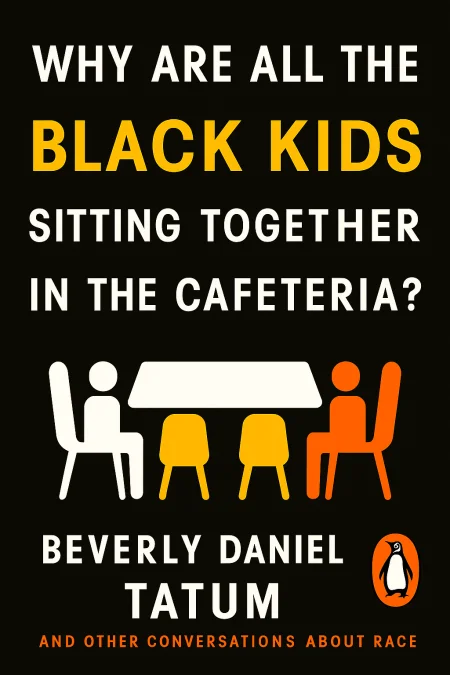
Why Are All the Black Kids Sitting Together in the Cafeteria?
And Other Conversations About Race
Book Edition Details
Summary
In the bustling halls of America’s diverse high schools, a quiet phenomenon unfolds—students naturally gravitate to groups that mirror their own race. Is this instinctive clustering a silent cry for connection, or a signpost of deeper societal issues? Beverly Daniel Tatum, a luminary in psychology, invites you on an enlightening journey through the intricate formation of racial identity. Her seminal work, Why Are All the Black Kids Sitting Together in the Cafeteria?, offers a profound look at how race shapes our lives from childhood through adulthood, bridging gaps between Black, white, and mixed-race families. Updated with fresh insights in 2017, this pivotal narrative challenges us to break through barriers of silence, fostering open dialogues on race that might just light the path to a more inclusive world. Essential for anyone committed to understanding the nuances of racial dynamics, this book remains a cornerstone of insightful discourse.
Introduction
The phenomenon of racial clustering in American schools, workplaces, and social settings reveals a fundamental misunderstanding about the nature of racial identity formation and its psychological necessity. Rather than representing voluntary segregation or a failure of integration efforts, these patterns reflect a sophisticated developmental process through which individuals navigate their sense of self within a racially stratified society. The clustering behavior emerges from deep psychological needs for belonging, validation, and protection against the corrosive effects of systemic racism on individual identity and self-worth. This analysis employs developmental psychology and social identity theory to decode the mechanisms driving racial identity formation across different groups. The framework challenges colorblind ideology by demonstrating how racial consciousness serves essential psychological functions, particularly for young people who must construct positive self-concepts while confronting negative societal messages about their racial group membership. The examination traces predictable stages of identity development, revealing how environmental encounters with racism trigger defensive strategies that appear divisive but actually represent healthy adaptation to discriminatory conditions. The exploration moves systematically through the psychological foundations of racial awareness, the unique challenges facing different racial groups in identity formation, and the institutional conditions that either support or undermine healthy development. By understanding these developmental patterns, readers gain tools for recognizing how individual psychological processes intersect with broader social structures to either perpetuate or challenge existing racial hierarchies in contemporary America.
The Psychological Necessity of Racial Identity Formation
Racial identity development represents a predictable psychological response to living in environments where race carries social significance and affects life opportunities. The process begins when individuals encounter situations that make their racial group membership salient, forcing them to grapple with questions about what this membership means for their self-concept and future prospects. These encounters often occur during adolescence when cognitive development enables young people to understand complex social hierarchies and their position within them. The initial stages of racial identity formation typically involve confusion and sometimes internalization of negative societal messages about one's racial group. Young people of color may experience preferences for dominant group characteristics or attempt to distance themselves from their racial community as they struggle to reconcile positive self-regard with negative group stereotypes. However, these early responses represent normal developmental phases rather than permanent psychological damage, serving as necessary steps toward eventual identity integration. The active exploration phase marks a crucial turning point where individuals immerse themselves in learning about their racial and cultural heritage. This period often involves intense engagement with same-race peers, consumption of culturally relevant media and literature, and adoption of cultural symbols that affirm racial identity. The apparent separatism during this phase serves essential psychological functions, providing emotional support, cultural knowledge, and validation necessary for healthy identity development. Successful navigation of these developmental stages culminates in an internalized, secure racial identity that enables individuals to maintain positive self-regard while engaging constructively across racial lines. Research consistently demonstrates that strong racial identity correlates with better psychological outcomes, including higher self-esteem, greater academic achievement, and more effective coping strategies when facing discrimination. This developmental process transforms potential psychological vulnerability into a source of strength and resilience.
White Identity Development and Colorblind Ideology's Limitations
White Americans typically reach adulthood without conscious awareness of their racial identity, experiencing whiteness as the unmarked norm rather than a socially constructed category with specific privileges and responsibilities. This racial unconsciousness reflects the advantage of belonging to the dominant group, where racial group membership rarely becomes salient in daily interactions. However, meaningful encounters with racial realities can trigger a developmental process that parallels the identity formation experienced by people of color, though with distinct psychological challenges. The initial recognition of white privilege and systemic racism typically generates significant psychological discomfort, including guilt, shame, and defensive anger. These emotions reflect cognitive dissonance between previously held beliefs about meritocracy and fairness and new awareness of unearned advantages. The temptation to retreat into colorblind ideology represents an attempt to restore psychological equilibrium without confronting the implications of racial advantage or the need for systemic change. Colorblind racial ideology functions as a sophisticated form of contemporary racism that maintains racial hierarchies while appearing to embrace egalitarian values. By insisting that race should not matter and refusing to acknowledge ongoing racial disparities, colorblind approaches effectively preserve existing inequities while positioning those who discuss race as the true perpetrators of racial division. This ideology allows white Americans to maintain positive self-concepts while avoiding the psychological discomfort of confronting their complicity in systemic racism. Healthy white identity development requires moving beyond colorblind denial toward active antiracist consciousness and action. This transformation involves developing authentic relationships across racial lines, educating oneself about historical and contemporary racism, and using privilege to challenge racist policies and practices. The process demands sustained commitment and community support, as antiracist whites often face isolation from other whites who remain invested in maintaining existing racial hierarchies through denial and avoidance.
Multiracial Experience and Contemporary Identity Complexity
Multiracial identity formation presents unique challenges within America's historically binary racial classification system, requiring individuals to navigate multiple racial communities while developing coherent sense of self that may not fit traditional categories. The psychological process involves negotiating family dynamics, community acceptance, and societal expectations while forging authentic identity that honors multiple racial backgrounds without forcing artificial choices between different aspects of heritage. Contemporary increases in multiracial births and marriages are reshaping American racial landscape, challenging traditional classification systems and creating new possibilities for racial understanding. However, multiracial individuals still face pressure to choose sides or explain their identity choices, particularly in contexts where racial boundaries remain rigid. Environmental factors play crucial roles in determining identity outcomes, including family attitudes, community demographics, physical appearance, and access to diverse social networks that validate multiracial experiences. The psychological research reveals several distinct patterns in multiracial identity development, ranging from identification with single racial group to embrace of multiracial identity that transcends traditional boundaries. Supportive environments that acknowledge complexity and avoid forcing categorical choices tend to produce more positive identity outcomes. Multiracial individuals who develop strong, integrated identities often become bridges between racial communities and advocates for more nuanced understandings of race and identity. These experiences illuminate the constructed nature of racial categories while highlighting their continued social significance in American society. Multiracial identity development demonstrates both the flexibility of racial boundaries and the persistent power of racial classification systems to shape individual experiences and social relationships. The growing multiracial population challenges existing frameworks while creating opportunities for more sophisticated approaches to racial understanding and cross-group collaboration.
Building Authentic Cross-Racial Dialogue for Systemic Change
Meaningful dialogue across racial lines requires acknowledging the different developmental needs and experiences that various racial groups bring to interracial encounters, rather than assuming that good intentions and colorblind approaches will automatically produce understanding. Effective cross-racial communication must create space for people of color to express anger about racism without white participants becoming defensive or withdrawing from conversation. Simultaneously, white participants need opportunities to process their racial awakening without burdening people of color with emotional labor or expecting absolution for systemic inequities. The psychological barriers to authentic dialogue include fear of making mistakes, guilt and shame about racial privilege, anger about discrimination, and lack of skills for navigating difficult conversations about race and power. Overcoming these barriers requires structured approaches that establish ground rules, acknowledge power dynamics, and provide ongoing support for participants as they develop greater racial awareness and cross-cultural competency. Successful dialogue initiatives balance emotional processing with concrete action planning, ensuring that increased awareness translates into meaningful changes in policies, practices, and interpersonal relationships. Research demonstrates that dialogue alone is insufficient for creating lasting change; it must be connected to systemic interventions that address institutional inequities and power imbalances. Participants who engage in sustained dialogue often develop stronger cross-racial relationships, increased racial awareness, and greater commitment to antiracist action. However, the process requires ongoing accountability structures to prevent participants from returning to previous patterns of racial separation and misunderstanding once formal programs conclude. Educational institutions, workplaces, and community organizations can create conditions supporting meaningful cross-racial dialogue through policy changes, leadership development, and sustained programming that addresses both individual attitudes and systemic barriers. The investment in such initiatives produces measurable improvements in racial climate, increased innovation through diverse perspectives, and stronger community cohesion that benefits all participants regardless of racial background. The ultimate goal extends beyond individual attitude change toward institutional transformation that eliminates conditions requiring defensive racial identity strategies.
Summary
The psychological foundations of racial identity development reveal that clustering by racial groups represents sophisticated adaptation to systemic inequality rather than evidence of natural segregation or failed integration efforts. Understanding these developmental processes as necessary responses to racial stratification reframes seemingly divisive behaviors as healthy strategies for maintaining psychological well-being while navigating discriminatory environments. The analysis demonstrates that strong racial identity serves as foundation for both individual resilience and effective social change, challenging assumptions that racial awareness necessarily leads to division or conflict. This framework offers pathways for creating educational and social environments that support healthy identity development across all racial groups while working toward systemic transformation that eliminates the discriminatory conditions making such defensive strategies necessary for psychological survival and community building.
Related Books
Download PDF & EPUB
To save this Black List summary for later, download the free PDF and EPUB. You can print it out, or read offline at your convenience.
By Beverly Daniel Tatum
