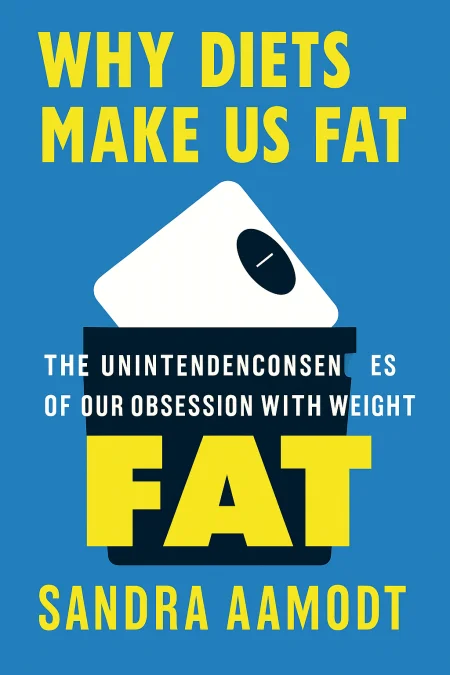
Why Diets Make Us Fat
The Unintended Consequences of Our Obsession With Weight Loss
Book Edition Details
Summary
In a world obsessed with the scale, where calorie counting and fad diets reign supreme, neuroscientist Sandra Aamodt brings a revelation that flips conventional wisdom on its head. Through her own battles with dieting and a deep dive into scientific research, Aamodt exposes the harsh truth: dieting not only fails to deliver long-term weight loss but also traps us in a cycle of gain and guilt. Her eye-opening narrative dismantles myths, revealing that our weight is more about genetics and gut bacteria than willpower and lettuce leaves. With a refreshing blend of science and personal insight, she argues for a more compassionate approach to health that eschews diets in favor of sustainable habits, offering a pathway to genuine well-being. Why Diets Make Us Fat isn’t just a book—it’s a beacon of hope for those weary of the weight-loss war.
Introduction
The modern approach to weight management rests on a profound misunderstanding of human biology that has created more harm than healing. Despite decades of diet culture promising permanent solutions, obesity rates continue climbing while millions cycle through repeated weight loss attempts, only to regain every pound. This paradox exposes a critical disconnect between popular beliefs about dieting and the actual mechanisms governing human weight regulation. Conventional wisdom treats weight control as a simple equation of willpower versus calories, ignoring the sophisticated biological systems that evolved to protect against starvation. These ancient survival mechanisms now work against us in environments of food abundance, creating internal battles that dieters inevitably lose. The evidence reveals how neurological, hormonal, and psychological factors truly drive weight regulation, explaining why traditional approaches fail so consistently and often produce opposite results. This analysis challenges fundamental assumptions about personal responsibility and body size by examining scientific research from neuroscience, endocrinology, and behavioral psychology. Rather than moral judgments about self-control, the focus shifts to understanding how brains actually respond to food restriction and weight loss attempts. The implications extend beyond individual choices to encompass medical practice, public health policy, and cultural attitudes toward health and body diversity.
The Brain's Weight Defense System Against Dieting
The human brain operates a sophisticated weight regulation system that functions like a biological thermostat, defending specific weight ranges with remarkable precision and persistence. Centered in the hypothalamus, this system continuously monitors energy stores through hormones like leptin, which fat cells produce in proportion to their size. When weight drops below the brain's defended range, leptin levels fall, triggering coordinated responses designed to restore lost pounds through increased hunger, reduced metabolism, and decreased spontaneous activity. This biological reality explains why dieting feels like fighting one's own body. The brain interprets intentional weight loss exactly as it would respond to life-threatening starvation, regardless of starting weight or health status. Neuroimaging studies reveal that weight-reduced individuals show heightened activation in brain reward centers when viewing food, while areas controlling impulse regulation show decreased activity. These changes persist long after diets end, creating ongoing biological pressure to regain weight. The metabolic suppression accompanying weight loss can endure for years, requiring formerly obese individuals to eat hundreds fewer calories daily than naturally thin people of identical size to maintain reduced weight. Research on extreme weight loss demonstrates that participants experience metabolic slowdown so severe they burn 500-800 fewer calories than predicted by body size, with these adaptations persisting years later despite substantial weight regain. Understanding this system shifts focus from moral failings to biological realities. The brain's weight thermostat doesn't distinguish between voluntary restriction and involuntary famine, triggering identical survival responses that evolved to preserve life during food scarcity. This knowledge reveals why willpower-based approaches fail consistently, suggesting sustainable strategies must work with rather than against these powerful regulatory mechanisms that operate continuously below conscious awareness.
Hidden Factors That Drive Weight Gain Beyond Willpower
Weight regulation involves complex interactions between genetic, environmental, and developmental factors that extend far beyond individual food choices or exercise habits. Early life experiences, including prenatal nutrition, childhood stress, and environmental chemical exposure, can permanently alter brain weight regulation systems. Children born during famines or to mothers experiencing severe pregnancy stress often develop metabolic patterns predisposing them to obesity when food becomes abundant, illustrating how early programming influences lifelong weight trajectories. Gut bacteria composition plays crucial roles in determining calorie extraction from identical foods, with some microbial communities providing an additional 140-180 calories daily from meals that yield fewer calories in people with different microbiomes. These bacterial populations, altered by antibiotic use, stress, or dietary changes, influence metabolism, inflammation, and food preferences. The discovery that gut bacteria can be transplanted between individuals, transferring obesity susceptibility, demonstrates their powerful impact on weight regulation. Chronic stress creates hormonal cascades promoting weight gain, particularly around the abdomen where fat poses greatest health risks. Cortisol not only increases appetite for high-calorie foods but directs fat storage to visceral areas. Sleep deprivation compounds these effects by disrupting hormones regulating hunger and satiety, making people feel hungrier while reducing satisfaction from eating. These physiological changes occur regardless of conscious intentions or willpower. Social and economic factors create additional pressures toward weight gain through mechanisms beyond individual control. Food marketing specifically targets psychological vulnerabilities while widespread availability of processed foods makes weight stability increasingly difficult. Weight stigma itself becomes a chronic stressor promoting further weight gain, creating vicious cycles where discrimination produces the very outcomes it claims to prevent. These interconnected factors demonstrate that weight regulation involves complex systems rather than simple personal choices.
Why Weight Loss Fails and Health-Focused Approaches Work
The overwhelming majority of intentional weight loss attempts result in complete weight regain within five years, often with additional pounds beyond starting weights. This pattern occurs regardless of diet method, intervention intensity, or participant motivation. Even comprehensive programs involving years of professional support and intensive lifestyle modification produce only modest long-term losses rarely exceeding five to ten pounds, revealing fundamental flaws in weight-focused approaches. Weight loss failures stem from their conflict with biological regulation systems that increase hunger signals, reduce metabolic rate, and enhance food reward value as weight decreases. These changes persist indefinitely after diets end, creating permanent biological drives toward weight restoration that operate continuously in background consciousness. Temporary willpower-based interventions cannot compete with these enduring alterations in brain function and hormonal signaling. Physical fitness provides health benefits largely independent of body weight, with research consistently demonstrating that fit individuals have substantially lower risks of heart disease, diabetes, and premature death regardless of weight category. Health risks traditionally attributed to obesity appear primarily mediated through fitness levels, inflammation, and metabolic markers rather than body weight itself. This evidence challenges medical focus on weight loss as primary health intervention. Sustainable health behaviors including regular exercise, adequate sleep, stress management, and nutritious eating can be maintained indefinitely while providing cumulative benefits over time. These approaches avoid psychological damage from repeated diet failures while building positive relationships with food and physical activity supporting lifelong wellbeing. The shift from weight-focused to behavior-focused interventions produces better long-term outcomes for both physical and mental health.
Mindful Eating as an Alternative to Diet Culture
Mindful eating represents a fundamental departure from external rules and restrictions toward internal awareness and body wisdom, involving deliberate attention to hunger and satiety signals while eating without distractions. Rather than following predetermined meal plans or calorie targets, this approach trusts the body's natural regulation systems and develops non-judgmental awareness of food experiences. The practice requires learning to distinguish physical hunger from emotional triggers, boredom, or habitual eating patterns. Developing sensitivity to subtle bodily sensations indicating hunger, satisfaction, and fullness takes time and patience, particularly for people who have spent years following external eating rules. Many chronic dieters discover they have lost touch with natural signals, having learned to eat according to schedules, portion sizes, or emotional states rather than physical needs. Relearning these internal cues involves mindful attention to how different foods affect energy, mood, and physical comfort. Mindful eating does not guarantee weight loss nor prioritize weight change as its primary goal. Instead, it aims to align eating behaviors with actual bodily needs, which may result in weight stability, modest changes, or no weight change at all. The approach recognizes that optimal weight varies among individuals based on complex biological factors rather than cultural ideals or arbitrary standards, emphasizing health and wellbeing over appearance or size. Benefits extend beyond physical outcomes to include reduced food anxiety, decreased binge eating, and improved quality of life. People practicing mindful eating report greater meal satisfaction, less preoccupation with food between meals, and freedom from constant mental energy required to monitor and restrict intake. This approach offers sustainable alternatives to restriction-rebellion cycles characterizing most diet attempts, supporting peaceful relationships with food and eating.
Summary
Scientific evidence reveals that cultural approaches to weight management fundamentally misunderstand human biology, creating cycles of failure and psychological harm rather than lasting health improvements. The brain's sophisticated weight defense system, evolved over millions of years to prevent starvation, cannot be permanently overridden through willpower or calorie restriction. Attempts to force weight below biologically defended ranges trigger powerful responses making regain nearly inevitable, while repeated diet failures often lead to additional weight gain and metabolic damage. True health emerges not from achieving specific numbers on scales but from sustainable practices supporting physical fitness, metabolic health, and psychological wellbeing regardless of body size. This understanding offers liberation from futile dieting cycles, pointing toward approaches honoring both scientific reality and human dignity.
Related Books
Download PDF & EPUB
To save this Black List summary for later, download the free PDF and EPUB. You can print it out, or read offline at your convenience.
By Sandra Aamodt
