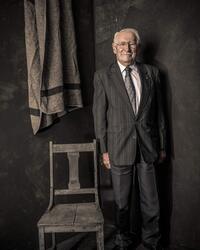
Eddie Jaku
Born Abraham Jakubowicz in 1920, Eddie Jaku OAM emerged from the crucible of 20th-century Europe as a beacon of resilience and hope. A German Jew, he endured the unimaginable horrors of World War II, surviving internment in the brutal confines of Buchenwald and Auschwitz concentration camps. In a testament to his indomitable spirit, Jaku escaped a harrowing death march in 1945, ultimately finding sanctuary with the Allied forces. This tumultuous chapter of his life forged a profound perspective that would later permeate his writing and public speaking. Eddie Jaku is best known for his poignant memoir, "The Happiest Man on Earth: The Beautiful Life of an Auschwitz Survivor," a work that has garnered both critical acclaim and widespread readership. This seminal book, which ascended to international bestseller lists, offers a deeply personal narrative that underscores the enduring power of optimism and resilience. Through his vivid recounting, Jaku not only preserves the memory of the past but also imparts universal lessons on the triumph of humanity over adversity. Jaku's narrative style is characterized by its clarity and emotional depth, weaving together personal anecdotes with larger historical contexts. His writing transcends mere autobiography, serving as a testament to the enduring impact of personal fortitude and the capacity for healing. By sharing his story, Eddie Jaku has contributed significantly to Holocaust literature, offering a unique voice that espouses the values of compassion, forgiveness, and the relentless pursuit of happiness even in the darkest of times.


by Paul J. Zak
by Rory Vaden
by Robert C. Solomon, Fernando Flores
by Brett Gardner
by Dennis S. Reina
by Julian Baggini
by Larry Downes, Omar Abbosh, Paul Nunes
by Jacqueline Woodson
by Kevin Oakes
by Lindsey Pollak, Kimberly B. Cummings, Kimberly Brown
