
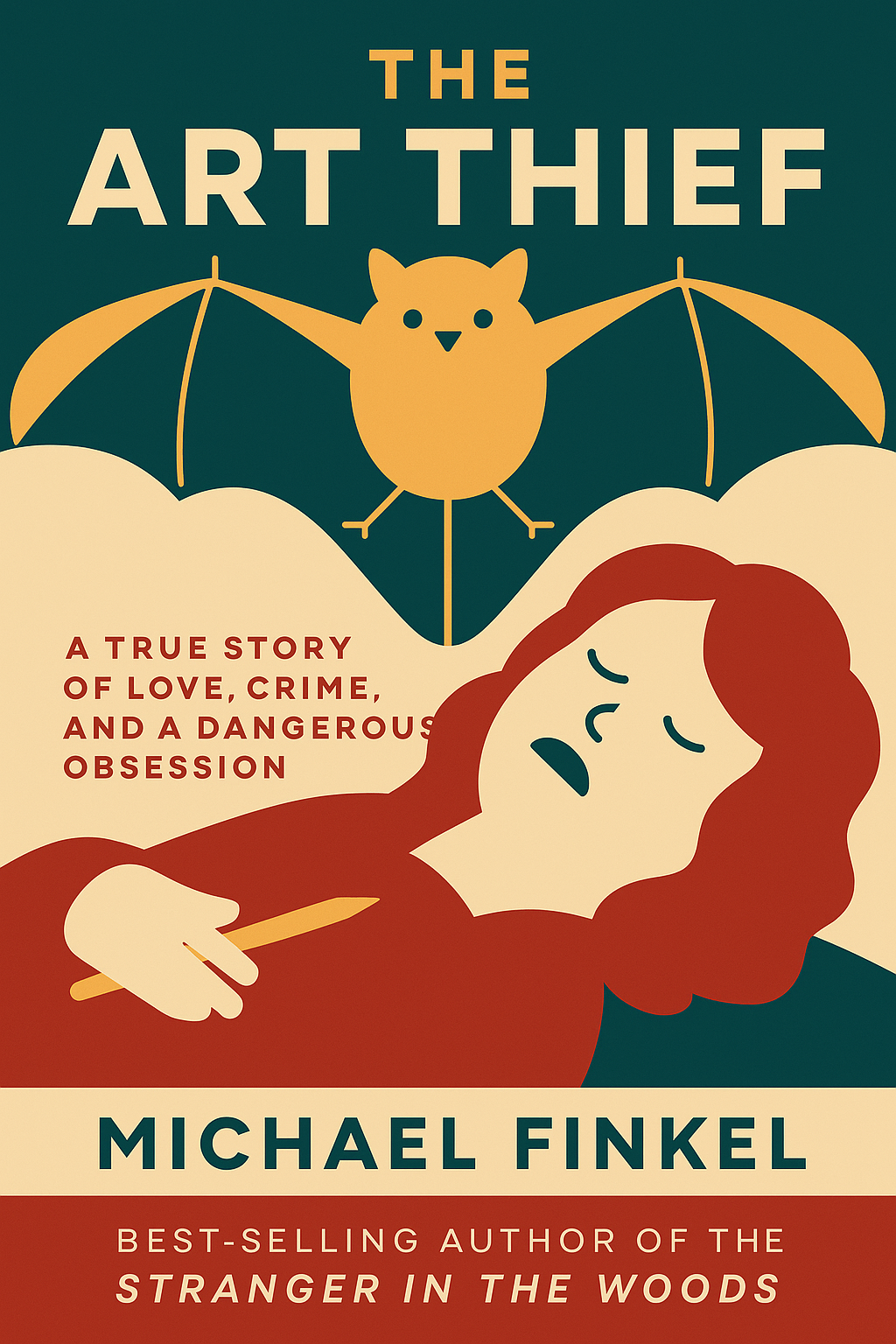
The Art Thief
A True Story of Love, Crime, and a Dangerous Obsession
Book Edition Details
Summary
In the shadowy corridors of European museums, a singular obsession unfolds—a tale of audacity and allure that defies the boundaries of art and crime. Meet Stéphane Breitwieser, the enigmatic virtuoso who pilfered masterpieces not for profit, but for passion, curating his own clandestine gallery of beauty. Over a whirlwind eight years, with his loyal accomplice by his side, Breitwieser executed a staggering series of heists, each more brazen than the last, amassing a collection valued at billions. Yet, beneath the surface of this extraordinary spree lies a labyrinth of personal flaws and unchecked desires, spiraling towards an inevitable downfall. In "The Art Thief," bestselling author Michael Finkel paints a vivid portrait of this intriguing figure—an unlikely blend of brilliance and recklessness—offering readers an enthralling exploration of the thin line between admiration and obsession.
Introduction
What drives someone to steal not for money, but for the sheer intoxication of beauty? In the quiet suburbs of eastern France, a young man and his girlfriend embarked on one of history's most audacious art crime sprees, accumulating treasures worth over two billion dollars in a secret attic room. Their story reveals the dangerous intersection where aesthetic obsession meets criminal compulsion, where the pursuit of beauty transforms into a prison of its own making. This extraordinary tale illuminates fundamental questions about our relationship with art and desire. How do we distinguish between appreciation and possession? When does collecting become hoarding, and passion become pathology? Through meticulous investigation spanning decades, we witness how a love affair with Renaissance masterpieces evolved into an addiction that consumed everything in its path. The narrative exposes the psychology of obsession, the vulnerabilities of cultural institutions, and the devastating consequences when the line between admiration and ownership dissolves completely. This account will captivate anyone fascinated by the psychology of crime, the allure of forbidden beauty, or the complex motivations that drive humans to risk everything for intangible rewards. It serves as both a gripping criminal saga and a profound meditation on the nature of aesthetic desire in modern life.
The Making of a Collector (1991-1997): From Love to Larceny
In the rolling hills of Alsace, where French vineyards meet German precision, a young man's innocent love for beauty would metastasize into criminal obsession. Stéphane Breitwieser's journey began traditionally enough, with childhood expeditions alongside his grandfather, unearthing pottery shards and medieval fragments from ancient fortress ruins. These archaeological treasures, carefully stored in a blue plastic box, represented his first taste of possessing history's tangible remnants. The transformation from collector to criminal coincided with personal upheaval. When his parents' bitter divorce stripped away the family's antique furniture and Renaissance paintings, leaving behind only stark IKEA replacements, Breitwieser felt aesthetically orphaned. This deprivation, combined with his meeting Anne-Catherine Kleinklaus at age twenty, catalyzed a dangerous alchemy. She became both his romantic obsession and criminal accomplice, the one person who shared his refined appreciation for historical beauty. Their first theft together in 1994 revealed the intoxicating formula that would define their partnership. A flintlock pistol from a small-town museum became their gateway drug, stolen impulsively but executed with surprising sophistication. The terror of potential capture quickly transformed into euphoria, then pride, then insatiable hunger for more. Each successful heist validated Breitwieser's belief that he possessed superior aesthetic judgment, that he was liberating art from the prison of public museums. By 1997, they had established their deadly rhythm: weekend raids across European borders, stealing three out of every four weekends with methodical precision. Their secret attic became a Renaissance wonderland, filled with ivory carvings, silver chalices, and oil paintings worth millions. They had discovered that crime, when motivated by beauty rather than greed, felt less like transgression than destiny. The world's cultural heritage was becoming their private kingdom, one theft at a time.
The Golden Years (1997-2001): Master of the Invisible Crime
The period following their arrest and release in Lucerne marked Breitwieser's evolution into history's most prolific art thief. Having survived legal scrutiny with minimal consequences, he developed an almost supernatural confidence in his abilities. His methods became increasingly sophisticated, employing techniques like the "silicone slice" to penetrate display cases without triggering alarms, and timing heists to coincide with guard rotations and tourist flows. During these peak years, Breitwieser elevated art theft to a form of performance art. He stole during guided museum tours, engaged in friendly conversations with security guards, and once called police to report vandalism to his car while stolen artifacts sat in his trunk. His Swiss Army knife became a precision instrument, capable of removing thirty screws to access a single ceramic platter. Anne-Catherine perfected her role as the vigilant accomplice, reading crowd dynamics and security vulnerabilities with uncanny accuracy. Their collection grew to encompass over 300 pieces, including works by Cranach, Brueghel, and other Renaissance masters. The secret attic transformed into a private Louvre, with oil paintings covering every wall and precious objects displayed on period furniture. Breitwieser lived his fantasy of being surrounded by beauty at every waking moment, reaching out to caress ivory carvings from his bed each morning. Yet success bred recklessness. By 2001, their stealing pace had become manic, with Breitwieser taking increasingly dangerous solo missions while Anne-Catherine worked. He began stealing from churches, disregarding their earlier ethical boundaries. The attic overflowed with objects stacked on floors and hidden under beds, while some pieces suffered damage from overcrowding. What began as aesthetic devotion was degenerating into compulsive hoarding, driven by an addiction that no amount of beauty could satisfy.
The Unraveling (2001-2002): Capture and the Great Destruction
The end arrived with characteristic banality. Returning to the scene of an earlier crime to erase fingerprints, Breitwieser was spotted circling the Wagner Museum by an alert dog walker. His arrest on November 21, 2001, initiated a cascade of confessions that would expose the scope of his crimes to incredulous investigators. Swiss detective Alexandre Von der Mühll skillfully extracted admissions to over 200 thefts across seven countries, while Breitwieser clung to the delusion that cooperation would earn him lenient treatment. The true devastation, however, occurred not in courtrooms but in his mother's house. Upon learning of her son's arrest, Mireille Stengel climbed the stairs to the secret attic for the first time in years. Confronted with irrefutable evidence of his massive criminality, she experienced what she later described as "destructive frenzy." In a single night of methodical destruction, she dismantled eight years of careful collecting, removing over 300 priceless objects from their carefully arranged displays. What followed was cultural catastrophe on an unprecedented scale. Stengel loaded her car multiple times, driving to remote locations to dispose of humanity's artistic heritage. Silver goblets and ivory carvings were dumped into a canal, where they would later be discovered by a passerby with a rake. A 400-year-old tapestry was thrown in a roadside ditch. Most devastating of all, she drove the 69 stolen oil paintings to a forest clearing and set them ablaze. Cranachs, Brueghels, and countless other Renaissance masterpieces curled and blackened in the flames, their paint running like tears before crumbling to ash. This act of maternal destruction was simultaneously an expression of love and revenge. Stengel sought to eliminate evidence that could condemn her son, while simultaneously punishing him in the most excruciating way imaginable. She had identified art as her primary rival for his affection and eliminated her competition with ruthless efficiency. By the time investigators arrived with search warrants, they found only empty walls and the lingering smell of fresh paint.
Legacy and Lessons: When Obsession Destroys What It Seeks
The aftermath of Breitwieser's capture reveals the true cost of aesthetic obsession taken to pathological extremes. His trials in Switzerland and France became meditations on the nature of art crime and cultural responsibility. While he received relatively modest sentences, the cultural loss was immeasurable. Museums worldwide upgraded their security systems, installing motion sensors and reinforced display cases that paradoxically made art less accessible to the public it was meant to serve. The case exposed fundamental vulnerabilities in how society protects its cultural heritage. Regional museums, operating on shoestring budgets, had relied on public trust rather than sophisticated security systems. Breitwieser's success highlighted the delicate balance between accessibility and protection that cultural institutions must navigate. His crimes forced a reckoning with questions that extend far beyond criminal justice: Who owns art? What is the relationship between appreciation and possession? How do we preserve beauty without imprisoning it? Perhaps most tragically, Breitwieser's story demonstrates how the pursuit of beauty, when divorced from ethical constraints, becomes self-defeating. His mother's destructive fury eliminated the very objects he had risked everything to possess. The fire in the Alsatian forest consumed not just paintings, but the possibility of their continued existence for future generations. In seeking to make beauty private, he had made it extinct. The case continues to haunt the art world, serving as a cautionary tale about the seductive power of aesthetic obsession. Breitwieser's later arrests for selling stolen art suggest that his fundamental relationship with beauty remains unchanged. He represents the dark shadow of cultural appreciation, the point where love becomes possession, and possession becomes destruction.
Summary
At its core, this story illuminates the paradox of human desire when confronted with transcendent beauty. The central tension between appreciation and ownership reveals how easily aesthetic passion can transform into destructive obsession. Breitwieser's journey from innocent collector to compulsive criminal demonstrates that the very intensity of our response to beauty can become our prison, consuming not just the objects of our desire but our capacity for ethical judgment. The broader implications extend beyond individual pathology to challenge how society balances access with protection in our cultural institutions. The case reveals the vulnerability of trust-based systems while simultaneously showing how excessive security measures can diminish the very experiences museums exist to provide. The ultimate irony remains that the pursuit of private ownership led to public loss, with masterpieces reduced to ash in a forest clearing. For contemporary society, this tale offers three crucial insights: first, that our relationship with beauty requires ethical boundaries to remain healthy; second, that the democratization of art access demands vigilance without paranoia; and third, that obsession, regardless of its object, inevitably destroys what it claims to love. The story serves as both a thrilling crime saga and a profound meditation on the responsibilities that accompany aesthetic privilege in a connected world.
Related Books
Download PDF & EPUB
To save this Black List summary for later, download the free PDF and EPUB. You can print it out, or read offline at your convenience.
By Michael Finkel
