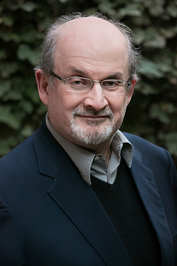
Salman Rushdie
Sir Ahmed Salman Rushdie, a novelist of Indian origin now residing in both Britain and America, stands as a luminary in contemporary literature. Born in Bombay, his work is a potent blend of magic realism and historical fiction, often exploring the intricate tapestries of Eastern and Western civilizations. Rushdie's narratives frequently traverse the Indian subcontinent, delving into themes of migration and cultural intersection. His life, marked by both acclaim and controversy, shifted dramatically following the publication of "The Satanic Verses" in 1988, which ignited global debates over censorship and religious extremism. Despite the peril that has accompanied his career, Rushdie's resolve and contribution to literature remain unwavering. Among his celebrated works, "Midnight's Children" holds a distinguished place, securing the Booker Prize in 1981 and later being recognized as the finest of the Booker winners on multiple occasions. This novel, a cornerstone of modern literature, captures the essence of India's journey through independence with a narrative that intertwines the personal and the political. In a more recent endeavor, Rushdie's "Knife: Meditations After an Attempted Murder" provides a poignant reflection on the violence that has shadowed his life, offering insights into the resilience and fortitude that define his character. Rushdie's prose is characterized by its lyrical quality and profound thematic depth, often addressing the complexities of identity, freedom, and the power of storytelling. His contribution to literature has been acknowledged through numerous accolades, including his fellowship at the Royal Society of Literature and his knighthood for services to the literary world. A fixture in the academic sphere, Rushdie has imparted his wisdom at institutions like New York University and Emory University. His memoir, "Joseph Anton," offers a candid exploration of his life under threat, further cementing his legacy as a fearless advocate for artistic freedom and a pivotal voice in global literature.


by Paul J. Zak
by Rory Vaden
by Robert C. Solomon, Fernando Flores
by Brett Gardner
by Dennis S. Reina
by Julian Baggini
by Larry Downes, Omar Abbosh, Paul Nunes
by Jacqueline Woodson
by Kevin Oakes
by Lindsey Pollak, Kimberly B. Cummings, Kimberly Brown
