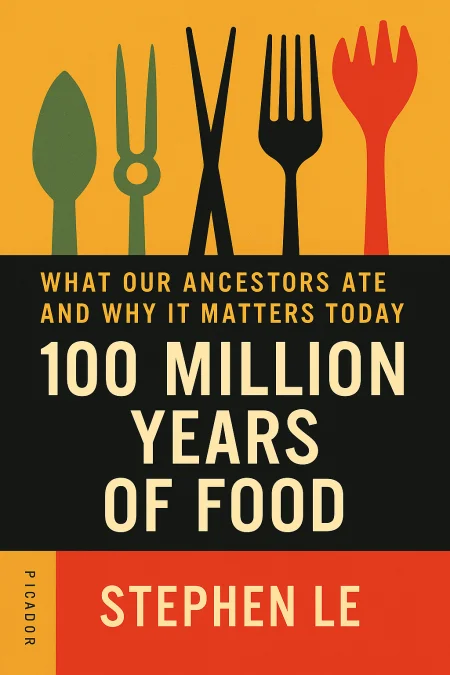
100 Million Years Of Food
What Our Ancestors Ate and Why It Matters Today
Book Edition Details
Summary
In a world where food myths clash like titans, Stephen Le's "100 Million Years of Food" offers a fresh lens on our culinary past, revealing secrets that shape our health today. As a biological anthropologist, Le uncovers the intricate dance between evolution and diet, illustrating how ancient cuisines were crafted by nature's hand to suit our very biology. Yet, modern life tempts us away from these ancestral paths, leading to a rise in diseases that plague the Western world. Through a tapestry of cultural flavors and historical insights, this book challenges us to rethink our plates, weaving a story of survival, adaptation, and the quest for dietary harmony.
Introduction
Picture our earliest primate ancestors 100 million years ago, their nimble fingers carefully selecting insects from bark crevices, extracting precious proteins and fats that would fuel the remarkable journey toward human consciousness. Fast-forward to a 19th-century rice mill in colonial Asia, where steam-powered machinery strips away nutritious bran layers, unknowingly triggering massive epidemics of beriberi among populations who believed they were eating better than ever before. These scenes capture the extraordinary paradox that defines human nutritional history: our relentless quest to improve food safety and abundance has repeatedly created unforeseen health crises that took generations to understand and resolve. This sweeping exploration reveals how humanity's relationship with food has been fundamentally transformed through four pivotal eras, each bringing remarkable innovations alongside devastating unintended consequences. From the ancient harmony between our evolved physiology and natural food sources, through the agricultural revolution that first disrupted traditional eating patterns, to today's industrial food system that produces both unprecedented abundance and widespread chronic disease, we witness a pattern of increasing disconnection from the foods that shaped our evolution. This nutritional odyssey offers invaluable insights for anyone seeking to understand why our modern food environment produces such contradictory health outcomes. Whether you're a health-conscious parent navigating conflicting dietary advice, a policy maker grappling with public health challenges, or simply someone fascinated by how food choices have shaped human civilization, this historical perspective provides essential context for making informed decisions about what we eat and how we live in our complex contemporary food landscape.
Ancient Harmony: Evolutionary Adaptation and Traditional Food Wisdom
For millions of years, human ancestors lived in remarkable synchrony with their food environment, developing sophisticated physiological adaptations that perfectly matched available nutrition sources. Around 100 million years ago, our earliest primate predecessors thrived as insectivores, their sharp teeth and agile bodies perfectly designed for extracting rich proteins and fats from chitinous prey. This ancient relationship established fundamental metabolic patterns that continue to influence human health today, including our attraction to umami flavors and our complex relationship with dietary fats. The transition to fruit-eating marked one of evolution's most significant nutritional gambles. As Earth's climate shifted and forests transformed, our ancestors lost the ability to synthesize vitamin C, a seemingly catastrophic genetic deletion that actually signaled their successful adaptation to fruit-rich environments. This evolutionary trade-off freed up genetic resources for other adaptations while establishing our permanent dependence on external vitamin sources. The biochemical changes from this period, including elevated uric acid levels and altered fructose metabolism, continue to influence modern health outcomes in ways we're only beginning to understand. Traditional human societies that emerged from this evolutionary foundation developed extraordinarily sophisticated food systems that maximized nutrition while minimizing risk. Indigenous cultures worldwide discovered that fermentation could transform toxic plants into nourishing staples, that seasonal eating patterns supported metabolic flexibility, and that specific food combinations unlocked hidden nutritional synergies. These time-tested approaches represented thousands of years of accumulated wisdom about how to work with, rather than against, our evolutionary heritage. The profound health of many traditional populations, virtually free from the chronic diseases that plague modern society, testifies to the effectiveness of these ancestral approaches. Their success lay not in perfect nutrition, but in maintaining the complex relationships between food, community, seasonal rhythms, and physical activity that had sustained human populations for millennia. This ancient harmony between human physiology and food environment would serve as the baseline against which all subsequent nutritional changes would be measured.
Agricultural Revolution: Processing Innovations and Hidden Health Costs (10,000 BCE-1800 CE)
The agricultural revolution, beginning around 10,000 years ago, marked humanity's first major departure from evolutionary eating patterns and introduced the world to systematic food processing. As hunter-gatherer societies transitioned to farming communities, they faced an unprecedented challenge: converting wild plants laden with natural toxins into safe, reliable food sources. This period witnessed the birth of cuisine itself, as ancient peoples developed ingenious techniques to neutralize the chemical defenses that plants had evolved over millions of years to protect themselves from consumption. The innovations of this era were nothing short of remarkable. Mesoamerican cultures discovered nixtamalization, treating corn with alkaline substances to prevent pellagra and improve nutritional value. Asian societies developed complex fermentation processes that transformed soybeans into digestible, protein-rich foods. European populations learned to leach tannins from acorns and process grains through soaking and sprouting to reduce anti-nutrients. Each technique represented generations of experimentation, often involving fatal mistakes, as communities learned to unlock nutrition while avoiding poisoning. However, the agricultural revolution also introduced the first systematic health disruptions in human history. The concentration of diets around a handful of staple grains reduced nutritional diversity and introduced anti-nutrients like phytates and lectins in unprecedented quantities. Populations began experiencing new diseases related to nutritional deficiencies, dental problems from softer processed foods, and increased susceptibility to famines when single crops failed. The very success of agriculture in supporting larger populations created ideal conditions for infectious diseases to emerge and spread through crowded settlements. Despite these challenges, traditional agricultural societies developed sophisticated methods to maximize the nutritional value of their staple crops while maintaining community health. The wisdom embedded in traditional food preparation, from careful grain processing to seasonal food preservation, represented humanity's first systematic attempt to improve upon nature through technology. These innovations laid the groundwork for all subsequent food processing developments, establishing both the tremendous potential and hidden dangers of transforming natural foods to meet human needs.
Industrial Transformation: Mass Production and Deficiency Disease Epidemics (1800-1950)
The Industrial Revolution unleashed humanity's second great nutritional transformation, as steam-powered mills and factory processing promised to make food safer, more convenient, and longer-lasting than ever before. Yet this technological triumph inadvertently created an entirely new category of human suffering: deficiency diseases that struck down millions who believed they were eating better than their ancestors. The mechanization of food processing, while solving problems of storage and distribution, systematically removed nutrients that populations had unknowingly depended upon for centuries. The tragedy of beriberi perfectly illustrates this cruel irony. Steam-powered rice mills could process grain faster and more thoroughly than traditional hand-pounding methods, producing the white, fluffy rice that consumers preferred and merchants could store indefinitely. But in stripping away the outer layers with unprecedented efficiency, these machines also removed the thiamine-rich bran that prevented beriberi. Across Asia, populations that had thrived on traditional rice preparation methods suddenly found themselves facing epidemics of paralysis and death. The wealthy, who could afford the finest processed rice, suffered most severely, while the poor, still eating partially milled grain, remained largely unaffected. Similar patterns emerged with pellagra in the American South, where industrially milled cornmeal replaced traditional stone-ground varieties, and rickets in European industrial cities, where children rarely saw sunlight and consumed increasingly processed foods. Each disease reflected the same fundamental problem: industrial processing that prioritized shelf life, appearance, and convenience over nutritional completeness. The great irony was that populations with access to the most advanced food processing often suffered more than those still relying on traditional methods that preserved essential nutrients. The eventual conquest of these diseases through vitamin supplementation and food fortification marked both a triumph of scientific understanding and the establishment of a new paradigm in nutrition. Rather than returning to traditional processing methods that preserved nutrients naturally, industrial societies chose to add back the vitamins and minerals that processing had removed. This reductionist approach worked brilliantly for addressing specific deficiencies, but it also established the precedent of viewing food primarily as a collection of individual nutrients rather than as complex, whole systems with intricate biological relationships.
Modern Paradox: Abundance, Hygiene and New Health Crises (1950-Present)
The post-war era brought humanity's third nutritional transformation, characterized by unprecedented food abundance, rigorous hygiene standards, and the emergence of entirely new categories of disease that seemed to defy explanation. This period reveals how solving old problems can create unexpected new ones, as our remarkable success in conquering infectious diseases and nutritional deficiencies gave rise to allergies, autoimmune disorders, and lifestyle-related chronic diseases that now affect billions worldwide. The hygiene hypothesis exemplifies this modern paradox beautifully. For millions of years, human immune systems evolved in constant dialogue with parasites, bacteria, and other microorganisms, developing sophisticated responses calibrated by continuous microbial exposure. When modern sanitation eliminated these ancient companions, our immune systems began attacking harmless substances like pollen, peanuts, and our own tissues instead. Children growing up on farms, exposed to diverse microbes through unpasteurized milk and animal contact, show dramatically lower rates of asthma and allergies than their urban counterparts raised in sterile environments. Meanwhile, the triumph over hunger created its own unprecedented health challenges. Cheap, abundant food and labor-saving technology produced populations that were simultaneously overfed and undernourished, sedentary yet chronically stressed. The diseases of affluence, diabetes, heart disease, and obesity, emerged as leading killers in societies that had successfully conquered the infectious diseases that had plagued humanity for millennia. Traditional cuisines, evolved over centuries to balance nutrition with available ingredients, gave way to industrial food systems optimized for profit margins rather than human health outcomes. Perhaps most remarkably, this era has witnessed the emergence of entirely new forms of malnutrition amid apparent plenty. Modern ultra-processed foods can provide excess calories while delivering insufficient essential nutrients, creating populations that are simultaneously obese and deficient in vitamins, minerals, and beneficial compounds found in whole foods. The challenge is no longer obtaining enough food to survive, but navigating an environment where the most convenient and affordable options often undermine long-term health while triggering overconsumption through engineered palatability that overwhelms natural satiety mechanisms.
Summary
This sweeping nutritional history reveals a profound central paradox: each major advance in food production and processing has brought remarkable immediate benefits alongside unforeseen long-term health consequences that often took generations to fully understand. From the agricultural revolution's transformation of toxic wild plants into life-sustaining staples, through industrialization's creation of deficiency diseases amid apparent abundance, to our current struggles with chronic diseases in an era of unprecedented food security, humanity has repeatedly discovered that solving one set of nutritional problems inevitably creates entirely new challenges that test our adaptability and wisdom. The recurring pattern suggests that our relationship with food cannot be separated from our broader technological, social, and environmental context. Traditional food cultures, evolved over centuries through countless cycles of trial and error, often possessed sophisticated understanding of nutrition that modern science is only beginning to appreciate and validate. The most successful historical approaches to nutrition balanced innovation with deep respect for time-tested practices, recognizing that food represents far more than the sum of its chemical components and that eating involves complex biological, social, and cultural dimensions that resist simple technological solutions. For contemporary readers navigating our complex modern food landscape, this historical perspective offers three crucial insights. First, maintain healthy skepticism toward nutritional innovations that ignore or dismiss traditional food cultures and preparation methods, as these often contain wisdom that took generations to develop. Second, recognize that our current food environment is historically unprecedented and requires conscious, informed effort to maintain health in ways our ancestors never needed to consider. Finally, understand that the most sustainable and effective approaches to nutrition will likely combine modern scientific understanding with ancient wisdom about food preparation, seasonal eating, community food practices, and the deep connections between diet, lifestyle, and long-term wellbeing.
Related Books
Download PDF & EPUB
To save this Black List summary for later, download the free PDF and EPUB. You can print it out, or read offline at your convenience.
By Stephen Le
