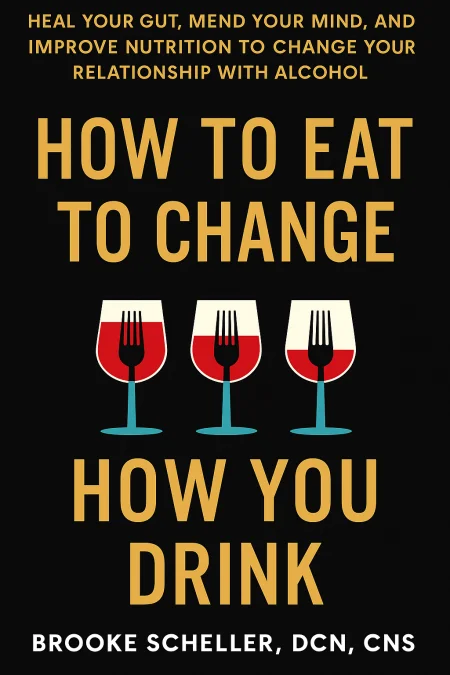
How to Eat to Change How You Drink
Heal Your Gut, Mend Your Mind, and Improve Nutrition to Change Your Relationship with Alcohol
Book Edition Details
Summary
From the depths of addiction to a symphony of nutritional revival, Dr. Brooke Scheller presents a transformative guide that merges the power of food with the journey to sobriety. How to Eat to Change How You Drink isn't just a manual—it's a lifeline. Scheller, having personally navigated the tumultuous waters of alcohol dependency, unveils a groundbreaking approach that combines the wisdom of nutrition with mindfulness to reshape your relationship with alcohol. This book not only identifies your drinking persona but provides a tailored nutritional strategy to diminish cravings and heal your body from within. With science-backed insights and a 30-day meal and lifestyle blueprint, discover how nutritional choices can be your most potent ally in reclaiming health and balance. This is a clarion call to redefine how we approach alcohol, not through abstinence alone, but through the nourishing embrace of food.
Introduction
Picture Sarah, a successful marketing executive, standing in her kitchen at 5 PM, staring at an open bottle of wine. What started as an occasional glass to unwind had become a daily ritual, then two glasses, then the entire bottle. She wasn't alone in her struggle. Across the country, millions of people find themselves caught in the subtle but powerful grip of alcohol dependence, wondering how something that once brought relaxation and joy has become a source of anxiety and shame. The relationship between what we consume and how we feel extends far beyond simple calories and nutrients. Our bodies are intricate biochemical systems where every substance we introduce creates ripple effects throughout our hormones, neurotransmitters, gut health, and brain function. When alcohol becomes a regular part of this equation, it doesn't just affect our liver—it rewires our entire system, creating cravings, mood swings, and physical dependencies that traditional willpower alone cannot overcome. This journey explores a revolutionary approach to breaking free from alcohol's hold by understanding and addressing the nutritional foundations of addiction. Rather than focusing solely on behavioral changes or emotional healing, this path recognizes that our bodies have become biochemically dependent on alcohol, and that healing must happen at the cellular level. Through targeted nutrition, strategic supplementation, and lifestyle modifications, it becomes possible to restore balance, reduce cravings, and reclaim control over our relationship with alcohol.
The Doctor's Hidden Battle: When Expertise Meets Personal Struggle
Dr. Brooke Scheller had dedicated her career to understanding nutrition and helping others achieve optimal health, yet she found herself trapped in a cycle that contradicted everything she knew about wellness. Despite holding a doctorate in clinical nutrition and years of experience counseling clients on healthy lifestyle choices, she was consuming alcohol almost daily, often to the point of losing control entirely. The contradiction was staggering. By day, she would advise clients on the importance of balanced eating, proper hydration, and avoiding substances that could dermine their health goals. By evening, she would find herself opening a bottle of wine, telling herself it was just one glass to unwind from a stressful day. But one glass inevitably became two, then three, until she was drinking an entire bottle regularly, sometimes starting as early as 2 PM during the pandemic lockdowns. What made her situation particularly complex was her deep understanding of exactly how alcohol was affecting her body. She knew it was depleting her B vitamins, disrupting her sleep cycles, causing inflammation, and interfering with her hormonal balance. She could explain to clients how alcohol metabolism prioritizes itself over other bodily functions, essentially hijacking the liver's normal processes. Yet this knowledge seemed powerless against the biochemical changes that alcohol had created in her brain and body. The turning point came when someone close to her pointed out that she had spent an entire weekend intoxicated during what was meant to be quality time together. The observation pierced through her carefully constructed denial, and she realized that her expertise in nutrition might actually hold the key to her recovery. Rather than viewing her addiction as a moral failing or purely psychological issue, she began to understand it as a biochemical problem that could be addressed through targeted nutritional interventions. This revelation led her to develop what she would later call "Functional Sobriety"—an approach that treats alcohol dependence as a complex interplay of nutritional deficiencies, neurotransmitter imbalances, gut dysbiosis, and hormonal disruption. Her personal breakthrough became the foundation for helping others understand that breaking free from alcohol isn't just about willpower; it's about healing the body's biochemistry at its core.
Understanding Your Drinking Pattern: The Three Archetypes Revealed
During her research and clinical practice, Dr. Scheller observed that people's relationships with alcohol fell into distinct patterns, each with its own triggers, biochemical markers, and nutritional needs. She identified these as the Social Drinker, the Stress Drinker, and the Habitual Drinker—archetypes that would require different approaches to healing and recovery. Marcus exemplified the Social Drinker archetype. A successful attorney in his thirties, he rarely drank during the week but transformed into a different person on weekends and at social events. What started as a couple of beers with friends would inevitably escalate into a night of heavy drinking, leaving him with crushing hangovers and regretful behavior. Despite going days or even weeks without alcohol, he found it impossible to moderate once he started drinking in social situations. His brain had been wired from college years to associate alcohol with fun and social bonding, creating a powerful dopamine response that overrode his rational decision-making. Jennifer represented the Stress Drinker pattern. A working mother of two, she discovered that a glass of wine at 5 PM seemed to give her the energy to tackle evening responsibilities—cooking dinner, helping with homework, managing household tasks. What she didn't realize was that her afternoon energy crash was largely due to blood sugar instability from poor eating patterns throughout the day. The alcohol provided a temporary blood sugar spike that felt energizing, but it set up a vicious cycle of crashes that required more alcohol to manage. Her drinking had become a biochemical band-aid for underlying nutritional imbalances. The Habitual Drinker archetype was embodied by Robert, a retail manager who had gradually progressed from weekend drinking to daily consumption over several years. His body had become so accustomed to alcohol that he experienced anxiety, shakiness, and intense cravings when he tried to stop. His neurotransmitter systems had adapted to the presence of alcohol, and without it, he felt unable to relax, sleep, or cope with normal daily stressors. His drinking wasn't driven by social pressure or specific stress events—it had become as automatic and necessary as eating or breathing. Understanding these archetypes reveals that there's no one-size-fits-all approach to recovery. Each pattern reflects different biochemical imbalances and requires targeted nutritional interventions to address the root causes rather than just the symptoms of alcohol dependence.
Healing from Within: How Nutrition Rewires Your Relationship with Alcohol
The breakthrough in understanding alcohol recovery through nutrition begins with recognizing that chronic alcohol consumption creates profound changes in three critical body systems: blood sugar regulation, gut health, and neurotransmitter production. These systems become so intertwined with alcohol metabolism that stopping drinking without addressing them often leads to intense cravings, mood swings, and relapse. Charlotte's story illustrates this perfectly. As a busy executive, she noticed that her afternoon wine ritual seemed to give her energy for evening activities—cooking dinner, doing laundry, and tidying up. What she didn't realize was that her eating pattern of a sugary coffee drink for breakfast and a light salad for lunch was creating severe blood sugar crashes by 5 PM. Her body was literally starving for fuel, but instead of recognizing hunger signals, she interpreted the discomfort as a craving for alcohol. The wine provided a rapid spike in blood sugar that temporarily restored her energy, but it also set up a cycle of dependency that made her feel she needed alcohol to function. When Charlotte worked with Dr. Scheller to implement a structured eating plan with protein-rich meals every three to four hours, something remarkable happened. Her afternoon "wine cravings" disappeared entirely. By stabilizing her blood sugar with strategic meals and snacks, her body no longer required the artificial energy boost that alcohol provided. The amino acids from increased protein intake began supporting her natural production of neurotransmitters like serotonin and dopamine, reducing her psychological dependence on alcohol for mood regulation. The gut component of her healing was equally crucial. Years of daily wine consumption had created an imbalance in her intestinal bacteria, with harmful microbes thriving on the alcohol and sugar while beneficial bacteria died off. These harmful bacteria were literally sending signals to her brain demanding more of their preferred fuel—alcohol and sugar. Through targeted probiotic supplementation and prebiotic-rich foods like asparagus, artichokes, and fermented vegetables, Charlotte's gut microbiome began to rebalance. As healthy bacteria multiplied, the biochemical craving signals subsided. This approach revealed a fundamental truth about alcohol recovery: the body that has been regularly consuming alcohol is biochemically different from one that hasn't. Simply removing alcohol without addressing these underlying changes leaves people fighting against their own physiology, making recovery unnecessarily difficult and often unsuccessful.
Building Your Alcohol-Free Life: Community, Food, and Lasting Change
The final piece of sustainable recovery extends beyond individual biochemistry to encompass the social and environmental factors that either support or sabotage lasting change. Emma's transformation illustrates how comprehensive lifestyle restructuring creates an ecosystem for success rather than just temporary sobriety. Emma had been sober for three months when she faced her biggest challenge: her best friend's wedding. The celebration was held at a vineyard, with wine flowing freely and her entire social circle expecting her to participate in the festivities as she always had. In the past, she would have used willpower alone to resist drinking, often ending the evening feeling isolated and resentful. This time, she prepared differently. She brought her own sparkling apple cider vinegar drink that looked festive in a wine glass, ate a protein-rich meal before the event to stabilize her blood sugar, and most importantly, she had built connections with others who supported her alcohol-free lifestyle. Through online communities and local meetup groups, Emma had discovered a world of people who were thriving without alcohol—entrepreneurs starting businesses, athletes training for marathons, parents who were more present with their children. These connections provided more than just accountability; they offered a vision of what life could look like beyond the limitations that alcohol had imposed. When someone at the wedding asked why she wasn't drinking, she simply said, "I feel better when I don't," and found that most people were actually curious and supportive rather than judgmental. The environmental changes Emma made were equally important. She curated her social media feeds to remove alcohol-focused content and replaced it with accounts sharing recipes, fitness inspiration, and personal growth content. She changed her route home from work to avoid passing the liquor store where she used to stop. Most significantly, she transformed her kitchen into a healing space, stocked with the foods that supported her recovery: organic vegetables, wild-caught salmon, nuts and seeds rich in omega-3 fatty acids, and herbal teas for evening relaxation. Emma's success wasn't just about removing alcohol from her life; it was about creating a completely new identity and lifestyle that made alcohol irrelevant. The nutritional foundation provided biochemical stability, while the community and environmental changes reinforced her new way of being. Six months later, she couldn't imagine returning to her old patterns—not because she was forcing herself to resist, but because she had genuinely outgrown the need for alcohol in her life.
Summary
The journey from alcohol dependence to freedom reveals a profound truth that challenges conventional approaches to recovery: lasting change happens not through willpower alone, but through understanding and healing the biochemical foundations that create and maintain addiction. When we recognize that chronic alcohol consumption fundamentally alters our blood sugar regulation, gut microbiome, and neurotransmitter production, we can address these root causes with targeted nutrition and create sustainable transformation from the inside out. The most powerful insight from this approach is that our bodies possess an innate capacity for healing when given the right conditions. By stabilizing blood sugar through strategic meal timing and macronutrient balance, restoring gut health with probiotics and healing foods, and supporting neurotransmitter production with amino acids and essential nutrients, we can literally rewire our relationship with alcohol at the cellular level. This creates space for genuine choice rather than biochemical compulsion. Perhaps most importantly, this journey teaches us that recovery is not about deprivation but about abundance—discovering energy, clarity, and joy that alcohol had been masking rather than providing. When we combine nutritional healing with supportive community and intentional lifestyle design, we don't just break free from alcohol; we step into a version of ourselves that is more vibrant, present, and capable than we ever imagined possible. The path forward isn't about battling cravings forever, but about creating a life so fulfilling that alcohol becomes irrelevant to our happiness and success.
Related Books
Download PDF & EPUB
To save this Black List summary for later, download the free PDF and EPUB. You can print it out, or read offline at your convenience.
By Brooke Scheller
