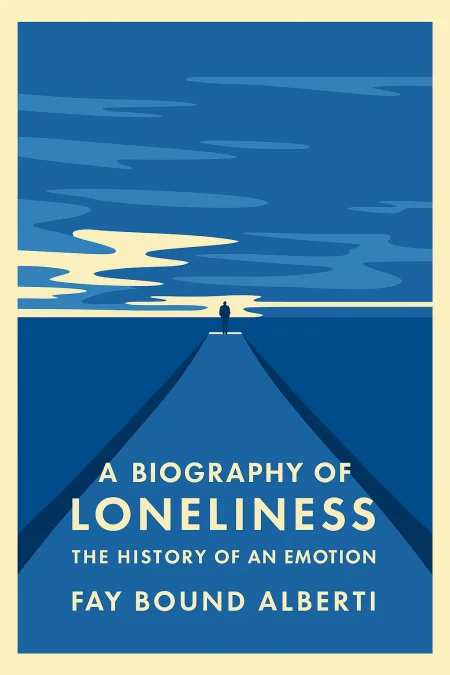
A Biography of Loneliness
The History of an Emotion
Book Edition Details
Summary
What if loneliness was never a timeless human woe, but rather a distinctly modern enigma? In "A Biography of Loneliness," Fay Bound Alberti embarks on a riveting exploration of this emotional labyrinth, challenging our assumptions with the weight of history. Alberti's compelling narrative unveils how loneliness, far from being an age-old universal plight, only found its voice in the post-1800 world. By weaving together the poignant stories of figures like Sylvia Plath, Queen Victoria, and Virginia Woolf, she paints a rich tapestry of how class, gender, and ethnicity color this complex sentiment. Dive into a world where loneliness speaks a language born of modernity, and discover how it has come to define our contemporary emotional landscape in ways both unexpected and profound.
Introduction
Imagine walking through a medieval village where every face is familiar, every role is defined, and solitude means communion with God rather than abandonment by humanity. Now picture yourself in a modern city, surrounded by millions yet profoundly alone, scrolling through social media feeds that somehow deepen rather than heal your isolation. This dramatic transformation reveals one of history's most overlooked yet consequential shifts: the birth of loneliness as we know it today. Before 1800, the very concept of loneliness barely existed. What we now consider a universal human affliction was actually born alongside industrialization, urbanization, and the rise of individualism. The word "lonely" once described merely a physical state, devoid of emotional suffering. Medieval monks sought solitude for spiritual enrichment, while eighteenth-century philosophers celebrated retreats into nature as paths to wisdom. Something fundamental changed as traditional communities dissolved and individual identity became paramount. This historical journey illuminates three crucial insights that reshape our understanding of human connection. First, loneliness is not an inevitable part of the human condition but a specific response to particular social arrangements that emerged over the past two centuries. Second, the same forces that liberated us from traditional constraints also severed the bonds that provided meaning and belonging. Third, our current loneliness epidemic has deep roots in the philosophical, economic, and technological transformations that created the modern world, suggesting that meaningful solutions require understanding these historical patterns rather than treating isolation as merely a personal failing.
The Birth of Loneliness: From Sacred Solitude to Secular Suffering (1800-1850)
The early nineteenth century witnessed a profound linguistic and emotional revolution that would reshape human experience forever. Before this period, being alone was simply "oneliness" - a neutral physical state often welcomed for spiritual contemplation or intellectual reflection. The transformation from this benign solitude to the painful condition we now call loneliness occurred as several revolutionary forces collided with devastating effect on traditional ways of life. The Industrial Revolution served as the primary catalyst, dismantling centuries-old patterns of communal existence. As people migrated from villages where every face was familiar to anonymous urban centers, they encountered forms of isolation their ancestors had never experienced. Extended families scattered across vast distances, traditional support networks crumbled, and the rhythms of agricultural life that had bound communities together for millennia gave way to the mechanical demands of factory production. Work became separated from home, public life from private experience, creating unprecedented divisions in human existence. Simultaneously, the Enlightenment was challenging the religious certainties that had provided comfort and meaning for countless generations. The decline of universal belief removed what medieval people had experienced as the constant, comforting presence of an ever-watchful God. Where previous generations might feel physically alone but never truly isolated in a divinely inhabited universe, secular modernity created the terrifying possibility of genuine abandonment. The rise of scientific materialism relocated human identity from the eternal soul to the individual mind, positioning each person as fundamentally separate from others. This convergence of social disruption and philosophical transformation created entirely new forms of emotional experience. Medical practitioners began documenting nervous conditions and forms of melancholy that seemed directly connected to social isolation. The very vocabulary of distress expanded to accommodate feelings that had no precedent in human history. The emergence of "loneliness" as both word and concept wasn't merely descriptive but constitutive, helping to create the very experiences it sought to name and establishing patterns that would define modern emotional life for centuries to come.
Industrial Revolution and Romantic Ideals: Creating the Isolated Individual (1850-1920)
The Victorian era transformed loneliness from an emerging concept into a central feature of modern consciousness, as industrial capitalism fundamentally altered both social structures and individual expectations. Factory workers labored in mechanical isolation far from family networks, while the emerging middle class found themselves trapped in rigid social conventions that often prevented genuine intimacy. The promise of progress came at the unexpected cost of human connection, creating forms of alienation that would define the modern condition. Literature became the primary vehicle for exploring these new emotional territories. The Romantic movement had already begun celebrating individual feeling over collective wisdom, but Victorian writers pushed further, creating complex psychological portraits of isolated souls navigating an increasingly fragmented world. From the brooding heroes of Gothic novels to the detailed inner lives of realist fiction, literature provided both language and legitimacy for experiences of profound disconnection. These weren't merely artistic innovations but mirrors of lived experience, as writers captured the emotional reality of a society in transition. The period witnessed the birth of the modern romantic ideal, with its promise of finding one's "soulmate" or perfect complement. This concept, drawing from ancient philosophy but transformed by Christian marriage ideals and capitalist individualism, created both transcendent hope and devastating disappointment. The expectation that romantic love could solve existential loneliness placed enormous pressure on personal relationships while often leaving people more isolated when such perfect unions proved elusive. The search for "the one" transformed loneliness from a temporary condition into a chronic state of incompleteness. Rapid urbanization completed this transformation by creating new forms of anonymous existence. City dwellers could be surrounded by thousands yet know none intimately, experiencing the peculiar modern phenomenon of being lonely in a crowd. Transportation networks connected distant places while paradoxically separating people from their immediate neighbors. The contrast between physical proximity and emotional distance became a defining feature of modern life, establishing the social conditions that would make loneliness not just possible but probable for millions of people navigating the brave new world of industrial civilization.
Digital Paradox: Social Media and the Contemporary Loneliness Epidemic (1990-2020)
The digital revolution promised to solve humanity's ancient connection problems by linking everyone instantly across vast distances, yet it has created the most paradoxical chapter in loneliness's history. Social media platforms designed to bring people together have often left users feeling more isolated than ever, scrolling through carefully curated lives while questioning their own worth and belonging. The technology that was supposed to heal modern disconnection has frequently deepened it, revealing the complex relationship between communication and genuine connection. The rise of social networking illuminated a crucial distinction that previous generations had taken for granted: having hundreds of online "friends" or thousands of "followers" proved no guarantee against profound loneliness. The digital medium itself seemed to strip away the subtle cues, physical presence, and shared experiences that create genuine intimacy. Virtual communities, while offering some benefits for marginalized groups and distant relationships, often substituted shallow interactions for the deep bonds that sustain human flourishing across time and adversity. Algorithmic systems designed to maximize user engagement discovered that negative emotions - envy, inadequacy, outrage, fear of missing out - kept people scrolling longer than positive ones. The attention economy inadvertently monetized human insecurity, creating business models that profited from psychological distress. Social comparison, always a feature of human societies, became constant and global, with devastating effects on mental health as people measured their behind-the-scenes reality against others' highlight reels. Yet the digital age also revealed loneliness's true nature as a social rather than merely individual problem. Research showed how isolation spreads through networks like a contagion, how online harassment can devastate real lives, and how digital divides exclude vulnerable populations from new forms of community. As artificial intelligence and virtual reality advance, we face fundamental choices about what kinds of relationships we want to cultivate and what role technology should play in human flourishing, recognizing that genuine connection requires more than communication - it demands presence, vulnerability, and shared meaning that transcend the virtual realm.
Summary
The biography of loneliness reveals a central paradox of modern life: our greatest historical achievement - individual freedom - has become a source of our deepest collective suffering. The transformation from medieval communal solidarity through industrial individualism to digital fragmentation shows how economic systems, technological innovations, and cultural values shape even the most intimate aspects of human experience. Each historical phase promised greater autonomy yet often delivered deeper isolation, as the pursuit of individual fulfillment came at the cost of communal bonds that previous generations had taken for granted. This historical perspective offers both sobering insights and genuine hope for addressing contemporary social isolation. The story reveals that current loneliness epidemics are not inevitable features of human nature but products of specific policy choices, technological designs, and cultural priorities that can be consciously altered. The same societies that created modern loneliness possess the capacity to create new forms of community that balance personal autonomy with social solidarity, learning from both the failures and successes of previous eras. Three practical insights emerge from this historical analysis. First, effective solutions require collective rather than purely individual responses - rebuilding institutions, redesigning technologies, and reimagining communities rather than simply treating loneliness as a personal pathology requiring individual therapy. Second, we must cultivate forms of connection that transcend digital mediation, creating spaces for genuine presence and shared purpose that acknowledge both our individual worth and our fundamental interdependence. Finally, addressing loneliness means confronting the structural inequalities and social arrangements that make some people more vulnerable to isolation than others, recognizing that human flourishing requires not just personal resilience but supportive communities that make connection possible, meaningful, and sustainable across the full spectrum of human experience.
Related Books
Download PDF & EPUB
To save this Black List summary for later, download the free PDF and EPUB. You can print it out, or read offline at your convenience.
By Fay Bound Alberti
