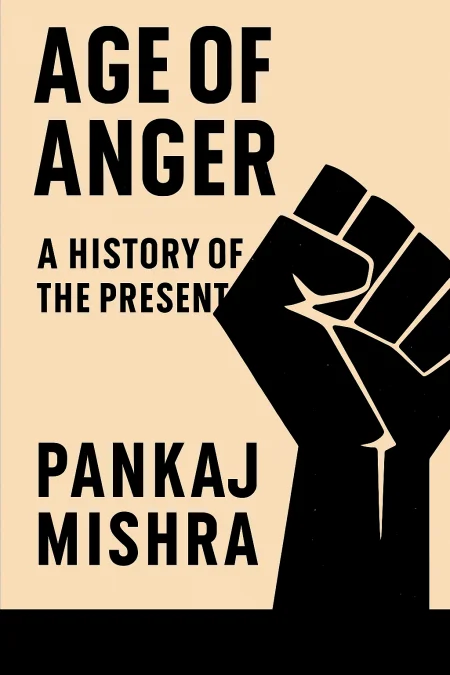
Age of Anger
A History of the Present
Book Edition Details
Summary
In a world teetering on the edge of chaos, Pankaj Mishra's "Age of Anger" confronts the unsettling rise of global rage with a piercing lens. As ancient resentments meet modern discontent, Mishra unearths the roots of today's turbulent landscape, tracing them back to the Enlightenment's unfulfilled promises. This book provocatively connects the dots from history's disillusioned dreamers to today's radicalized voices, offering a daring perspective on how our interconnected era breeds both hope and hostility. With insightful clarity, Mishra invites readers to navigate the tumultuous waters of cultural anxiety and ideological conflict, urging a reconsideration of the forces shaping our collective fate. Here lies an essential exploration for those daring to question the unsettling echoes of the past reverberating through our present.
Introduction
In the autumn of 1749, Jean-Jacques Rousseau experienced a moment of revelation while walking the dusty roads outside Paris. Reading about an essay contest on whether progress in arts and sciences had improved human morals, he suddenly perceived the dark contradictions lurking beneath the glittering surface of Enlightenment civilization. This flash of insight would ignite a counter-revolution against modernity that continues to shape our turbulent world today. The transformation of Enlightenment dreams into waves of global anger represents one of history's most consequential narratives. This exploration traces an unbroken line from the intellectual salons of 18th-century Paris to today's digital echo chambers, revealing how the same patterns of frustrated aspiration and vengeful backlash repeat themselves across cultures and centuries. From German Romantic nationalism to Islamic fundamentalism, from Russian nihilists to contemporary populists, the forces that promised to liberate humanity from tradition and superstition have paradoxically created new forms of alienation and rage. Understanding this historical arc proves essential for anyone seeking to comprehend the roots of contemporary political upheaval and cultural conflict. The book illuminates why our interconnected world seems perpetually convulsed by anger, why prosperity and progress have bred such widespread discontent, and how the very success of modern civilization has generated its own enemies. These insights speak directly to citizens, leaders, and thinkers grappling with the seemingly inexplicable fury that characterizes our age.
Voltaire vs Rousseau: The Foundational Split of Modernity (1750-1789)
The intellectual foundations of our modern crisis emerged from an extraordinary philosophical battle in 18th-century France. Voltaire and his fellow philosophes championed reason, commerce, and cosmopolitan progress with supreme confidence. These ambitious men of letters had risen from humble origins to become the toast of Parisian salons, where they preached the gospel of material advancement and rational reform. Voltaire himself embodied their success story, transforming from a lawyer's son into one of Europe's wealthiest and most influential intellectuals. The philosophes believed they had discovered the secret formula for human happiness: unleash individual self-interest in free markets, apply scientific reason to social problems, and gradually extend civilization's benefits to all mankind. They celebrated luxury and consumption as civilizing forces, with Voltaire boldly declaring that "the golden age is where I am." Their vision attracted powerful patrons among enlightened despots who promised to drag their backward subjects into modernity through rational administration. Yet even as this cosmopolitan elite celebrated their triumph over religious superstition and feudal hierarchy, Jean-Jacques Rousseau launched a devastating counter-attack from within their own ranks. The awkward outsider from Geneva, who never quite fit into sophisticated salon society, argued that the very progress the philosophes celebrated was corrupting human nature itself. He perceived that competitive individualism created artificial needs and envious comparisons that made people miserable despite their material gains. Rousseau's famous declaration that "man is born free, and everywhere he is in chains" pointed to the psychological bondage imposed by a society based on perpetual competition. His insights into the spiritual costs of modernization, his celebration of authentic community over cosmopolitan sophistication, and his understanding of resentment as progress's dark shadow would echo through the centuries. This fundamental disagreement between Voltaire's optimistic materialism and Rousseau's romantic critique established the dynamic tension that would drive the next three centuries of global upheaval.
German Romanticism and the Birth of Cultural Nationalism (1790-1848)
The French Revolution's explosive promise of liberty, equality, and fraternity sent shockwaves across Europe, nowhere more powerfully than in the fragmented German states. Young German intellectuals initially welcomed the Revolution as vindication of their philosophical ideals, but disillusionment quickly followed as the movement degenerated into terror and Napoleonic imperialism. This bitter disappointment, combined with their own political weakness and cultural marginalization, drove German thinkers to develop an entirely revolutionary response to modernity. Figures like Herder, Fichte, and the young romantics transformed their resentment of French cultural dominance into a celebration of German Kultur over Western Zivilisation. They argued that each nation possessed a unique spirit expressed through language, customs, and folk traditions that was inherently superior to the artificial cosmopolitanism of the Enlightenment. This represented more than cultural pride; it was a fundamental reimagining of human identity itself, replacing the universal rational individual of the philosophes with the idea of people shaped by their membership in organic national communities. The humiliation of German defeat and occupation by Napoleon's armies after 1806 transformed this cultural nationalism into something far more dangerous. Intellectuals like Fichte began calling for a "holy war" against French domination, while poets like Kleist fantasized about damming the Rhine with French corpses. The Wars of Liberation that followed created the first modern nationalist mythology, complete with martyrs, sacred symbols, and promises of spiritual regeneration through blood sacrifice. This German model of cultural nationalism would prove devastatingly influential across the world. From Russian Slavophiles to Japanese philosophers, from Hindu nationalists to Islamic fundamentalists, educated elites in societies struggling to match Western power would adopt the German strategy of claiming spiritual and cultural superiority over their materially successful rivals. The pattern remained constant: initial fascination with Western achievements, followed by humiliation and rejection, culminating in assertions of indigenous authenticity against foreign corruption. The German Romantics had created a template for resentment that would fuel global conflicts for centuries to come.
Imperial Competition and the Crisis of Liberal Democracy (1848-1914)
The failure of democratic revolutions across Europe in 1848 marked a crucial turning point in modernity's trajectory. Liberal hopes for gradual progress through constitutional government and free markets gave way to more radical solutions as industrial capitalism's contradictions became impossible to ignore. The Crystal Palace exhibition of 1851 may have celebrated British industry and global commerce, but it also symbolized a world increasingly divided between winners and losers in the great game of modernization. The second half of the 19th century witnessed unprecedented global integration driven by railways, telegraphs, and steamships, yet this connectivity bred conflict rather than harmony. The very success of Western industrial civilization created new forms of anxiety and competition. Established powers like Britain and France faced challenges from rising nations like Germany and the United States, while vast populations in Asia and Africa found their traditional ways of life disrupted by relentless market expansion. This period saw the emergence of political movements that would define the 20th century: socialism, nationalism, and imperialism all gained mass followings as responses to rapid modernization's dislocations. Intellectuals and activists across Europe developed increasingly radical critiques of liberal democracy, which seemed incapable of addressing modern life's spiritual emptiness and social fragmentation. From Wagner's mythological nationalism to Marx's revolutionary socialism to Nietzsche's philosophy of the will to power, thinkers offered alternatives to bourgeois civilization's bland materialism. The scramble for empire that intensified after 1870 represented both Western confidence's apex and the beginning of its undoing. As European powers carved up Africa and Asia, they spread the very ideas of national self-determination and popular sovereignty that would eventually turn against them. The age of global integration was simultaneously the age of global fragmentation, as the Western development model created its own contradictions and enemies. By 1914, the liberal dream of peaceful progress through commerce and reason lay in ruins, replaced by the nightmare of total war between industrialized nation-states.
Modern Rage: From World Wars to Digital Age Populism (1914-Present)
The catastrophic world wars of the 20th century shattered Enlightenment faith in inevitable progress, but they did not end the cycle of modernization and backlash that had begun in 18th-century Europe. Instead, the pattern spread globally as decolonization brought Western ideas and institutions to societies across Asia and Africa. The results were often explosive, as traditional elites found themselves caught between modernization's demands and populations unwilling or unable to adapt to rapid change. The Iranian Revolution of 1979 exemplified this dynamic perfectly. The Shah's aggressive Westernization program, backed by American power and oil wealth, had created a modern facade that concealed deep social tensions. Intellectuals like Jalal Al-e-Ahmad articulated powerful critiques of "Westoxification" that resonated with millions of Iranians who felt alienated from their own culture. When revolution came, it took the form not of secular nationalism but of Islamic fundamentalism, as Ayatollah Khomeini successfully channeled popular resentment into religious ideology promising both authenticity and empowerment. The collapse of communism in 1989 seemed to vindicate the Western model of liberal democracy and free markets, but the triumph proved short-lived. The globalization that followed created new winners and losers on unprecedented scales, while the digital revolution accelerated change beyond what many societies could absorb. From Hindu nationalism's rise in India to authoritarian populists' success in Europe and America, the early 21st century has witnessed a global backlash against cosmopolitan elites and their promises of universal prosperity. Today's angry movements, whether Islamic fundamentalists, Hindu nationalists, or Western populists, all follow the same script pioneered by Rousseau and perfected by German Romantics. They claim to represent authentic people against corrupt elites, promise to restore lost greatness through purification and struggle, and offer the psychological satisfaction of moral superiority over their enemies. The specific content of their ideologies may differ, but the underlying structure of resentment remains constant, suggesting that the age of anger is far from over.
Summary
The central paradox of the modern world emerges clearly from this historical survey: the very forces that promised to liberate humanity from ignorance and oppression have repeatedly generated new forms of alienation and rage. The Enlightenment dream of rational progress through individual freedom and global commerce has consistently produced its own negation in romantic nationalism, religious fundamentalism, and populist backlash. This pattern represents not an accident but an inherent feature of modernization itself, which destroys traditional sources of meaning and identity faster than it can create adequate replacements. Understanding this recurring dynamic offers crucial insights for navigating our current global crisis. Rather than dismissing contemporary anger as irrational fanaticism, we must recognize it as a predictable response to rapid change's dislocations. The solution requires moving beyond the simplistic opposition between progress and tradition to find ways of honoring human needs for meaning, community, and dignity within an interconnected world's framework. This means developing more inclusive forms of development that address not only material needs but also spiritual longings that purely technical solutions cannot satisfy. Only by learning from history's repeated cycles of hope and disappointment can we hope to build a future that fulfills modernity's promises without reproducing its pathologies.
Related Books
Download PDF & EPUB
To save this Black List summary for later, download the free PDF and EPUB. You can print it out, or read offline at your convenience.
By Pankaj Mishra
