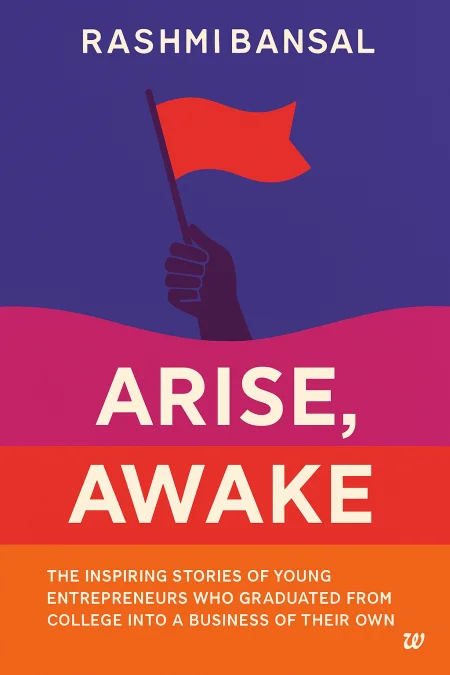
Arise, Awake
The Inspiring Stories of Young Entrepreneurs Who Graduated from College into a Business of Their Own
Book Edition Details
Summary
In the vibrant whirl of ambition and innovation, "Arise, Awake" chronicles the audacious journeys of India’s trailblazing young entrepreneurs who dared to defy conventional career paths. Meet the dreamers who, armed with little more than passion, an idea, and a modest internet connection, transformed their hostel rooms into the nerve centers of burgeoning enterprises. This compelling narrative showcases individuals from varied educational and geographic backgrounds, each carving out their niche in fields as diverse as construction, student housing, and fast food. United by the spirit of self-reliance, they turned obstacles into opportunities, igniting a revolution of self-made success stories. This book is not just a collection of inspiring tales; it’s a manifesto for the bold, urging readers to seize their moment and sculpt their destiny with relentless fervor.
Introduction
In the bustling corridors of engineering colleges and business schools across India, while most students prepare for campus placements and dream of secure corporate careers, a different breed of young minds is quietly brewing revolutionary ideas. These are the student entrepreneurs who dared to transform dormitory conversations into business ventures, turning college canteens into boardrooms and hostel rooms into startup headquarters. From selling flavored lassi outside IIT gates to creating India's first automatic dosa machine, these young visionaries refused to wait for graduation to chase their dreams. Their journeys reveal the raw audacity of youth meeting the harsh realities of business world. Some failed spectacularly before finding success, others pivoted from their original dreams to discover their true calling, and a few built empires while still attending lectures. What unites them all is an unwavering belief that age is just a number when it comes to creating value and solving real problems. Through their stories, we discover how the freedom of college life, combined with fearless ambition, can become the perfect incubator for groundbreaking enterprises. These entrepreneurs show us that success isn't about having all the answers, but about having the courage to ask the right questions and the persistence to find solutions, even when the world tells you to wait your turn.
From Campus Dreams to Market Reality
The transition from student life to entrepreneurial reality often begins with a simple observation of everyday problems. Shashank and Abhinav from NIT Surathkal noticed the chaos in healthcare appointments during a family medical emergency, leading them to create Practo, now a multi-crore healthcare platform. Similarly, Sourabh Bansal's moment of clarity came when he wrote "5000 crore" on his hostel room wall at IIT Kharagpur, transforming a bold prediction into the foundation of Magicrete's revolutionary building materials empire. These campus-bred entrepreneurs quickly learned that academic theories pale in comparison to market realities. The comfortable ecosystem of college, with its predictable schedules and safety nets, gave way to the unforgiving world of cash flows, customer negotiations, and 16-hour work days. Prabhkiran Singh discovered this firsthand when his beloved lassi business at IIT Bombay failed during monsoons, teaching him that passion alone isn't sufficient without understanding seasonal market dynamics and operational challenges. Yet the college environment provided unique advantages that seasoned professionals often lack. Students had time to experiment, fail, and iterate without the pressure of supporting families or maintaining lifestyles. Prakash Mundhra leveraged his MBA coursework to refine his puja kit business model, while Anurag Arora used his painful experience as a cheated hostel resident to build Ganpati Facilities. The peer networks, faculty support, and institutional credibility of their colleges became launching pads rather than limitations. The most successful among them understood that the transition required more than just scaling up college projects. They needed to professionalize operations, build sustainable business models, and create value propositions that extended far beyond their immediate campus communities. Those who made this mental shift from student entrepreneurs to serious business builders found themselves leading companies that outlasted their college years and grew into legitimate enterprises serving thousands of customers nationwide.
Breaking Conventions and Building Ventures
Traditional career paths held little appeal for these unconventional minds who viewed established norms as puzzles to be solved rather than rules to be followed. When Aruj Garg's law school peers prepared for prestigious firm internships, he was experimenting with sandwich recipes in his hostel room, eventually building Bhukkad into a natural fast food brand. His decision to abandon legal practice for food entrepreneurship shocked classmates and family, but it aligned with his authentic interests and market observations about healthy eating trends. The courage to break conventions often meant facing skepticism from multiple quarters. Parents who had invested in engineering or management degrees struggled to understand why their children would abandon "secure" corporate careers. Apurva Joshi faced constant questions about her choice to specialize in forensic accounting, a field so niche that even fellow chartered accountants doubted its viability. Yet her persistence in this unconventional path led to expertise that made her indispensable when corporate fraud investigations became mainstream. These entrepreneurs discovered that breaking conventions required not just courage but also strategic thinking. Eshwar and Sudeep spent three years perfecting their automatic dosa machine, understanding that revolutionary products demand revolutionary patience. They bunked classes to sit with mechanics in Chennai's industrial markets, learning practical engineering that their textbooks never covered. Their willingness to prioritize hands-on learning over academic performance ultimately created intellectual property that attracted serious investors. The most successful convention-breakers learned to channel their rebellious energy into systematic innovation. Rather than rejecting all established practices, they carefully chose which rules to break and which to follow. They maintained academic performance to keep backup options open while pouring their creative energy into ventures that aligned with their natural talents and market opportunities. This balanced approach to rebellion proved more sustainable than complete rejection of conventional wisdom.
Lessons from Young Pioneers
The journey from student to successful entrepreneur revealed consistent patterns across different industries and personalities. First, these young pioneers learned that starting early provided crucial advantages in developing business instincts and building resilience. Rupesh Shah's early failures at traditional academics became strengths when he needed to navigate the uncertain world of open-source software and educational technology. His willingness to learn from mistakes rather than hide from them became a competitive advantage. Time emerged as the most valuable resource these students possessed. Unlike working professionals juggling existing responsibilities, students could dedicate entire summers to perfecting products or understanding markets. Ankit and Neeraj from BITS Pilani used this temporal freedom to iterate through multiple business ideas before discovering their breakthrough concept in YoCaptcha. Their ability to pivot quickly without financial pressure allowed them to find product-market fit through experimentation rather than expensive market research. The importance of building complementary partnerships became another crucial lesson. Most successful student ventures involved pairs or small teams where different personalities and skills created synergy. Dhruv's business development skills perfectly complemented Ankit's technical abilities, while Puneet's financial acumen balanced Sourabh's visionary leadership at Magicrete. These partnerships worked because they were built on genuine friendship and shared commitment rather than just complementary skillsets. Perhaps most importantly, these pioneers learned to embrace uncertainty as a competitive advantage rather than a limitation. While established companies moved cautiously to protect existing market positions, student entrepreneurs could take bold risks because they had little to lose. This fearlessness in the face of uncertainty became their greatest weapon against larger, more resourced competitors who were paralyzed by the need to protect existing revenue streams and market share.
The Entrepreneurial Mindset in Action
The entrepreneurial mindset that emerged from these college experiences transcended specific business models or industry sectors. It represented a fundamental approach to problem-solving that combined optimism with pragmatism, creativity with execution discipline. When Prabhkiran and Siddharth's initial ventures failed, they didn't retreat into safe employment but instead applied lessons learned to build Bewakoof into a successful youth lifestyle brand. Their ability to view failure as data rather than defeat became the foundation of their eventual success. This mindset manifested most clearly in how these entrepreneurs approached resource constraints. Rather than waiting for perfect conditions or adequate funding, they found creative ways to bootstrap their ventures using available resources. Anurag Arora funded his hostel business expansion using advance payments from students, while Apurva Joshi built her forensic accounting expertise through unpaid internships that provided invaluable practical experience. They viewed limitations as creative challenges rather than insurmountable obstacles. The entrepreneurial mindset also required developing comfort with ambiguity and rapid decision-making under incomplete information. Traditional academic training emphasizes finding correct answers to well-defined problems, but entrepreneurship demands making directional decisions with limited data and adjusting course based on market feedback. These young entrepreneurs learned to balance analytical thinking with intuitive judgment, using both logic and gut instinct to navigate uncertain business environments. Most significantly, they developed an ownership mentality that extended beyond their formal roles or immediate responsibilities. They understood that entrepreneurial success required taking responsibility for outcomes regardless of circumstances, learning whatever skills were necessary, and persisting through setbacks that would derail less committed individuals. This ownership mindset became their most transferable asset, valuable whether they continued building their original ventures or applied their entrepreneurial skills to new challenges and opportunities.
Summary
The stories of these young entrepreneurs illuminate a fundamental truth about innovation and business creation: great ventures often emerge not from perfect planning or ideal conditions, but from the unique combination of youthful audacity, extended experimentation time, and genuine problem-solving passion that college life provides. These individuals transformed their educational years from passive preparation into active creation, proving that the gap between learning and doing can be much smaller than conventional wisdom suggests. Their journeys offer two essential lessons for aspiring entrepreneurs: first, that starting early provides invaluable advantages in developing business instincts and resilience, and second, that the willingness to embrace uncertainty and learn from failure often matters more than technical expertise or access to capital. For students sitting in classrooms today, these stories serve as both inspiration and practical roadmap, demonstrating that the most meaningful education often happens not in lecture halls but in the challenging, exhilarating process of building something meaningful from scratch.
Related Books
Download PDF & EPUB
To save this Black List summary for later, download the free PDF and EPUB. You can print it out, or read offline at your convenience.
By Rashmi Bansal
