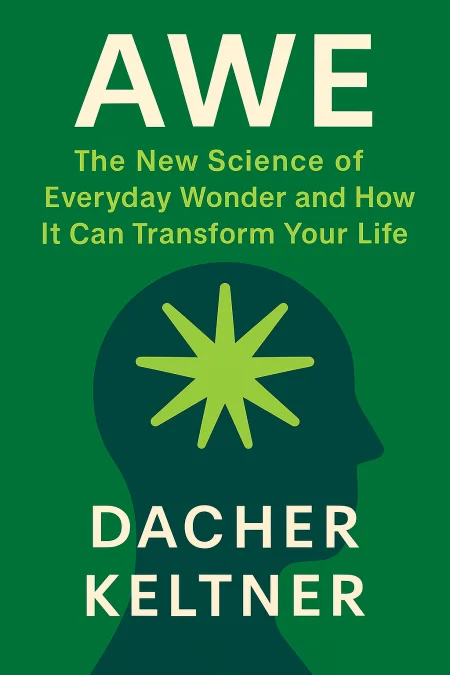
Awe
The New Science of Everyday Wonder and How It Can Transform Your Life
Book Edition Details
Summary
In a world teetering on the brink of division and discord, "Awe" emerges as a beacon of hope and unity. Dacher Keltner, a pioneer in the exploration of human emotions, delves into the transformative power of awe—a feeling that transcends the ordinary and connects us to the sublime. From the breathtaking vista of the Grand Canyon to the intimate wonder of a child’s first steps, awe reshapes our minds and bodies, fortifying our communities and nurturing our capacity for empathy and innovation. Through groundbreaking research interwoven with personal reflections, Keltner reveals how this profound emotion can sharpen our intellect, bolster our health, and inspire us to act for the greater good. In these uncertain times, "Awe" offers a vital roadmap to rediscovering the essence of our shared humanity, urging us to embrace the mysteries that enrich our lives and invigorate our spirits.
Introduction
Picture yourself standing at the edge of the Grand Canyon as the sun rises, painting the ancient rock layers in brilliant oranges and golds. Or imagine holding your newborn child for the first time, feeling overwhelmed by a love so profound it seems to expand your very sense of self. In these moments, you're experiencing something far more complex than simple appreciation or happiness—you're encountering awe, one of humanity's most mysterious and transformative emotions. This feeling of being in the presence of something vast and magnificent doesn't just create pleasant memories; it literally rewires your brain, changes your body chemistry, and alters how you relate to the world around you. Recent scientific discoveries reveal that awe and other profound emotions leave actual physical traces in our bodies, from the geometric patterns formed by crystallized tears to the specific neurochemical signatures that flood our brains during transcendent experiences. What emerges is a fascinating map of human emotional landscapes, showing us that our deepest feelings aren't just fleeting mental states but measurable biological phenomena that connect us to something infinitely larger than ourselves. Through this exploration, you'll discover how wonder serves as a gateway to personal transformation, why certain experiences move people across all cultures in remarkably similar ways, and how the hidden geometries of our emotions reveal profound truths about what it means to be human.
The Eight Universal Triggers of Awe Across Cultures
What exactly makes us feel awe? Scientists have discovered something remarkable: despite vast differences in culture, religion, and personal background, people around the world experience awe in response to eight specific types of encounters. Think of these as humanity's "universal wonder triggers"—experiences so fundamental to our nature that they transcend all cultural boundaries and speak to something deep within our shared human essence. The most surprising discovery is that moral beauty tops the list. More than towering mountains or starlit skies, we're most likely to feel awe when witnessing extraordinary human goodness. Whether it's watching a stranger help someone in need, hearing about a person who overcame incredible hardships, or seeing parents care for a sick child with unwavering devotion, these displays of human virtue activate the same brain regions as physical beauty—but with a crucial difference. Moral beauty doesn't just make us feel good; it inspires us to become better people ourselves, creating a ripple effect of positive behavior that spreads through communities. The remaining seven triggers paint a complete picture of human transcendence. Collective effervescence occurs when we move in harmony with others through dance, sports, or shared rituals, creating that electric feeling of being part of something larger. Nature's vastness overwhelms our sense of scale and reminds us of our place in the cosmic order. Music transcends language barriers to synchronize our hearts and minds with others. Visual art and design reveal hidden patterns and beauty in the world around us. Spiritual experiences connect us to the sacred and mysterious. Encounters with life and death force us to confront the deepest questions of existence. Finally, moments of profound insight or epiphany suddenly illuminate truths that seemed hidden before. What makes these findings truly extraordinary is their universality. When researchers studied people from twenty-six different countries, they found remarkably consistent patterns. A rice farmer in rural Vietnam and a software engineer in Silicon Valley might encounter awe through different specific experiences, but both recognize the same fundamental feeling when it arises. This suggests that our capacity for wonder isn't learned or culturally constructed—it's hardwired into our biology, representing one of the most fundamental aspects of what makes us human. These eight pathways to transcendence are always available to us, waiting to be discovered in the ordinary moments of our daily lives.
How Wonder Rewires Our Brain and Body Chemistry
When awe washes over you, something extraordinary happens inside your skull. The constant chatter of your everyday mind—that inner voice worried about deadlines, social status, and personal problems—suddenly goes quiet. In its place emerges what scientists call the "small self," a profound shift in perspective that fundamentally changes how your brain processes reality. Brain imaging studies reveal that awe literally rewires your neural networks, deactivating regions associated with self-focused thinking while lighting up areas linked to wonder, connection, and openness to new experiences. This neurological transformation triggers a cascade of chemical changes throughout your body. Your brain releases oxytocin, the same hormone involved in bonding between parents and children, while simultaneously activating your vagus nerve, which promotes feelings of calm and connection. Stress hormones like cortisol decrease, while feel-good chemicals like dopamine and serotonin increase. Perhaps most remarkably, people experiencing awe show reduced levels of inflammatory markers in their blood, suggesting that wonder might actually boost your immune system and protect against disease. The familiar sensations of goose bumps, tears, and that distinctive "wow" vocalization aren't just side effects—they're your body's way of signaling that you're connecting with something larger than yourself. These physical changes translate into profound shifts in behavior that researchers can measure in laboratory settings. When scientists induce awe in study participants—whether by having them look up at towering trees or watch videos of natural wonders—people become more generous, helpful, and cooperative. They literally draw smaller pictures of themselves, representing their diminished sense of self-importance. They become more curious about the world, more open to different perspectives, and more willing to help strangers. Time seems to slow down and expand, making people feel less rushed and more present in the moment. The implications of these discoveries extend far beyond individual well-being. Awe appears to be nature's antidote to narcissism, prejudice, and the kind of narrow thinking that divides communities. In an age of increasing polarization and social fragmentation, understanding how wonder transforms our brain chemistry offers hope for healing divisions and rebuilding connections. Regular experiences of awe don't just make life more beautiful—they make us more fully human, activating our natural capacity for empathy, generosity, and cooperation with others.
Sacred Geometries: The Microscopic Art of Human Tears
Hidden within every tear you cry lies a secret world of crystalline beauty that would make any artist envious. When photographer Rose-Lynn Fisher first placed her tears under a microscope, she discovered something that challenged everything scientists thought they knew about the relationship between emotions and physical matter. Each type of tear—whether shed from grief, joy, laughter, or onions—creates distinctly different geometric patterns when it dries, forming intricate structures that look like aerial photographs of vast landscapes or mandala-like sacred geometries. The science behind this phenomenon reveals the profound connection between our emotional states and the physical world. Tears aren't just salty water; they're complex biochemical cocktails containing proteins, hormones, and neurotransmitters that vary dramatically depending on why we're crying. Emotional tears contain higher concentrations of stress hormones, endorphins, and other chemicals than basic lubricating tears. When these molecular mixtures crystallize, they form patterns as unique as fingerprints, each one carrying information about our psychological state at the moment it was shed. Tears of grief create branching, river-like formations that seem to mirror the fragmented feeling of loss, while tears of joy form more circular, harmonious patterns reminiscent of flowers or mandalas. Tears from laughter produce chaotic but energetic structures, and even tears from cutting onions have their own distinctive geometric signature. These aren't random formations but precise visual representations of our internal emotional chemistry, proving that feelings aren't just abstract experiences but measurable biological events that literally reshape matter at the molecular level. This discovery opens up entirely new ways of thinking about the relationship between mind and body, between subjective experience and objective reality. The geometric patterns in dried tears serve as a kind of emotional fossil record, preserving moments of human feeling in crystalline form. They remind us that our most intimate experiences—our sorrows, joys, and moments of overwhelming beauty—leave lasting traces in the physical world, creating microscopic artworks that capture the sacred geometry of human emotion in ways that words never could.
From Neural Networks to Cultural Expression of Transcendence
Throughout human history, we haven't simply experienced transcendent emotions—we've created elaborate cultural systems to capture, preserve, and share these profound moments with others. Music, visual art, religious practices, and storytelling traditions serve as what we might call "cultural archives of transcendence," allowing communities to collectively explore the vast mysteries of existence through shared symbolic expression. What's remarkable is how these cultural forms mirror the same neural patterns and emotional responses that scientists now measure in laboratories. Music possesses a unique power to synchronize our brains and bodies with others, creating what sociologists call "collective effervescence"—that electric feeling of being part of something larger than ourselves. When we listen to music together, our brain waves literally align, our hearts beat in rhythm, and we experience the same neurochemical changes associated with natural awe. The acoustic properties of transcendent music mirror the vocalizations we naturally make when experiencing wonder: the "whoas," "wows," and "aahs" that emerge spontaneously when confronted with something magnificent. Whether it's a Bach cantata, a gospel choir, or the rhythmic chanting of Tibetan monks, music creates shared emotional landscapes that connect us across cultural and linguistic boundaries. Visual art serves a similar function, using techniques like vast scale, repetitive patterns, and unusual perspectives to trigger the same neural responses as natural wonders. The geometric precision of Islamic architecture, the swirling energy of Van Gogh's paintings, and the immersive installations of contemporary artists all employ sophisticated methods for evoking transcendent states. These artistic traditions represent thousands of years of human experimentation with visual triggers for awe, creating reliable pathways to wonder that can be activated simply by viewing certain combinations of color, form, and composition. Religious and spiritual traditions perhaps represent the most elaborate cultural systems for cultivating transcendent experiences. The world's great religions emerged from individuals' encounters with what they perceived as divine mystery, then developed complex practices—prayer, meditation, ceremony, sacred architecture—designed to reliably evoke similar experiences in others. Whether through the rhythmic movements of Sufi dancing, the contemplative silence of Buddhist meditation, or the communal singing of Christian hymns, spiritual traditions offer time-tested technologies for transcendence that connect us both to the sacred and to our fellow human beings. These cultural expressions of wonder serve as bridges between individual mystical experience and collective meaning-making, helping entire communities navigate the profound questions of existence together.
Summary
The most revolutionary insight from studying human wonder and emotional landscapes is that our feelings aren't fleeting mental experiences but complex biological phenomena that create measurable patterns in our brains, bodies, and cultural expressions. From the crystalline geometries hidden in our tears to the universal triggers of awe that transcend all cultural boundaries, science reveals that emotions serve as bridges connecting our individual consciousness to vast networks of meaning and connection that extend far beyond our ordinary awareness. This understanding transforms how we think about mental health, education, community building, and even global cooperation, suggesting that cultivating wonder and transcendence isn't just personally fulfilling but essential for human flourishing. As we continue developing more sophisticated tools for mapping these emotional territories, what new discoveries might emerge about the nature of consciousness itself, and how might this knowledge reshape our approaches to healing division and building more connected, compassionate societies?
Related Books
Download PDF & EPUB
To save this Black List summary for later, download the free PDF and EPUB. You can print it out, or read offline at your convenience.
By Dacher Keltner
