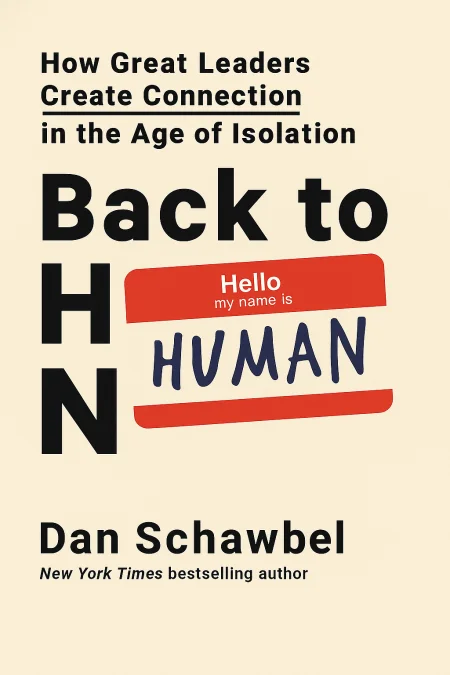
Back to Human
How Great Leaders Create Connection in the Age of Isolation
Book Edition Details
Summary
In the labyrinth of modern workplaces, where virtual connections often overshadow real human interaction, "Back to Human" emerges as a vital guide to reclaiming authentic engagement. Dan Schawbel's groundbreaking research, spanning insights from over 2,000 professionals, lays bare the paradox of digital communication: while it bridges distances, it can deepen the chasm of isolation. This book is a clarion call for leaders to infuse humanity back into their teams, transforming offices from isolated cubicles into vibrant communities. Through the innovative "Work Connectivity Index" and a treasure trove of interactive exercises, Schawbel equips you with the tools to enhance collaboration and fulfillment. "Back to Human" is not just a book—it’s a movement to redefine how we connect, ensuring technology serves as a bridge, not a barrier, to meaningful workplace relationships.
Introduction
Contemporary workplaces face a profound paradox: while technological tools promise unprecedented connectivity, employees report feeling more isolated than ever before. Digital communication platforms, remote work arrangements, and automated systems have fundamentally transformed how we interact with colleagues, yet these changes have created unexpected barriers to meaningful human connection. This disconnect manifests in declining employee engagement, reduced collaboration effectiveness, and weakening organizational cultures across industries. The central premise examined here challenges the assumption that technological advancement naturally leads to improved workplace relationships. Instead, evidence suggests that over-reliance on digital communication undermines the authentic connections essential for effective leadership and team performance. Traditional management approaches fail to address this fundamental shift, leaving leaders struggling to build trust, foster creativity, and maintain employee commitment in increasingly fragmented work environments. The analysis proceeds through a systematic examination of how isolation manifests in modern organizations, followed by concrete strategies for rebuilding human-centered leadership practices. Rather than rejecting technology entirely, the focus centers on establishing intentional boundaries and leveraging digital tools to facilitate, rather than replace, genuine interpersonal engagement. This framework provides leaders with actionable approaches to restore the human element that drives organizational success.
The Technology Paradox: How Digital Tools Isolate Us at Work
Modern workplace technologies create an illusion of connection while systematically undermining genuine human interaction. Email communication, instant messaging platforms, and video conferencing tools promise efficiency and seamless collaboration, yet research demonstrates these channels often reduce relationship quality and emotional understanding between colleagues. The fundamental issue lies not in the technology itself, but in how organizations implement these tools without considering their psychological and social consequences. Digital communication strips away crucial nonverbal cues that facilitate trust-building and empathy development. Tone of voice, facial expressions, and body language carry significant meaning in human interaction, yet these elements disappear in text-based exchanges and become distorted even in video calls. Employees report feeling misunderstood more frequently when relying primarily on digital channels, leading to increased conflict and reduced willingness to share ideas or admit mistakes. The addiction-like qualities of workplace technology compound these problems. Constant notifications and the expectation of immediate responses create a state of continuous partial attention, preventing the deep focus necessary for meaningful work and relationships. Workers spend increasing amounts of time managing digital communication streams rather than engaging in substantive collaboration or strategic thinking. Most concerning is how these patterns reshape workplace culture itself. Organizations that prioritize digital efficiency over human connection find their employees becoming more transactional in their interactions, treating colleagues as functional resources rather than whole individuals. This shift fundamentally alters the social fabric that traditionally supported innovation, loyalty, and collective problem-solving in successful teams.
The Human Connection Imperative: Why Relationships Drive Performance
Strong interpersonal relationships serve as the foundation for all high-performing organizations, regardless of industry or structure. Research consistently demonstrates that teams with robust internal connections outperform those focused solely on technical skills or individual achievement. These relationships enable faster problem-solving, more creative solutions, and greater resilience during challenging periods. The quality of workplace relationships directly correlates with employee retention, job satisfaction, and overall organizational effectiveness. Trust emerges as the critical element distinguishing functional teams from exceptional ones. When team members trust each other, they share information more freely, take calculated risks, and provide honest feedback that drives improvement. This trust cannot be built through digital channels alone; it requires repeated face-to-face interactions where individuals can observe authenticity and reliability over time. Organizations that fail to prioritize trust-building activities inevitably experience communication breakdowns and reduced collaboration. The psychological need for belonging significantly impacts individual performance and commitment levels. Employees who feel genuinely connected to their colleagues demonstrate higher engagement, increased willingness to go beyond basic job requirements, and stronger alignment with organizational goals. Conversely, isolated workers often become disengaged, seeking opportunities elsewhere or reducing their contribution to team efforts. Connection also drives innovation through diverse perspective-sharing and intellectual cross-pollination. Breakthrough solutions typically emerge from informal conversations and relationship-based knowledge exchange rather than formal procedures or digital collaboration platforms. Teams that invest in relationship-building create environments where creative thinking flourishes naturally, leading to competitive advantages and improved outcomes across all performance metrics.
Building Authentic Leadership: From Self-Connection to Team Engagement
Authentic leadership begins with leaders understanding their own needs for connection and fulfillment before attempting to create meaningful relationships with team members. Self-aware leaders recognize how their personal well-being affects their ability to support others and make conscious choices about balancing productivity demands with relationship maintenance. This foundation enables them to model healthy work practices and create psychologically safe environments where employees feel valued as complete individuals. Effective leaders prioritize genuine presence over task completion when interacting with team members. This means putting aside digital devices during conversations, actively listening without preparing responses, and showing curiosity about employees' perspectives and experiences. Such behaviors demonstrate respect and create space for authentic exchange, building the trust necessary for long-term collaboration and mutual support. Recognition and gratitude play crucial roles in fostering authentic connections. Rather than relying on formal reward systems or generic appreciation messages, successful leaders provide specific, timely feedback that acknowledges both professional contributions and personal growth. This personalized approach signals investment in individuals' development and strengthens emotional bonds that sustain motivation during difficult periods. The development of empathy represents perhaps the most important capability for authentic leadership. Leaders who can genuinely understand and respond to others' emotional states create inclusive environments where diverse perspectives are welcomed and conflicts are resolved constructively. This emotional intelligence cannot be automated or digitized; it requires consistent human interaction and conscious cultivation of understanding across different backgrounds, experiences, and communication styles.
Creating Organizational Connection: Culture, Hiring, and Employee Experience
Organizational culture emerges from countless daily interactions between individuals, making the quality of these exchanges fundamental to overall workplace atmosphere and effectiveness. Leaders who prioritize human connection in their cultural design create environments where collaboration occurs naturally, innovation flourishes, and employee satisfaction remains high even during stressful periods. This requires intentional structuring of physical spaces, meeting formats, and communication norms that encourage face-to-face interaction. Hiring decisions significantly impact organizational connection by determining whether new team members will contribute to or detract from existing relationship networks. Rather than focusing solely on technical qualifications, effective leaders evaluate candidates' interpersonal skills, emotional intelligence, and capacity for building trust with colleagues. This approach recognizes that skills can be developed through training, but personality traits and relationship capabilities have more lasting effects on team dynamics. The onboarding process provides crucial opportunities to establish connection patterns that persist throughout employees' tenure. Organizations that create meaningful integration experiences, facilitate relationship-building between new hires and existing team members, and clearly communicate cultural expectations set the foundation for long-term engagement and performance. This investment in early relationship development pays dividends through reduced turnover and increased productivity. Employee experience design must account for the full spectrum of human needs, including social connection, personal growth, and meaningful contribution. While compensation and benefits remain important, employees increasingly value workplaces that support their relationships and provide opportunities for authentic engagement with colleagues. Leaders who understand this shift can create competitive advantages through superior culture and connection rather than relying solely on financial incentives or technological solutions.
Summary
The path forward requires leaders to reclaim their essential role as facilitators of human connection rather than managers of digital processes. While technology will continue advancing and reshaping work environments, the fundamental human needs for trust, belonging, and meaningful relationships remain constant. Leaders who master the art of building authentic connections while strategically leveraging technology create organizations that thrive in an increasingly automated world. This approach represents not a rejection of progress, but a more sophisticated understanding of how human and technological elements must work together to achieve sustainable success.
Related Books
Download PDF & EPUB
To save this Black List summary for later, download the free PDF and EPUB. You can print it out, or read offline at your convenience.
By Dan Schawbel
