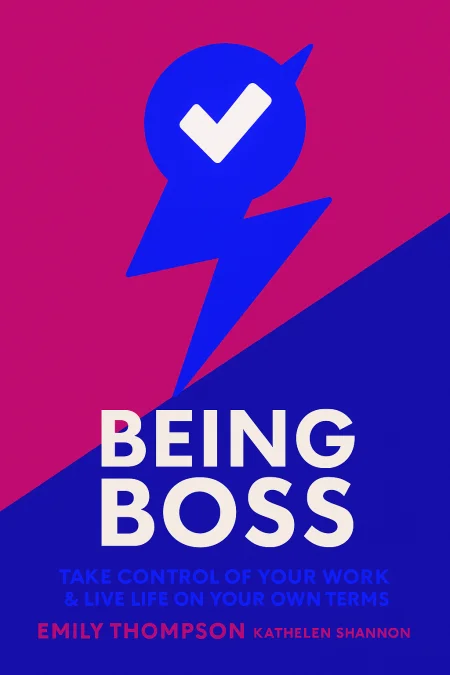
Being Boss
Take Control of Your Work and Live Life on Your Own Terms
byEmily Thompson, Kathleen Shannon
Book Edition Details
Summary
When two powerhouse creatives unite, sparks fly and wisdom flows. Kathleen Shannon and Emily Thompson, the dynamic duo behind the acclaimed Being Boss podcast, distill their entrepreneurial magic into a must-read guide for the creatively driven. With vibrant energy and unflinching honesty, they arm you with strategies to channel your inner boss, slay financial dragons, and cultivate routines that lead to extraordinary outcomes. This isn't just a manual for business triumph—it's a manifesto for a balanced life where ambition meets self-care. Packed with practical worksheets and candid insights, this book transforms the journey of entrepreneurship into an exhilarating adventure, promising not just success, but fulfillment in every facet of your existence.
Introduction
Picture Sarah, a talented graphic designer trapped in a gray cubicle, watching the clock tick toward another uninspiring 5 PM. Every morning, she dreams of launching her own creative studio, but fear whispers doubt into her ear: "What if you fail? What if you're not good enough? What if security is more important than passion?" Sound familiar? You're not alone in this struggle. Millions of creative souls find themselves caught between the safety of traditional employment and the magnetic pull of entrepreneurial freedom. They possess remarkable talents and innovative ideas, yet feel paralyzed by uncertainty about how to transform their creative gifts into sustainable income. The gap between dreaming and doing seems impossibly wide, filled with questions about money, self-worth, and the courage to bet on themselves. But what if that gap isn't as wide as it appears? What if the path from employee to entrepreneur, from dreamer to doer, is actually paved with practical steps, mindset shifts, and daily practices that anyone can master? The journey from conventional work to creative independence isn't just about business strategies or marketing tactics – it's about fundamentally reimagining your relationship with work, money, and yourself. It's about discovering that you already possess everything needed to build a life and career that reflects your deepest values and wildest ambitions.
From Day Jobs to Dream Careers: The Entrepreneurial Awakening
Kathleen's story begins in the most unlikely place for a future entrepreneur – a comfortable suburban childhood where security meant government jobs, steady paychecks, and retirement plans. Her parents had crafted a life around predictability: work nine to five, save diligently, take one vacation annually, and find contentment in routine. Yet even as a child, Kathleen felt like an outsider in her own life. Year after year, classmates dubbed her "most nonconformist," a title that both thrilled and terrified her. While her peers embraced mainstream fashion, she boldly wore combat boots with thrift store flannels, channeling her style icons Kurt Cobain and Gwen Stefani. This rebellious spirit, however, coexisted with deeply ingrained people-pleasing tendencies. Kathleen craved gold stars from teachers and felt genuine anxiety over anything less than perfect grades. She dutifully followed the prescribed path: college, degree in graphic design, immediate employment at an advertising agency. For years, she climbed the corporate ladder with determination, collecting industry awards and bonuses, convincing herself she had "made it" with her mortgage and 401k. Everything appeared successful from the outside, yet something fundamental felt missing. The turning point came through an unexpected obsession with Mount Everest. What began as casual fascination with a Discovery Channel show evolved into deep research about mountaineering and human endurance. Kathleen realized she craved her own epic adventure, her own story worth telling. The decision to trek to Everest Base Camp seemed impossible – she barely owned hiking boots, had limited travel experience, and certainly didn't have enough vacation time for such an expedition. But sometimes the most important decisions defy logic, and Kathleen bought a plane ticket to Nepal before figuring out the details. The solution to her time-off problem was radical: she quit her job. The fear was overwhelming, the uncertainty paralyzing, yet something deeper compelled her forward. That Himalayan trek became more than an adventure – it became a declaration of independence, a physical manifestation of her transition from employee to entrepreneur. Documenting the journey on her blog, she discovered that sharing her authentic experience resonated with others who felt similarly trapped between security and dreams. Her vulnerability about the challenges and triumphs of self-employment attracted a community of like-minded creatives, setting the foundation for everything that followed. The entrepreneurial awakening isn't about rejecting stability or embracing reckless risk-taking. Instead, it represents a fundamental shift in how we define security and success, recognizing that the greatest risk might be staying exactly where we are, unfulfilled and unexpressed.
Building Your Boss Foundation: Mindset, Boundaries, and Daily Practice
Emily's journey toward entrepreneurship began with a painful realization about the cost of security. Growing up, she watched her parents and grandparents endure backbreaking work that drained their spirits while providing for their families. Though they claimed satisfaction with their jobs out of duty, Emily could sense their physical, emotional, and spiritual exhaustion. This early exposure to work-related suffering taught her a crucial lesson: doing work you don't love doesn't just affect your career – it colors your entire existence. At eighteen, Emily made an audacious decision that would shape her understanding of business ownership. She purchased a tanning salon, becoming an owner-operator while attending college full-time. The experience was simultaneously thrilling and terrifying, offering firsthand insight into customer service, marketing, employee management, and the weight of financial responsibility. When Hurricane Katrina devastated the Gulf Coast, Emily faced her first major business crisis. The salon survived physically but struggled economically as the community's priorities shifted from personal maintenance to basic survival and recovery. The decision to sell the salon after two years wasn't failure – it was education. Emily had tasted the intoxicating combination of autonomy, creativity, and responsibility that defines entrepreneurship. More importantly, she understood that being your own boss requires more than passion or good intentions; it demands a foundation built on three essential pillars: mindset, boundaries, and daily practice. Mindset involves cultivating unshakeable belief in your ability to figure things out as you go. It means viewing challenges as opportunities for growth rather than evidence of inadequacy. Boundaries protect your energy, time, and resources from being depleted by demands that don't align with your values or goals. Daily practice transforms good intentions into consistent actions that move you steadily toward your vision. These three elements work together like legs of a stool – remove any one, and the entire structure becomes unstable. The most successful creative entrepreneurs master all three, creating sustainable businesses that support both their financial needs and their deeper desire for meaningful work. They understand that being boss isn't about working harder or longer; it's about working with intention, focus, and alignment.
Doing the Work: Creating Content, Finding Clients, and Making Money
The transition from dreaming about entrepreneurship to actually making money requires mastering what might be called the "holy trinity" of creative business: creating compelling content, attracting ideal clients, and generating consistent revenue. Many aspiring entrepreneurs get stuck in the preparation phase, endlessly perfecting their websites, business cards, or social media presence while avoiding the vulnerable work of actually selling their services. Kathleen discovered this truth firsthand when she launched her branding company with her sister. Despite months of preparation – crafting perfect branding, developing comprehensive systems, creating stunning portfolio pieces – they found themselves with zero clients after the initial excitement faded. The harsh reality of entrepreneurship hit: having a beautiful business doesn't guarantee customers. Success requires actively engaging with the world, sharing your expertise, and making it easy for people to hire you. The solution came through generous content creation. Instead of hoarding knowledge or worrying about giving away "trade secrets," Kathleen began openly sharing everything she knew about branding, client management, and creative entrepreneurship. Each blog post, each piece of advice, each vulnerable story about the challenges of self-employment positioned her as a trustworthy expert. Paradoxically, the more she gave away for free, the more people wanted to pay her for personalized guidance. This approach challenges conventional wisdom about scarcity and competition. Many entrepreneurs fear that sharing their knowledge will eliminate their competitive advantage or train potential competitors. The opposite proves true: generous content creation establishes expertise, builds trust, and attracts ideal clients who appreciate your perspective and approach. It demonstrates your thinking process, problem-solving abilities, and personality – all crucial factors in hiring decisions. The key lies in understanding that content serves multiple purposes simultaneously. It educates your audience, establishing you as a valuable resource. It showcases your personality and values, helping ideal clients recognize kinship with your approach. It creates multiple touchpoints with potential customers, building relationships over time rather than pressuring immediate sales. Most importantly, it separates serious practitioners from casual hobbyists, signaling your commitment to your craft and your clients' success. Successful content creation requires consistency over perfection, authenticity over polish, and service over self-promotion. The most effective creative entrepreneurs treat content as farming rather than hunting – planting seeds consistently, nurturing relationships patiently, and trusting that harvest will come in due season.
Living Your Life: Beyond Work to Personal Fulfillment
The greatest irony of creative entrepreneurship lies in its potential to consume the very life it promises to enhance. When work becomes an expression of identity and passion, the boundaries between professional achievement and personal fulfillment blur dangerously. Many successful creative entrepreneurs find themselves working longer hours for themselves than they ever did for employers, justified by the intoxicating freedom to make their own decisions. Emily's forty-day cross-country road trip with her family illustrates the intentional approach required to prevent entrepreneurship from overwhelming life. Dubbed "#indiegoeswest," this epic journey wasn't just a vacation – it was a deliberate test of whether she had built a business or created another job. The preparation required months of advance planning: pre-recording podcast content, establishing systems for her team to handle daily operations, and creating clear communication protocols for the limited check-ins she'd allow herself. The trip itself challenged every assumption about comfort, convenience, and necessity. Living out of a car with a young daughter, setting up and breaking camp daily, navigating with minimal resources – these experiences stripped away the non-essential and highlighted what truly mattered. The physical demands were intense: hiking, cooking over fires, sleeping on the ground, visiting over twenty-two states and numerous national treasures. Yet the most profound challenge was psychological: trusting that taking time away from work wouldn't destroy everything she had built. The journey transformed Emily's understanding of what it means to be boss. Real entrepreneurial success isn't measured solely by revenue, client satisfaction, or business growth – it's evaluated by whether your work enables the life you want to live. The trip proved that her business could function without her constant attention, validating that she had created systems rather than just another demanding job. This experience highlights a crucial distinction between being self-employed and being truly entrepreneurial. Self-employment often means trading one demanding boss for an even more demanding one – yourself. True entrepreneurship involves building something that serves your life rather than consuming it. It requires the discipline to step away, the wisdom to prioritize relationships and experiences over productivity, and the courage to trust that taking care of yourself enhances rather than diminishes your professional capabilities. The most successful creative entrepreneurs understand that life hustle matters as much as work hustle. They invest energy in relationships, adventures, personal growth, and experiences that have nothing to do with their business. This isn't selfish indulgence – it's strategic investment in the well-rounded humanity that makes their work more meaningful and sustainable.
Summary
The path from conventional employment to creative entrepreneurship isn't paved with shortcuts or magic formulas, but rather with daily choices that align actions with values, courage with practical wisdom, and dreams with disciplined execution. The entrepreneurs who thrive understand a fundamental truth: success isn't about escaping work but about redesigning it to serve life rather than consume it. Throughout their journey from advertising agencies and tanning salons to chart-topping podcasts and published books, these stories reveal that being boss requires equal parts vulnerability and strength, planning and adaptability, individual courage and community support. The most sustainable creative businesses emerge not from perfect strategies but from authentic expression, generous service, and unwavering commitment to growth. They flourish when entrepreneurs embrace both the farming mentality of patient cultivation and the hunting instinct of bold action, knowing when each approach serves their deeper purpose. Perhaps most importantly, true entrepreneurial success transcends financial metrics or professional recognition. It's measured by the alignment between who you are and how you spend your days, the integration of personal values with professional practices, and the creation of work that energizes rather than depletes. The ultimate goal isn't just to make money doing what you love, but to build a life so compelling that work becomes a natural extension of your deepest curiosities and commitments. This is the real promise of creative entrepreneurship: not just the freedom to be your own boss, but the opportunity to become fully, authentically, courageously yourself.
Related Books
Download PDF & EPUB
To save this Black List summary for later, download the free PDF and EPUB. You can print it out, or read offline at your convenience.
By Emily Thompson
