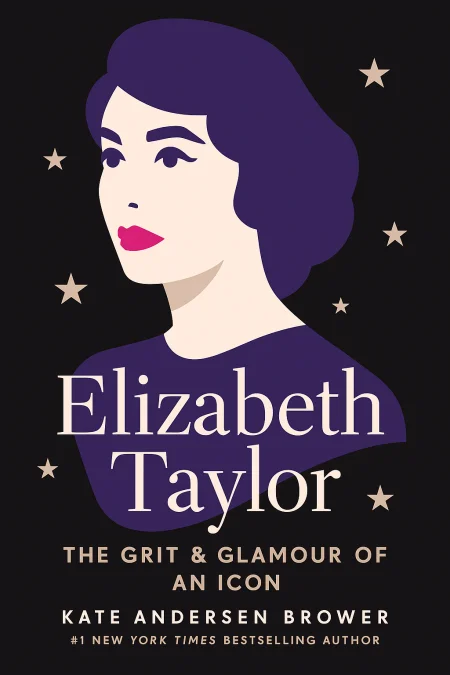
Elizabeth Taylor
The Grit and Glamour of an Icon
Book Edition Details
Summary
Glamour, defiance, and an unyielding spirit defined Elizabeth Taylor, the icon who rewrote Hollywood's playbook. In this first authorized biography, Kate Andersen Brower peels back the glitzy veneer to expose the raw, compelling saga of a woman who captured the world's gaze. Taylor's life was a dramatic reel of epic loves, fierce independence, and groundbreaking activism, culminating in her pivotal role in the fight against HIV/AIDS. Drawing from intimate letters and conversations with those closest to her, this portrait reveals the passionate force behind the legendary beauty. From her dazzling ascent at twelve to her seismic impact as a trailblazer, Taylor's story is a testament to resilience and reinvention, capturing the heart of a star whose legacy blazes brighter than ever.
Introduction
In the golden age of Hollywood, when stars were manufactured in studio lots and their lives carefully orchestrated by powerful executives, one woman refused to be controlled. Elizabeth Taylor emerged as more than just a beautiful face on the silver screen—she became a force of nature who lived life entirely on her own terms. Born into fame as a child star, she transformed from the innocent girl who rode horses in "National Velvet" into one of the most captivating and controversial figures of the twentieth century. Taylor's life was a tapestry woven with extraordinary beauty, passionate love affairs, and groundbreaking activism. She married eight times to seven different men, each union a chapter in her relentless pursuit of true love. Her romances, particularly her tumultuous relationship with Richard Burton, captivated the world and helped create modern celebrity culture. Yet beneath the glamour and scandal lay a woman of remarkable depth and compassion, who would ultimately find her greatest purpose in fighting for those society had forgotten. From her journey through Hollywood's studio system to her emergence as a pioneering AIDS activist, Taylor's story reveals the evolution of a woman who refused to apologize for her desires, her choices, or her fierce determination to live authentically. Her legacy extends far beyond her two Academy Awards and legendary beauty—she redefined what it meant to be a powerful woman in the public eye, using her fame as a weapon for social change and leaving behind a blueprint for celebrity activism that continues to inspire today.
From Child Star to Hollywood Icon
Elizabeth Taylor's transformation from a precocious child to Hollywood royalty began in the most unlikely circumstances. Born in London to American parents in 1932, she might have lived an ordinary life if not for World War II, which forced her family to flee to Los Angeles when she was seven. Her mother Sara, a former actress with unfulfilled dreams, quickly recognized that her daughter's extraordinary beauty could open doors that had been closed to her own ambitions. The studio system of the 1940s was a machine designed to manufacture stars, and Elizabeth became its most precious product. At MGM, she was molded, controlled, and protected, but also isolated from the normal experiences of childhood. While other children played in schoolyards, she attended classes in a one-room schoolhouse on the studio lot, surrounded by the artificial world of movie sets and commissary lunches with established stars like Clark Gable and Spencer Tracy. The loneliness was profound, yet it taught her to find solace in her own imagination and to value the few genuine friendships she formed, particularly with fellow actors like Roddy McDowall and Montgomery Clift. Her breakthrough role in "National Velvet" at age twelve established her as more than just another pretty child star. The film's story of a girl who disguises herself as a boy to compete in a dangerous horse race resonated with Elizabeth's own rebellious spirit. Even at that young age, she displayed the determination that would define her entire life—literally growing three inches to secure the role and enduring a serious back injury during filming that would plague her for decades. The success of the film marked the beginning of her seventeen-year contract with MGM, a golden cage that would both nurture and constrain her emerging talents. As Elizabeth matured, the studio faced the challenge of transitioning her from child star to leading lady, a transformation that had destroyed many careers. But Elizabeth possessed something unique—an innate understanding of her own power and an unwillingness to be diminished by others' expectations. She learned to navigate the treacherous waters of Hollywood politics, standing up to tyrannical studio head Louis B. Mayer and refusing to let the system break her spirit. By her late teens, she had evolved from the innocent girl who loved horses into a young woman who understood that her beauty was both a gift and a responsibility, one that would shape not only her career but her entire approach to life.
Love, Passion, and the Burton Years
The collision between Elizabeth Taylor and Richard Burton on the set of "Cleopatra" in 1962 created more than just a love affair—it ignited a cultural phenomenon that redefined celebrity and challenged the moral conventions of an entire era. When the Welsh actor, known for his magnificent voice and Shakespearean training, met the world's most famous movie star in Rome, neither was prepared for the seismic shift that would follow. Their attraction was immediate and overwhelming, a meeting of equals who recognized in each other the same fierce intelligence, passionate nature, and refusal to live by others' rules. Their affair unfolded against the backdrop of the most expensive film ever made, with Elizabeth commanding an unprecedented one million dollar salary and the world's media documenting their every move. The scandal was intoxicating—here were two married people, both with children, conducting their romance in full view of the international press. The Vatican condemned Elizabeth for "erotic vagrancy," American congressmen tried to ban them from entering the country, and fans either worshipped or reviled them with equal intensity. Yet Elizabeth and Richard seemed to thrive on the controversy, understanding instinctively that their love story was bigger than conventional morality. What made their relationship extraordinary was not just the passion, but the intellectual and emotional connection between two people who had found their match. Richard introduced Elizabeth to literature, philosophy, and the deeper possibilities of her craft as an actress. She, in turn, showed him the intoxicating power of global celebrity and helped him embrace a larger-than-life existence that matched his theatrical nature. Together, they lived like modern royalty, traveling the world, collecting magnificent jewelry, and creating a lifestyle so lavish it seemed almost mythical. Their two marriages and two divorces became the stuff of legend, marked by epic fights, passionate reconciliations, and a love so intense it seemed to consume everything in its path. Even after their final divorce, they remained connected by invisible threads, speaking almost daily and never quite able to let go of what they had shared. Richard once said he couldn't live with her and couldn't live without her—a sentiment that captured the beautiful impossibility of their relationship and cemented their place as the most famous lovers of the twentieth century.
Finding Purpose Through AIDS Activism
In the 1980s, as Elizabeth Taylor entered her fifties, she discovered a calling that would define the final decades of her life and establish her most enduring legacy. The AIDS epidemic was devastating communities across America, particularly affecting the gay men who had been among her closest friends throughout her career—Montgomery Clift, Rock Hudson, James Dean, and countless others who had found in her a fierce ally and protector. When Rock Hudson became one of the first major celebrities to die from AIDS-related complications in 1985, Elizabeth's grief transformed into a righteous fury that would reshape her entire existence. Elizabeth's approach to AIDS activism was revolutionary in its boldness and scope. At a time when the Reagan administration refused even to acknowledge the epidemic publicly, she used her celebrity as a weapon, demanding attention for a crisis that was being ignored because it primarily affected marginalized communities. She co-founded amfAR, the Foundation for AIDS Research, and organized the first major celebrity fundraiser for AIDS research, using her connections and influence to force the issue into mainstream consciousness. Her activism was deeply personal—she had watched too many friends suffer and die while society turned away in fear and prejudice. What set Elizabeth apart from other celebrity activists was her willingness to get her hands dirty in the fight. She didn't just lend her name to fundraisers; she personally lobbied politicians, confronted presidents, and used her fame to shame those in power into action. When President George H.W. Bush maintained policies that banned HIV-positive individuals from entering the United States, she publicly declared that she wasn't sure he even knew how to spell AIDS. Her fearlessness in speaking truth to power, combined with her genuine compassion for those suffering, made her one of the most effective advocates of her generation. The transformation from Hollywood glamour queen to humanitarian warrior revealed the true depth of Elizabeth's character. She had always been drawn to outsiders and underdogs, perhaps recognizing in them something of her own experience of being judged and misunderstood. Through her AIDS work, she found a purpose that transcended her film career and personal dramas, proving that her greatest role was not any character she played on screen, but the part she chose to play in making the world more compassionate and just.
Summary
Elizabeth Taylor's extraordinary life stands as a testament to the power of living authentically, even when the world demands conformity. She refused to apologize for her desires, her choices, or her refusal to be diminished by others' expectations, creating a template for female empowerment that was decades ahead of its time. Her journey from child star to global icon to humanitarian warrior demonstrates that true legacy is built not just on talent or beauty, but on the courage to use one's gifts in service of something greater than oneself. The lessons of Elizabeth's life remain profoundly relevant today: that love is worth fighting for, even when it comes at great personal cost; that fame and influence carry the responsibility to speak for those who cannot speak for themselves; and that it is possible to transform pain and loss into compassion and action. Her example encourages us to embrace our own contradictions, to live boldly despite criticism, and to never underestimate the power of one person to change the world. For anyone seeking to understand how to live with passion, purpose, and unapologetic authenticity, Elizabeth Taylor's remarkable journey offers both inspiration and a roadmap for creating a life that matters long after the final curtain falls.
Related Books
Download PDF & EPUB
To save this Black List summary for later, download the free PDF and EPUB. You can print it out, or read offline at your convenience.
By Kate Andersen Brower
