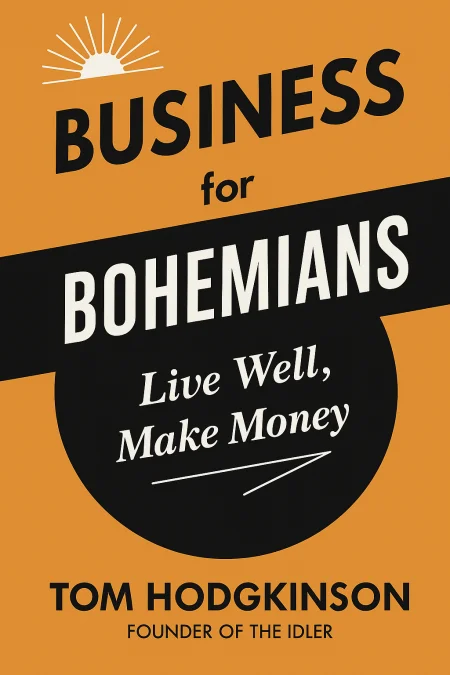
Business for Bohemians
Live Well, Make Money
Book Edition Details
Summary
For those yearning to escape the monotony of the nine-to-five grind without surrendering their artistic essence, Tom Hodgkinson's "Business for Bohemians" offers a liberating manifesto. Hodgkinson, with his trademark wit and wisdom, dismantles the daunting façade of business jargon, transforming balance sheets into mere instruments of creativity. This guide is not just a manual, but a philosophy, celebrating the marriage of financial acumen and bohemian flair. Whether you're plotting to launch your creative venture or seeking to monetize your artistry, this book reveals the delightful secret: business is not the antithesis of freedom, but its potential ally. Prepare to embrace laziness as a strategic virtue and find joy in spreadsheets with Hodgkinson as your humorously insightful mentor.
Introduction
Have you ever dreamed of escaping the soul-crushing nine-to-five grind to build something meaningful with your own hands? Perhaps you're a creative spirit who feels trapped in corporate bureaucracy, yearning to transform your artistic vision into a sustainable livelihood. The path from passionate dreamer to successful entrepreneur isn't just about following traditional business advice—it's about discovering how to maintain your authentic self while building something that truly matters. This journey requires a unique blend of creative intuition and practical wisdom, where spreadsheets become as important as inspiration, and understanding your customer's needs becomes as vital as understanding your art. The most fulfilling businesses aren't born from pure profit motives, but from a genuine desire to contribute something beautiful and useful to the world while creating the freedom to live on your own terms.
Build Your Foundation: Money, Planning, and Systems
The foundation of any bohemian business begins with embracing a fundamental truth: respecting money is not about becoming materialistic, but about creating sustainable freedom. Many creative entrepreneurs resist financial planning, viewing it as antithetical to their artistic nature, yet this resistance often leads to the very constraints they sought to escape. When Tom Hodgkinson and his partner Victoria decided to transform their beloved Idler magazine into a full-fledged academy, they faced this reality head-on. Despite years of successfully running their publication from a remote Devon farmhouse, they discovered that scaling required substantial investment. They remortgaged their house for fifty-two thousand dollars, not from greed, but from a recognition that their vision needed proper funding to flourish. This decision terrified them—there were sleepless nights filled with anxiety about Polish painters working in their unfunded space while mortgage applications hung in limbo. The transformation proved revelatory. What initially felt like a betrayal of their anti-capitalist ideals became the very mechanism for spreading their message more widely. Their investment enabled them to create beautiful courses, employ talented staff, and reach thousands of people who desperately needed their philosophy of mindful living. The money became a tool for amplifying their impact rather than corrupting their mission. Start by calculating your true fixed costs—rent, utilities, insurance, basic staff wages—everything you must pay regardless of sales. Create a simple spreadsheet listing these monthly essentials. Next, determine your minimum viable revenue: multiply your fixed costs by two to account for taxes and unexpected expenses. This becomes your survival threshold. Finally, develop three funding scenarios: bootstrapping with personal savings, borrowing from family and friends, or seeking external investment. Each path has distinct implications for your creative freedom, so choose based on your tolerance for risk and external accountability. Remember that money problems rarely solve themselves through wishful thinking. Address financial challenges with the same creativity you bring to your art, viewing constraints as design problems rather than insurmountable barriers.
Master the Art of Selling and Marketing
Selling transforms from a dreaded necessity into an extension of your creative expression when you realize it's fundamentally about storytelling and connection. The most authentic marketing emerges from genuinely believing in what you create and sharing that passion naturally with others who need it. Hodgkinson initially struggled with the transition from writer to shopkeeper, feeling embarrassed about serving coffee to customers who didn't recognize his literary achievements. His internal monologue screamed, "Don't you know who I am? I'm published in twenty countries!" Yet this aristocratic disdain for trade nearly destroyed what he was trying to build. The breakthrough came when he stopped seeing customers as interruptions to his important work and started viewing each interaction as an opportunity to share something valuable. The magic happened during a quiet afternoon when a young philosophy student wandered into their bookstore. Instead of grudgingly helping, Hodgkinson engaged authentically, discussing the student's interests and recommending Foucault's "History of Sexuality." Watching the student's eyes light up with excitement, he realized this was journalism in action—connecting people with ideas that could transform their thinking. The sale became secondary to the genuine human connection and intellectual exchange. Begin by identifying what you genuinely love about your work and practice articulating this passion in conversations. Create opportunities to demonstrate your expertise through free samples, whether that's offering a small taste of your artisanal honey, sharing a brief excerpt from your writing, or providing a mini-consultation. Build your email list systematically by offering something valuable in exchange for contact information—a useful guide, exclusive content, or early access to new products. Price your offerings confidently, remembering that underpricing often signals low quality and prevents sustainable growth. Focus on building relationships rather than pushing products. When you serve your customers' genuine needs with authenticity and expertise, sales become a natural outcome of trust rather than a manipulative transaction.
Navigate Challenges with Stoic Wisdom
The entrepreneurial journey inevitably includes moments of crushing doubt, financial pressure, and seemingly insurmountable obstacles. Developing stoic resilience doesn't mean suppressing emotions, but rather learning to respond thoughtfully instead of reacting impulsively to inevitable setbacks. During the early years of the Idler Academy, Hodgkinson found himself waking at five-thirty each morning in blind panic, his mind racing through an endless catalog of problems: staff showing up late, cash flow shortages, angry customers, broken equipment, and regulatory complications. What had begun as a romantic vision of running literary salons had devolved into a nightmare of operational firefighting. He transformed from a laid-back advocate of leisurely living into a stressed-out micromanager, alternating between desperate friendliness and explosive rage. The turning point came when he started carrying a small notebook labeled "The Wrong Book." Instead of viewing daily disasters as evidence of failure, he began documenting each problem as valuable data for improvement. A broken coffee machine became an opportunity to refine their equipment maintenance system. A late staff member revealed the need for clearer expectations and backup plans. Customer complaints highlighted gaps in their service delivery that, once addressed, dramatically improved satisfaction. This practice transformed chaos into learning opportunities and restored his sense of agency. Implement daily problem documentation by keeping a simple journal of what goes wrong and what you learn from each incident. Create backup plans for your most common challenges—alternative suppliers, emergency contacts, simplified processes that can function when things break down. Develop your emotional regulation through regular practice, whether meditation, exercise, or simply taking walks to gain perspective before making important decisions. When facing major setbacks, remind yourself that temporary failures are tuition payments for valuable business education. Embrace the philosophy that obstacles are not blocking your path—they are the path. Each challenge successfully navigated builds resilience and capability for handling larger challenges ahead.
Embrace Laziness and Know When to Quit
True laziness is not about avoiding work, but about working so intelligently and efficiently that you create space for the creative reflection that fuels innovation. The most successful entrepreneurs understand when to persist and when to pivot, knowing that stubborn attachment to failing strategies wastes precious energy that could be redirected toward success. Hodgkinson's revelation about productive laziness came from observing efficient systems in action. While struggling to manage every aspect of their complex operation—bookstore, café, event venue, and educational center—he noticed that their most effective staff member, Julian, left promptly at six each day yet accomplished more than others working longer hours. Julian had developed streamlined systems that eliminated unnecessary steps, delegated appropriately, and focused energy on high-impact activities. This wasn't laziness from lack of care, but intelligent design that maximized results while preserving personal well-being. The wisdom of strategic quitting became apparent when they finally abandoned their café operation after years of selling two croissants per day and eating the remainder for lunch. The romantic notion of serving artisanal coffee and organic pork pies had consumed enormous energy while generating minimal revenue or customer satisfaction. Once they accepted this reality and focused exclusively on their strengths—books, events, and educational content—both their profitability and their daily enjoyment improved dramatically. Regularly audit your activities to identify which generate genuine value versus which merely create the illusion of productivity. Schedule specific times for deep work when you're unavailable for interruptions, protecting your most creative and strategic thinking. Build systems that function without your constant attention, whether automated marketing sequences, standardized operating procedures, or reliable team members who can handle routine decisions. Most importantly, develop the courage to abandon projects that aren't working, regardless of how much time you've already invested. Efficiency is the foundation of sustainable freedom. Work smart enough that you can afford to be genuinely lazy, creating space for the reflection and relationships that make entrepreneurship worthwhile.
Summary
Building a business as a creative person requires embracing both your artistic nature and practical necessity, discovering that these forces can enhance rather than oppose each other. As Hodgkinson learned through years of trial and transformation, "The ideal for a small business would be to sign up your customers on a direct-debit scheme. But the real pleasure for me of doing Idler business is the impact on the lives of our readers, customers, and fans. They love the fact that we exist. We help them to find happiness. And that is the whole point." Begin today by choosing one practical business skill that initially feels uncomfortable—whether creating a simple budget, reaching out to potential customers, or organizing your workspace—and commit to spending thirty minutes learning it this week. Your creative spirit will not be diminished by competence; it will be liberated by the freedom that comes from building something sustainable and meaningful.
Related Books
Download PDF & EPUB
To save this Black List summary for later, download the free PDF and EPUB. You can print it out, or read offline at your convenience.
By Tom Hodgkinson
