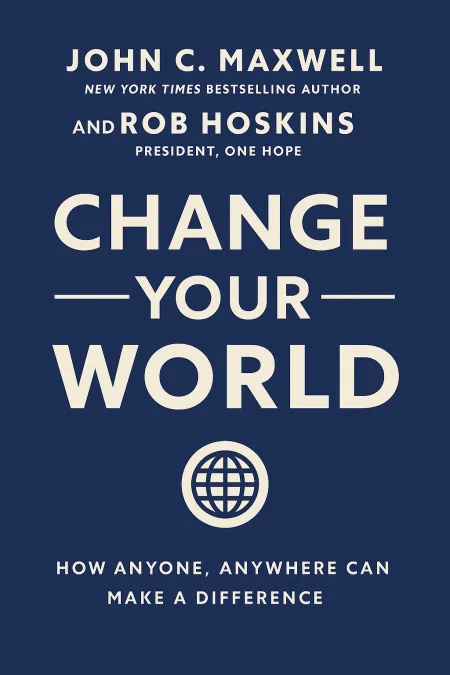
Change Your World
How Anyone, Anywhere Can Make a Difference
byJohn C. Maxwell, Rob Hoskins
Book Edition Details
Summary
Picture a world where you, yes you, are the architect of transformation. In "Change Your World," leadership maestros John C. Maxwell and Rob Hoskins hand you the keys to make this vision a reality. This is not just a guide; it's a call to action for the bold-hearted who see a world in need and refuse to sit idly by. From pinpointing your passion to galvanizing a team, every page is a blueprint for change, inspired by the authors' profound global impact. Here, the tools to measure and magnify your efforts await, empowering you to be the change you’ve always dreamed of being. Whether it's a neighborhood or a nation, the ripple starts with you.
Introduction
Every morning, millions of people wake up feeling restless about the state of their communities, their workplaces, their families. They see problems that need solving, injustices that demand attention, and opportunities for positive change that seem just out of reach. Yet too many resign themselves to waiting for someone else to step forward, for conditions to improve on their own, or for perfect circumstances that never arrive. The truth is far more empowering: transformation begins with ordinary individuals who decide they can no longer accept the status quo. When people embrace good values, connect with others who share their vision, and take consistent action, they discover an extraordinary capacity to create lasting change. The stories that follow reveal how anyone, regardless of background or resources, can become a catalyst for meaningful transformation in their world.
Becoming a Catalyst for Positive Change
At its core, being a catalyst means becoming someone whose presence accelerates positive change in any environment. Like a chemical catalyst that speeds up reactions without being consumed in the process, human catalysts maintain their authentic selves while helping others transform. This isn't about becoming a different person, but rather about unleashing the change-making potential that already exists within you. Norman Borlaug exemplifies this perfectly. A simple farm boy from Iowa, Borlaug spent decades quietly working in Mexican wheat fields, crossbreeding different strains to create higher-yielding crops. Day after day, under the blazing sun, he pursued his vision while others pointed to problems or made dire predictions about global famine. His patient, persistent work seemed insignificant at the time, yet it ultimately prevented hundreds of millions of deaths from starvation. Borlaug's story demonstrates that world-changing catalysts often work in obscurity, driven not by recognition but by deep conviction. The transformation Borlaug created didn't happen overnight. His breakthrough came through what he called "an unquestionable sense of calling" combined with relentless daily action. When he received the Nobel Peace Prize for his contributions to world food supply, the committee noted his impatience with slow progress and his refusal to accept the magnitude of world hunger problems as insurmountable. To become a catalyst yourself, start by moving from good intentions to good actions. Ask yourself what specific problem in your immediate environment calls to you most strongly. Then take one concrete step today, no matter how small. Remember that catalysts don't need perfect plans or unlimited resources. They need genuine care, consistent action, and the courage to begin before they feel completely ready.
Building Values-Based Transformation Tables
Values serve as the invisible foundation that determines whether change efforts succeed or fail spectacularly. When people gather around transformation tables, they create powerful spaces where good values can be examined, discussed, and applied to real-life situations. These intimate settings of eight to ten people become laboratories for personal growth and community transformation. The concept proved itself dramatically at Patsy, a forty-year-old restaurant chain in Guatemala with over six hundred employees. When leadership introduced values-based transformation tables throughout their twenty-three locations, they witnessed remarkable changes. Monthly usage of their employee development library increased by 400 percent within one year. More significantly, 99 percent of their staff credited the values they learned at transformation tables with increasing both their personal and professional satisfaction. What made these tables so effective was their emphasis on moving from awareness to application. Each week, participants would learn about a specific value like integrity, perseverance, or forgiveness. But learning wasn't enough. Everyone was asked to evaluate themselves honestly on a scale of one to five, share their self-assessment with the group, and commit to specific actions they would take in the coming week to grow in that area. This combination of vulnerability, accountability, and consistent practice created profound personal transformations. The beauty of transformation tables lies in their accessibility. Anyone can start one with as few as three other people. Begin by choosing values that resonate with your group's needs and circumstances. Create a safe environment where people feel comfortable sharing their struggles and victories. Meet consistently, ask powerful questions, and hold each other accountable with kindness and encouragement. Remember that transformation happens through repetition and relationship, not through one-time events or isolated efforts.
Measuring Impact and Sustaining Momentum
Meaningful change requires more than good intentions and inspirational meetings. It demands rigorous measurement and continuous refinement based on real results. This approach separates genuine transformation from activities that feel good but accomplish little. The key lies in tracking outcomes, not just outputs, and being willing to adjust strategies based on what the data reveals. Rob Hoskins learned this lesson painfully during a visit to Swaziland, where his organization had been working for years. Despite impressive activity numbers and positive feedback, the country's HIV/AIDS rates were actually increasing rather than decreasing. The United Nations projected that Swaziland could become the first extinct nation if current trends continued. This devastating reality forced Hoskins to confront the difference between being busy and being effective. Rather than defending past efforts or making excuses, Hoskins developed what he calls the Five Ds framework. Discover involves researching what's really happening and who's already addressing the issue. Design means creating strategy that begins with the end in mind. Deploy focuses on implementing plans while starting small and adjusting frequently. Document requires measuring intended outcomes rigorously. Dream means using results to expand what works while abandoning what doesn't work. This systematic approach transformed Hoskins' organization's effectiveness. In Swaziland, they redesigned their approach completely, creating a program called "I Matter" that was so successful the government adopted it and the CDC expanded it nationally. The key was their willingness to face hard truths, measure what mattered, and change course based on evidence rather than assumptions. To implement this in your own change efforts, start by clearly defining what success looks like in specific, measurable terms. Track both quantitative data and qualitative stories. Meet regularly with your team to analyze results and brainstorm improvements. Celebrate failures as learning opportunities that bring you closer to breakthrough solutions. Most importantly, remember that measurement isn't about judgment but about ensuring your precious time and energy create the maximum positive impact possible.
Summary
True transformation begins when ordinary people decide they cannot wait for someone else to create the change they want to see. As this journey reveals, anyone willing to learn and live good values, value people, and collaborate with others can become a catalyst for meaningful transformation. The stories throughout demonstrate that small, consistent actions compound into remarkable results when guided by clear values and sustained by genuine community. One particularly powerful insight echoes throughout: "Transformation is more than a lesson to be learned; it is a life to be lived." This means change must happen within us before it can flow through us to others. Your next step is simple yet profound: identify one person in your immediate circle who would benefit from the values-based approach you've learned about, invite them to coffee this week, and share what you've discovered about creating positive change. Remember that movements begin not with the masses, but with a few people committed to making things better.
Related Books
Download PDF & EPUB
To save this Black List summary for later, download the free PDF and EPUB. You can print it out, or read offline at your convenience.
By John C. Maxwell
