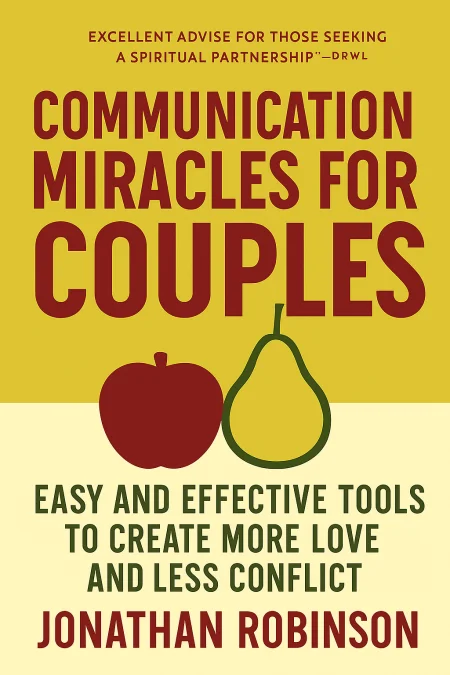
Communication Miracles for Couples
Easy and Effective Tools to Create More Love and Less Conflict
Book Edition Details
Summary
In the intricate dance of human connection, words can either build bridges or erect barriers. Jonathan Robinson's "Communication Miracles for Couples" unveils the art of heartfelt dialogue, offering couples the tools to transform misunderstanding into mutual understanding. This timeless guide, embraced by readers worldwide, distills decades of therapeutic wisdom into practical strategies that breathe life into every relationship. With Robinson's insights, discover how to speak with kindness, listen with intention, and nurture a love that thrives on empathy and clarity. Whether you're celebrating years together or just beginning your journey, this book is your companion in crafting a love that stands resilient and true.
Introduction
Every relationship reaches those moments when words feel inadequate, when conversations spiral into frustration, and when two people who deeply love each other feel like strangers speaking different languages. You've likely experienced those painful exchanges where good intentions somehow transform into hurt feelings, where attempts at connection result in distance, and where love feels buried beneath layers of misunderstanding. These communication breakdowns don't happen because couples lack love for each other—they happen because most of us were never taught the essential skills of intimate communication. The human heart yearns for deep connection, yet our modern world offers little guidance on how to create and maintain the profound intimacy we crave. Instead, we stumble through relationships using trial and error, often repeating patterns that push our partners away rather than drawing them closer. But what if there were proven methods to transform every difficult conversation into an opportunity for deeper connection? What if you could learn to speak in ways that consistently open your partner's heart rather than triggering their defenses? The journey toward effortless, loving communication begins with understanding that these skills can be learned, practiced, and mastered by anyone willing to embrace a new way of being together.
Building Intimacy Through Understanding
At the core of every human being lies a fundamental hunger for three essential experiences: acknowledgment, appreciation, and acceptance. These three elements function like emotional fuel, powering our capacity for love and connection. When we feel truly seen, valued, and accepted for who we are, our hearts naturally open and we become more loving in return. Yet most couples struggle to provide these gifts consistently, often because they're operating from depleted emotional reserves themselves. Consider the story of Bob and Jill, a couple on the verge of divorce who had fallen into the destructive pattern of subtle blame. During their counseling session, Jill would make cutting remarks disguised as reasonable observations, while Bob would shut down completely, feeling perpetually criticized and misunderstood. The breakthrough came when Jill learned to acknowledge Bob's experience before expressing her own needs. Instead of saying "You never listen to me," she learned to say "I can see how you've felt blamed by me, and how that must have really hurt. I'm very sorry you've felt that way." The transformation was immediate and profound. Bob's defensive walls crumbled as he felt truly heard and understood. His eyes filled with tears as he reached for his wife's hand, and suddenly they were on the same team again, working together rather than against each other. This simple shift from blame to acknowledgment created the safety necessary for authentic intimacy to flourish. The Acknowledgment Formula provides a practical framework for this transformation: "It sounds like you... That must feel... I'm sorry you feel..." This approach validates your partner's reality without requiring you to agree with their perspective. When you consistently offer acknowledgment, appreciation for specific qualities and actions, and acceptance of your partner's fundamental worth, you create an environment where love can thrive. The key lies in remembering that your partner, like you, is simply a human being seeking to feel valued and understood, and every interaction offers an opportunity to either build or diminish that sense of worth.
Transforming Conflict Into Connection
Arguments don't begin with raised voices or harsh words—they start when one or both partners drop below a critical threshold in their emotional well-being. When someone feels depleted, criticized, or overwhelmed, their first instinct is often to restore their sense of worth by diminishing their partner's. This creates a destructive cycle where both people try to feel better by making the other person feel worse, ultimately leaving everyone more hurt and disconnected than before. The revolutionary approach known as the Spoon Tune offers a completely different path through conflict. When Helena and her partner found themselves locked in heated disagreement about her chronic lateness, the situation seemed hopeless. He was absolutely certain he was right—after all, he had reminded her multiple times about their departure time, and punctuality was clearly the reasonable expectation. She felt criticized and controlled, certain that his rigidity was the real problem. Both were prepared for a long, painful battle of wills. Instead of continuing the verbal warfare, they implemented the Spoon Tune: lying together in the spooning position and breathing in unison for four minutes. During those minutes, his internal dialogue shifted dramatically from righteous indignation to curiosity, from blame to understanding, and finally to genuine care for his partner's well-being. By the time four minutes had passed, the issue that had seemed so important moments before felt completely manageable, and they were reconnected at a heart level. This technique works because it bypasses the rational mind, which loves to be right, and connects partners at a deeper physiological level through shared breath and physical closeness. The larger partner typically follows the breathing rhythm of the smaller partner, creating a natural synchronization that restores harmony. When couples feel safe and connected at this fundamental level, problems naturally resolve themselves or become much easier to address from a place of mutual care rather than defensive self-protection. The magic lies not in solving the surface issue, but in remembering that you're on the same team, working together toward the shared goal of love and understanding.
Mastering Solutions Without Ego Damage
The art of requesting change from your partner resembles performing delicate surgery—it requires careful preparation, precise technique, and skillful follow-through. Most people approach this challenge by pointing out what's wrong with their partner's behavior and demanding immediate correction, a strategy virtually guaranteed to trigger defensive resistance. The more effective approach treats your partner's ego with the same gentle care a surgeon would show a patient's vital organs. Daniel discovered this principle when addressing his girlfriend Anne's chronic lateness, an issue that had created numerous arguments and threatened their relationship. Previously, his attempts to discuss the problem had triggered Anne's defensive responses, leaving both of them frustrated and the issue unresolved. Using the A PI SWAP method, Daniel began by genuinely appreciating Anne's generous nature, particularly highlighting her thoughtful cooking. He then explained his positive intention: deepening their connection by resolving this recurring source of tension. Rather than attacking Anne's character or demanding she change, Daniel took responsibility for his own emotional response: "I feel hurt and fearful when we arrive late because I have a need to feel secure about what others think of us." Most importantly, instead of prescribing his own solution, he asked Anne for her input: "How do you think we could handle this differently so we both feel good about our timing?" This approach honored Anne's intelligence and autonomy while creating space for collaborative problem-solving. Anne responded with unexpected openness, suggesting that Daniel give her a thirty-minute warning before departure time. This simple agreement, born from Anne's own initiative rather than Daniel's demands, proved remarkably effective. The key insight is that people resist being told what to do but embrace solutions they help create. When you appreciate your partner first, express your positive intention, describe your experience without blame, and then invite their creative input, you transform potential conflicts into opportunities for deeper partnership. If your partner struggles to generate solutions, you can offer your own ideas by asking permission first: "Would you be open to hearing a couple of possibilities I've been thinking about?" This respectful approach maintains their sense of agency while moving toward practical resolution.
Summary
The journey toward effortless communication in intimate relationships begins with a fundamental shift in perspective: seeing your partner not as an opponent to be defeated, but as a fellow human being seeking the same love, understanding, and acceptance that you desire. As this book beautifully illustrates, "When people feel fully accepted, they do their very best to make their partners happy." Every interaction becomes an opportunity to either build the foundation of trust and connection or chip away at it through blame, defensiveness, and the relentless need to be right. The most powerful transformation occurs when couples learn to approach each difficult moment with curiosity rather than judgment, seeking first to understand rather than to be understood. Whether you're offering the three As of acknowledgment, appreciation, and acceptance, practicing the Spoon Tune during moments of conflict, or skillfully requesting change through the A PI SWAP method, the underlying principle remains constant: treat your partner's heart with the same tenderness you would show a precious child. Take one method from these pages and commit to practicing it this week—notice how even small changes in your approach can create profound shifts in the love you share together.
Related Books
Download PDF & EPUB
To save this Black List summary for later, download the free PDF and EPUB. You can print it out, or read offline at your convenience.
By Jonathan Robinson
