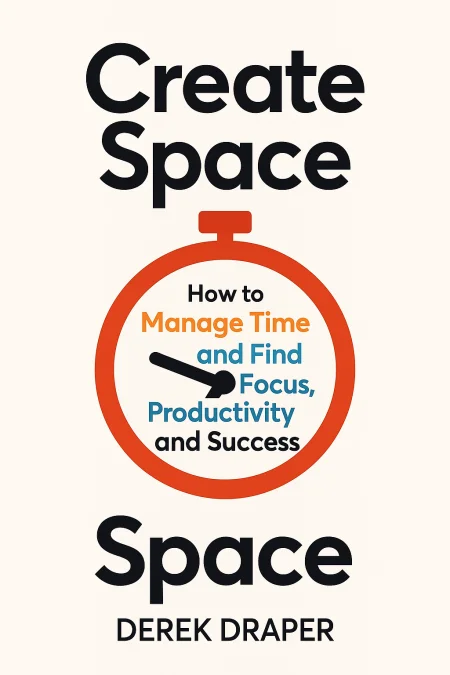
Create Space
How to Manage Time, and Find Focus, Productivity and Success
Book Edition Details
Summary
Amidst the chaos of relentless demands and ceaseless noise, Derek Draper's "Create Space" emerges as a sanctuary for those yearning to reclaim their lives. Distilled from years of elite coaching, this transformative guide offers a lifeline to the harried and hurried. Draper unveils the art of carving out mental and physical space, empowering readers to transcend daily tumult and reach their peak potential. Through a blend of time-tested strategies and groundbreaking psychological insights, each chapter serves as a beacon for those navigating the complexities of modern life. Whether you're at the helm of a corporation or just starting out, Draper's wisdom illuminates the path to balance and success, making this a must-read for anyone determined to thrive in a demanding world.
Introduction
We live in an unprecedented era where the greatest challenge isn't finding something to do, but finding the mental and emotional room to do what truly matters. Every day, we're pulled in countless directions by notifications, meetings, and urgent demands that fragment our attention and scatter our energy. The result is a pervasive sense of being overwhelmed, reactive, and trapped in cycles of busyness that don't lead to genuine fulfillment or breakthrough results. Yet within this modern dilemma lies an extraordinary opportunity for those willing to swim against the current. When you learn to consciously create space in your professional and personal life, you unlock your capacity for strategic thinking, authentic relationships, focused execution, and purposeful growth. This isn't about productivity hacks or time management tricks. It's about fundamentally transforming how you show up in the world by first creating the conditions in which your best self can emerge and thrive.
Master the Art of Strategic Thinking
Strategic thinking is the ability to step back from immediate pressures and engage your mind in deeper reflection, continuous learning, and confident decision-making. It's what separates reactive managers from visionary leaders who shape their industries and inspire their teams to achieve extraordinary results. Consider Raku, a brilliant pharmaceutical general manager whose career had mysteriously stalled despite her impressive credentials and technical expertise. Her manager consistently rated her performance as merely average, citing rushed decisions and poor listening skills that undermined her effectiveness. The root of Raku's struggle wasn't lack of intelligence or capability, but rather a psychological pattern rooted in childhood competition with her gifted older sister. This early experience had programmed her to rush constantly, believing she needed to "catch up" with everyone around her to prove her worth. Through coaching, Raku discovered that her frantic pace was actually preventing her from accessing her greatest asset: her analytical mind. When she learned to pause, reflect deeply, and truly listen to her team's insights, everything began to change. She started scheduling protected thinking time each morning, asking herself fundamental questions about situations before reacting. One colleague observed the transformation: "It's like we're getting all of Raku now, whereas before we were just skimming the surface." Her performance ratings soared as she realized that slowing down to think strategically wasn't falling behind—it was the key to moving ahead. To develop your strategic thinking capacity, start by scheduling just fifteen minutes of protected reflection time each morning before checking any messages. Use this space to ask yourself three fundamental questions: What do I think about this situation? How do I feel about it? What alternatives haven't I considered? Practice the discipline of pausing before making important decisions, even when it feels uncomfortable initially. Remember that the quality of your thinking directly impacts the quality of your results, and rushing often leads to costly mistakes that require far more time to fix than thoughtful deliberation would have required.
Build Deep Professional Relationships
Professional success is fundamentally relational, built on your ability to connect authentically with others, share your emotional reality appropriately, and build the kind of trust that enables true collaboration and influence. This goes far beyond networking or surface-level pleasantries—it's about creating genuine human connection within professional boundaries. Nick, a newly promoted manufacturing division managing director, exemplified how unresolved emotional patterns can sabotage even the most talented leaders. Despite his intelligence and strong work ethic, colleagues consistently experienced him as abrasive and overly demanding. His team felt constantly criticized and never good enough, while he felt unappreciated and unsupported by the very people he was trying to lead. The situation was deteriorating rapidly, threatening both his career and the division's performance. The breakthrough came when Nick recognized that his workplace behavior was unconsciously mirroring his childhood experience with absent and highly critical father figures. He was treating his team exactly the way he had been treated, perpetuating a cycle of emotional distance and harsh judgment that he himself had found so painful. Through coaching, Nick learned to develop what can be called "professional intimacy"—the ability to be authentic, vulnerable, and genuinely caring within appropriate workplace boundaries. He began acknowledging his own need for recognition rather than pretending such needs were beneath him, and most importantly, he realized that the validation he craved couldn't come from others but had to be cultivated from within. Begin building deeper professional relationships by practicing regular emotional check-ins with yourself throughout the day. Notice what you're feeling and why, then share appropriate aspects of your inner experience with trusted colleagues. Move beyond surface-level interactions by asking people how they're really doing and being prepared to share authentically yourself. Create opportunities for meaningful connection through informal conversations, team meals, or structured relationship-building activities. Remember that vulnerability, when exercised with wisdom and appropriate boundaries, is actually a strength that invites others to bring their whole selves to work and contribute their best thinking.
Execute with Focus and Discipline
Execution is what separates dreamers from achievers, requiring the discipline to prioritize ruthlessly, the focus to see important projects through to completion, and the wisdom to know when good enough is sufficient. In our distraction-rich environment, the ability to execute with sustained focus becomes a rare and valuable competitive advantage. Tamsin, CEO of a growing healthcare company, had built her entire reputation on being the person who could handle everything that came her way. She wore her ability to juggle dozens of priorities as a badge of honor, often working weekends and responding to emails within minutes at all hours. However, as her business expanded, this very strength became a critical liability. She found herself overcommitting constantly, missing important deadlines, and spreading herself so thin that nothing received her full attention. Her team gradually lost trust in her ability to deliver on commitments, and investors began questioning her leadership capabilities. The root issue wasn't lack of capability but rather a core belief formed in childhood that her worth depended on fixing everything and helping everyone around her. This compulsive helping pattern had served her well in smaller organizational settings but was now destroying her effectiveness as a senior leader. Despite extensive coaching efforts to help her prioritize and delegate more effectively, Tamsin ultimately chose to leave her CEO role rather than fundamentally change her approach. She preferred the familiar chaos and constant firefighting to the structured discipline that truly effective execution requires, illustrating that technical solutions are insufficient without addressing the underlying psychological patterns that drive our behavior. To dramatically improve your execution capabilities, start by identifying your three most important priorities and ruthlessly saying no to everything else that doesn't directly support these goals. Block specific time in your calendar for deep work on these priorities, treating these appointments with yourself as sacred and non-negotiable. Practice the discipline of finishing what you start before moving to the next shiny project or urgent request. Develop simple but consistent systems for tracking progress and holding yourself accountable to your commitments. Most importantly, examine whether your identity has become tied to being busy rather than being effective, and be willing to challenge long-standing patterns that no longer serve your success.
Design Your Path to Growth
Sustainable success requires intentional growth that balances achievement with well-being, ambition with authenticity, and professional development with personal fulfillment. This means taking conscious control of your development rather than simply reacting to opportunities or external expectations. Hans, a highly skilled finance director with clear aspirations for the top role in his organization, possessed exceptional technical abilities but consistently struggled to contribute meaningfully to strategic discussions outside his narrow area of expertise. His childhood in a strict religious household had taught him that expressing opinions beyond his area of absolute certainty was dangerous and presumptuous. This deeply ingrained psychological pattern was severely limiting his leadership potential, keeping him confined to functional expertise rather than developing the broad business acumen required for senior executive roles. Hans's breakthrough came during a powerful visualization exercise where he discovered his deep-seated fear of other people's judgment and criticism. Once he clearly understood this limiting pattern, he could begin to challenge it consciously and deliberately. In his very next management meeting, he courageously offered a marketing perspective that ended up significantly shaping the team's final decision. The CEO thanked him afterward for his valuable contribution, and Hans experienced the profound confidence that comes from showing up authentically and fully. This single act of courage opened the door to expressing the broader leadership presence he had always possessed but never felt safe to reveal. Design your personal growth path by first identifying the psychological patterns or limiting beliefs that may be constraining your potential. Reflect honestly on your childhood experiences and consider how they might be unconsciously influencing your current professional behavior and choices. Set specific developmental goals that deliberately stretch you beyond your comfort zone, and create robust accountability systems to ensure you follow through consistently. Seek feedback regularly from trusted sources and use it as fuel for growth rather than confirmation of your existing fears or insecurities. Remember that meaningful growth requires both the courage to face your current limitations honestly and the compassion to support yourself through the sometimes uncomfortable process of transcending them.
Summary
Creating space is the fundamental leadership practice that unlocks all others, serving as the foundation for every form of meaningful professional and personal development. As this exploration reveals, "Before you set out to grow as a leader, you must first create the space that you will grow into. Creating space is the a priori task that unlocks optimal personal performance and development." The leaders who truly thrive in our complex, fast-moving world are those who consciously step back from the chaos to think deeply, connect authentically, execute with laser focus, and grow intentionally. They understand that being constantly busy is not the same as being genuinely effective, and that true leadership emerges not from doing more things but from doing what matters most with full presence and unwavering commitment. Start today by choosing just one area where you will deliberately create more space, whether for strategic reflection, relationship-building, focused execution, or personal growth. Your future self and everyone you have the privilege to lead will thank you for this investment in conscious, intentional leadership.
Related Books
Download PDF & EPUB
To save this Black List summary for later, download the free PDF and EPUB. You can print it out, or read offline at your convenience.
By Derek Draper
