
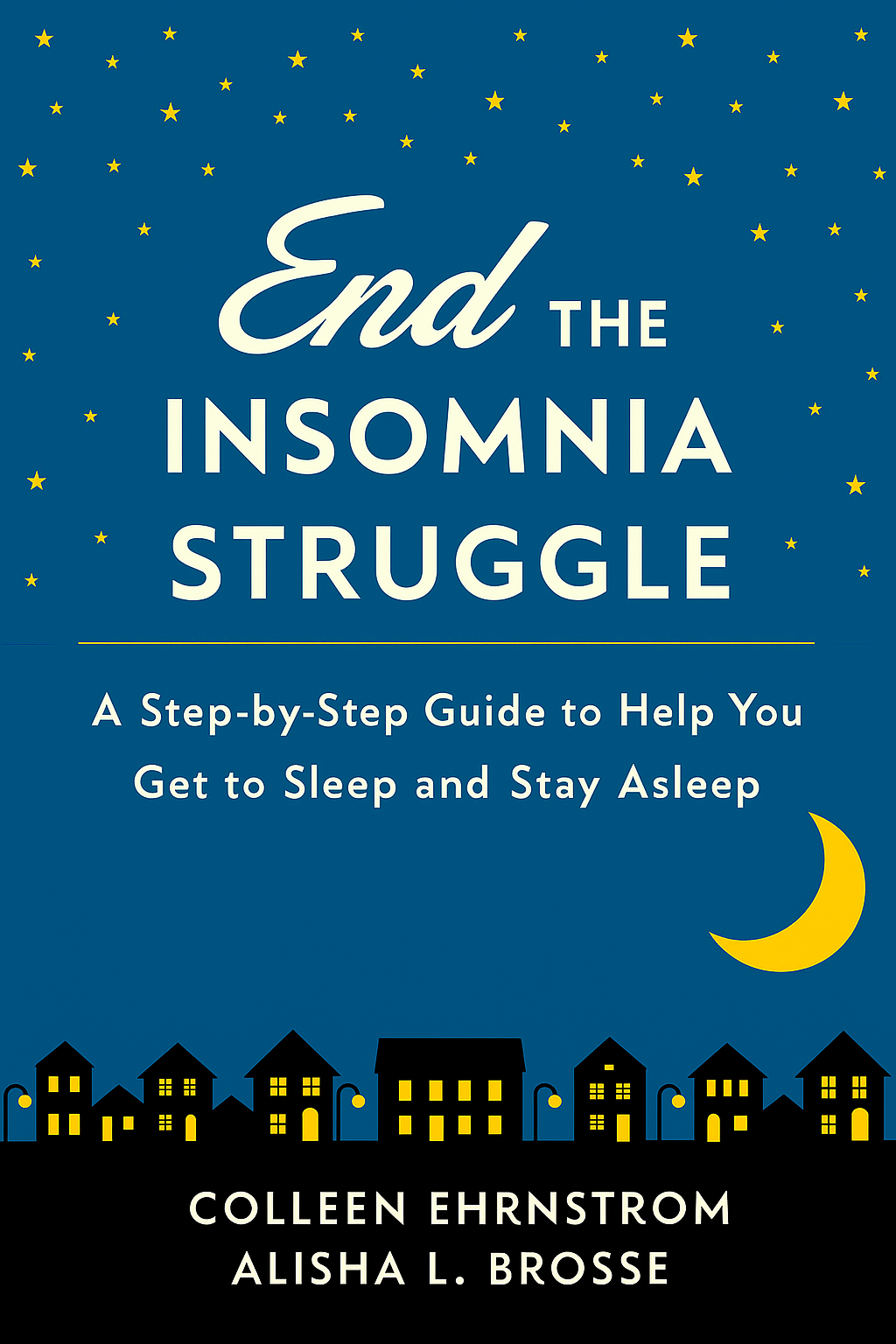
End the Insomnia Struggle
A Step-by-Step Guide to Help You Get to Sleep and Stay Asleep
byColleen Ehrnstrom, Alisha L. Brosse
Book Edition Details
Summary
In the hushed hours when sleep seems elusive, the mind races and the soul tires, "End the Insomnia Struggle" emerges as a beacon for weary souls. This transformative guide, rich with personalized strategies and grounded in cutting-edge sleep science, offers a lifeline without the crutch of medication. Embrace a journey where insomnia's grip loosens through the harmonious fusion of cognitive behavioral therapy and acceptance commitment therapy. Craft your own path to serene slumber with tailored insights and actionable steps. Here, every night becomes an opportunity to reclaim the restorative power of sleep, nurturing both body and mind. Awaken revitalized, ready to greet each day with clarity and vigor. This isn't just a book; it's your personal roadmap to restful nights and brighter days.
Introduction
If you're reading these words at 3 AM, staring at yet another sleepless night, know that you're not alone in this struggle. Millions of people lie awake each night, trapped in a cycle where the harder they try to sleep, the more elusive it becomes. This isn't just about feeling tired tomorrow—it's about how insomnia steals your joy, productivity, and sense of control over your own life. The good news is that breakthrough research has revealed why traditional approaches often fail and, more importantly, what actually works. Through a revolutionary combination of proven behavioral strategies and acceptance-based techniques, you can finally break free from the insomnia trap. This isn't about forcing sleep to happen; it's about creating the conditions where sleep naturally returns, transforming your relationship with rest from one of struggle to one of trust.
Find Your Sweet Spot with Sleep
The concept of finding your "sweet spot" with sleep represents a fundamental shift from fighting insomnia to partnering with your body's natural rhythms. This approach recognizes that sleep cannot be controlled through willpower alone, but rather requires a delicate balance between effort and surrender. Consider George, a high-energy businessman whose sleep problems began after his third child was born. Initially, he approached his insomnia like a business challenge, trying to "solve" it through sheer determination and increasingly rigid bedtime routines. He would lie in bed for hours, mentally reviewing work problems and growing more frustrated as sleep remained elusive. His well-intentioned efforts to catch up on weekends by sleeping in actually made his weekday sleep worse, creating an exhausting cycle. George's breakthrough came when he learned to find his sweet spot—being disciplined enough to follow proven sleep strategies while remaining flexible enough to avoid creating anxiety around sleep itself. He discovered that tracking his sleep patterns without obsessing over them, maintaining consistent wake times while accepting occasional variations, and following behavioral guidelines without turning them into rigid rules created the perfect environment for natural sleep to return. The sweet spot approach involves three key elements: consistent sleep scheduling that works with your natural rhythms, behavioral changes implemented gradually rather than drastically, and most importantly, accepting that some nights will be better than others without letting this derail your overall progress. Start by tracking your current sleep patterns for two weeks without making any changes, simply observing when you naturally feel sleepy and wake up. Use this data to create a realistic sleep schedule that honors both your body's preferences and your life's demands. Remember that finding your sweet spot is an ongoing process, not a one-time achievement. Your optimal sleep approach may shift with life changes, seasons, and circumstances, and maintaining flexibility while holding to core principles will serve you far better than rigid adherence to any single method.
Master Behavioral Sleep Strategies
Behavioral sleep strategies form the foundation of effective insomnia treatment, focusing on retraining your brain to associate bed with sleep rather than wakefulness and worry. These evidence-based techniques work by addressing the habits and patterns that inadvertently maintain sleep problems over time. Sarah, a marketing executive, had developed a habit of working in bed on her laptop, checking emails, and watching Netflix to unwind. When stress increased at work, she began experiencing difficulty falling asleep, but continued using her bedroom as a multipurpose space. Her brain gradually learned to associate her bed with alertness, work thoughts, and entertainment rather than sleep. After months of lying awake feeling frustrated, she felt trapped in a cycle where bedtime meant anxiety time. Through implementing stimulus control therapy, Sarah learned to use her bed exclusively for sleep and intimacy. She relocated her work and entertainment activities to other areas of her home and established a rule: if she wasn't asleep within twenty minutes, she would leave the bedroom and engage in a quiet, boring activity until sleepiness returned. Initially challenging, this approach retrained her brain to see bed as a cue for sleep. Within weeks, she noticed falling asleep became easier and more natural. The core behavioral strategies include stimulus control (using bed only for sleep), sleep restriction (limiting time in bed to match actual sleep time), and sleep hygiene (creating optimal environmental and behavioral conditions). Begin by conducting a bedroom audit—remove work materials, entertainment devices, and anything unrelated to sleep. Establish consistent bedtimes and wake times, even on weekends. If you're not asleep within twenty minutes, leave the bedroom and return only when genuinely sleepy. Track your progress using a sleep log, noting patterns without judgment. Many people see improvements within two to four weeks of consistent implementation. The key is patience and persistence—these strategies work by gradually reestablishing healthy sleep associations rather than providing immediate relief.
Transform Your Relationship with Thoughts
Your thoughts about sleep often become the very thing that keeps you awake, creating a vicious cycle where worry about not sleeping generates the alertness that prevents sleep. Transforming your relationship with these thoughts involves learning to observe them without being controlled by them. Michael, a teacher, found himself lying awake calculating how many hours of sleep he would get if he fell asleep "right now." His mind would race: "If I fall asleep by midnight, I'll get six hours... now it's 12:30, so five and a half hours... this is going to be a terrible day tomorrow." These thoughts created increasing anxiety, making sleep even more unlikely. He began dreading bedtime, knowing his mind would start its familiar spiral of worry and calculation. Through cognitive restructuring techniques, Michael learned to identify and challenge these unhelpful thought patterns. Instead of engaging with catastrophic predictions about tomorrow, he practiced responding with more balanced thoughts like "I've functioned on less sleep before" and "Worrying about sleep is more harmful than the actual sleep loss." He also learned mindfulness techniques to observe his thoughts without getting caught up in their content, treating them like clouds passing through the sky of his awareness. The transformation process involves three key steps: recognizing when you're engaging in sleep-interfering thoughts, challenging the accuracy and helpfulness of these thoughts, and developing alternative responses that reduce rather than increase arousal. Common problematic thoughts include catastrophizing ("I'll be useless tomorrow"), fortune-telling ("I know I won't sleep tonight"), and all-or-nothing thinking ("I need eight hours or I can't function"). Practice designated worry time during the day—set aside fifteen minutes to deliberately focus on your concerns, then remind yourself that worry time is over when these thoughts arise at bedtime. Develop a arsenal of calming mental alternatives: gratitude reflection, visualization of peaceful scenes, or simple mantras like "This too shall pass." The goal isn't to eliminate all sleep-related thoughts but to change your relationship with them from struggle to acceptance.
Maintain Your Sleep Wellness Journey
Maintaining good sleep over the long term requires viewing sleep wellness as an ongoing journey rather than a destination, with strategies for navigating inevitable challenges and setbacks while preserving the progress you've made. This perspective transforms temporary sleep difficulties from catastrophes into manageable bumps in the road. Jennifer, a nurse who had successfully overcome chronic insomnia using behavioral strategies, faced a major test when her father became seriously ill. The stress and schedule disruptions of caring for him triggered several nights of poor sleep, and she felt the familiar panic rising: "It's all coming back. I'm going to lose everything I've gained." Her first instinct was to abandon her sleep schedule entirely, sleeping whenever exhaustion allowed, which quickly unraveled months of progress. However, Jennifer remembered that setbacks are normal and temporary. Instead of catastrophizing, she returned to her basic sleep hygiene practices while showing herself compassion during this difficult period. She maintained her consistent wake time even when sleep was disrupted, used her stimulus control techniques when worry kept her awake, and practiced acceptance that some sleep loss was inevitable during this stressful time. Most importantly, she distinguished between a temporary lapse and a full relapse, treating the situation as a test of her skills rather than evidence of failure. Long-term maintenance involves developing resilience strategies for common sleep disruptors: travel, illness, stress, schedule changes, and life transitions. Create a "sleep emergency kit" of techniques you can quickly implement when challenges arise. This might include portable relaxation techniques, backup plans for disrupted schedules, and pre-written reminders of what has worked for you in the past. Build flexibility into your approach by identifying which elements of your sleep routine are non-negotiable versus which can be adapted to circumstances. Generally, maintaining consistent wake times and stimulus control principles are most crucial, while bedtime routines and sleep environment factors can be more flexible. Regular check-ins with yourself about your sleep patterns, stress levels, and life changes will help you make proactive adjustments before problems become entrenched.
Summary
Your journey to better sleep isn't about achieving perfection—it's about developing a sustainable, flexible relationship with rest that serves you throughout life's inevitable ups and downs. As this comprehensive approach reveals, the path forward lies not in forcing sleep to happen, but in creating conditions where natural sleep can flourish while building resilience for times when it doesn't. The most powerful insight from this work is that "sleep to live, don't live to sleep"—a reminder that sleep should support your life rather than dominate it. Start tonight by choosing just one behavioral change you're willing to commit to consistently: perhaps maintaining the same wake time for the next seven days, or removing electronic devices from your bedroom. Small, consistent actions create the foundation upon which lasting sleep wellness is built.
Related Books
Download PDF & EPUB
To save this Black List summary for later, download the free PDF and EPUB. You can print it out, or read offline at your convenience.
By Colleen Ehrnstrom
