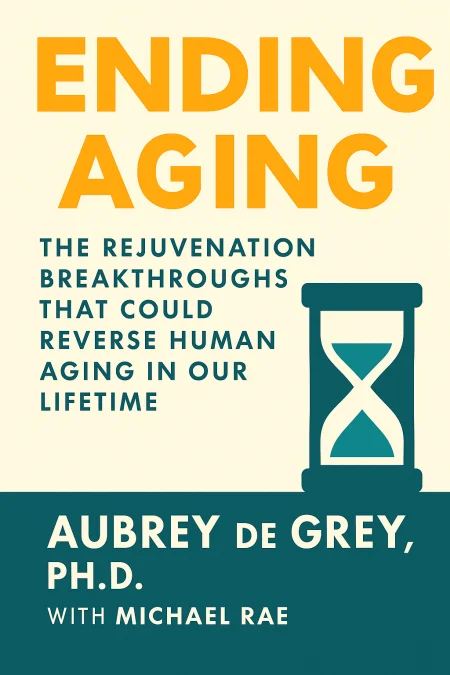
Ending Aging
The Rejuvenation Breakthroughs That Could Reverse Human Aging in Our Lifetime
Book Edition Details
Summary
Imagine a future where aging is merely a relic of the past. In "Ending Aging," visionary scientist Dr. Aubrey de Grey, alongside Michael Rae, unveils a provocative blueprint for rewriting the human lifespan. As they delve into the cellular chaos that ages our bodies, they reveal cutting-edge biotechnologies poised to halt—and even reverse—our biological clocks. Through riveting analogies and persuasive arguments, de Grey challenges the fatalistic acceptance of aging as an inevitability. This groundbreaking narrative not only promises an extended youth but ignites the imagination with possibilities once confined to science fiction. For those daring to question the boundaries of human potential, this book offers a tantalizing glimpse into a world where time surrenders its hold.
Introduction
Imagine if aging were not an inevitable fate but simply another medical condition waiting to be cured. This revolutionary perspective challenges everything we've been taught about growing old, suggesting that the wrinkles, weakness, and diseases we associate with aging are merely symptoms of repairable damage accumulating in our bodies over time. Just as we've learned to treat infections with antibiotics and replace worn-out joints with artificial ones, we may soon develop comprehensive therapies to reverse the fundamental processes that cause our bodies to deteriorate with age. The key lies in understanding that aging isn't controlled by some mysterious biological clock, but results from seven specific types of molecular damage that build up throughout our lives. Scientists are now developing targeted strategies to repair mitochondrial mutations that cause our cellular power plants to fail, clear away toxic waste products that clog our cells like garbage in city streets, and even eliminate cancer risk through radical genetic modifications. Rather than simply slowing aging or treating its symptoms, these approaches could potentially restore youthful function to aged bodies and maintain it indefinitely. This scientific revolution promises to transform not just medicine, but our entire understanding of what it means to be human in a world where death from old age becomes optional rather than inevitable.
Seven Types of Aging Damage We Must Repair
The human body ages through the gradual accumulation of seven distinct categories of molecular and cellular damage, each contributing to the familiar decline we associate with growing older. Think of your body as a bustling city where millions of microscopic workers carry out essential tasks every second of every day. Just as any busy metropolis generates waste, experiences equipment failures, and suffers from wear and tear, our cellular cities accumulate various forms of damage that eventually impair their function. The beauty of this framework is that it transforms aging from a mysterious, inevitable process into a concrete engineering problem with identifiable targets. These seven damage types include cells dying when they should stay alive, cells staying alive when they should die, mutations in the DNA of our cellular power plants called mitochondria, mutations in the main DNA housed in cell nuclei, the buildup of molecular garbage both inside and outside cells, unwanted chemical bonds forming between proteins, and the accumulation of excess cells that disrupt normal tissue function. Each type follows its own timeline and affects different organs, but together they create the comprehensive deterioration we call aging. Some damage becomes noticeable relatively early, like the stiffening of arteries from protein cross-links, while other types take decades to reach problematic levels. The revolutionary insight is that we don't need to prevent this damage from occurring in the first place, which would require interfering with the incredibly complex processes of life itself. Instead, we can allow damage to accumulate naturally and then develop therapies to repair or remove it before it reaches levels that cause disease and dysfunction. This approach sidesteps the enormous complexity of trying to redesign metabolism while focusing on the much simpler task of cleaning up the mess that metabolism leaves behind. By addressing all seven categories systematically, we could potentially maintain youthful function indefinitely, transforming aging from an inevitable decline into a manageable medical condition requiring periodic maintenance.
Mitochondrial Mutations and Cellular Power Plant Failure
Mitochondria function as the power plants of our cells, converting the food we eat into usable energy through a sophisticated process that resembles the operation of hydroelectric dams. These remarkable organelles contain their own DNA, completely separate from the genetic material stored in the cell's nucleus, and this mitochondrial DNA codes for essential components of the cellular energy production machinery. Unfortunately, mitochondria operate in an extremely hostile environment, constantly bombarded by reactive molecules called free radicals that are natural byproducts of energy generation. This makes mitochondrial DNA far more vulnerable to damage than nuclear DNA, accumulating mutations at rates ten to twenty times higher. The traditional theory suggested that as mitochondrial DNA becomes damaged, these cellular power plants would produce less energy and more harmful free radicals, creating a vicious cycle of accelerating decline. However, careful scientific observation revealed a more complex and surprising pattern. When researchers examined cells from aged tissues, they discovered that individual cells contained mitochondria with identical mutations, suggesting that mutant mitochondria somehow outcompete their healthy neighbors. This led to the "survival of the slowest" hypothesis, where defective mitochondria gain a competitive advantage precisely because they're not working properly. The real problem emerges when cells become completely dominated by these mutant mitochondria. Unable to generate energy through normal pathways, these cells must find alternative ways to dispose of the electrons that would normally flow through the energy production system. They begin exporting these excess electrons through their outer membranes, creating what scientists call "reductive hotspots" in the surrounding tissue. These hotspots generate free radicals outside the cell, where they can damage important molecules like cholesterol and convert them into toxic substances that spread throughout the body. This mechanism explains how a relatively small number of cells with completely mutant mitochondria can drive aging processes throughout the entire body. The toxic substances they produce can travel through the bloodstream and damage tissues far from their origin, contributing to atherosclerosis, neurodegeneration, and other age-related diseases. The solution involves creating backup copies of essential mitochondrial genes in the cell nucleus, where they're better protected from damage, ensuring that cells can continue producing vital proteins even when their mitochondrial DNA becomes corrupted.
Cleaning Up Cellular Waste Through Biological Innovation
Every cell in our body generates waste products as an inevitable consequence of normal metabolism, much like how any functioning factory produces both useful products and unwanted byproducts. Cells have evolved sophisticated waste management systems, particularly specialized organelles called lysosomes that function as cellular recycling centers. These lysosomes contain powerful enzymes capable of breaking down worn-out cellular components, damaged proteins, and various toxic substances, then recycling the useful parts and disposing of the rest. However, some waste products prove too chemically complex or stable for these natural recycling systems to handle effectively. Over time, this undegradable waste accumulates inside cells, gradually filling up the lysosomal storage compartments like garbage piling up in overstuffed dumpsters. Scientists call this accumulated waste lipofuscin or "age pigment," and its buildup contributes to cellular dysfunction and many age-related diseases. In atherosclerosis, immune cells called macrophages become overwhelmed trying to digest modified cholesterol molecules, eventually dying and forming the dangerous cores of arterial plaques. In neurodegenerative diseases like Alzheimer's and Parkinson's, specific protein aggregates accumulate because cellular recycling systems lack the tools to break them down efficiently. The solution draws inspiration from environmental cleanup efforts and the remarkable abilities of soil microorganisms. Bacteria and fungi have evolved over billions of years to break down virtually every organic compound on Earth, including many of the complex waste products that accumulate in aging human cells. By identifying the specific enzymes these microorganisms use to digest tough organic materials, scientists can potentially upgrade our cellular waste management systems to handle previously undegradable substances. This approach, termed "medical bioremediation," involves introducing carefully selected microbial enzymes into human lysosomes, essentially giving our cells new tools for waste disposal. The concept has already been proven successful in treating certain genetic diseases where patients are born lacking specific lysosomal enzymes. By providing the missing enzymes through regular treatments, doctors can restore normal cellular function and prevent the devastating consequences of waste accumulation. Similar strategies could address age-related waste buildup, allowing cells to clear out decades of accumulated garbage and restore youthful function to aged tissues.
Breaking Cancer's Evolution Through Telomerase Control
Cancer represents the ultimate challenge for any comprehensive anti-aging strategy because it's fundamentally a disease of cellular evolution that gets better at surviving our treatments over time. Traditional cancer therapies face an impossible battle against natural selection within tumors. Even if a treatment successfully kills 99.9 percent of cancer cells, the surviving 0.1 percent will be those most resistant to that particular therapy. These survivors multiply rapidly, creating new tumors that are inherently more difficult to treat than the original cancer. This evolutionary arms race explains why cancer remains so deadly despite decades of research and billions of dollars in treatment development. The key to defeating cancer lies in understanding how malignant cells achieve their most dangerous capability: unlimited reproductive potential. Normal healthy cells can only divide a limited number of times before protective DNA structures called telomeres become too short, causing the cells to stop dividing or die. This built-in limitation prevents normal cells from growing into tumors, but cancer cells overcome this restriction by reactivating an enzyme called telomerase that rebuilds telomeres and allows unlimited cell division. Nearly all dangerous cancers depend on this enzyme to sustain their growth, making telomerase both cancer's greatest strength and its potential Achilles heel. The radical solution involves removing the telomerase gene from every cell in the human body, making it impossible for any cancer to achieve unlimited growth. Without telomerase, cancer cells would be limited to the same finite number of divisions as normal cells, preventing them from growing beyond small, harmless sizes. However, this strategy would also affect our normal stem cells, which need telomerase to maintain and repair our tissues throughout life. The elegant workaround involves regularly replenishing our stem cell populations with fresh cells that have long telomeres but lack the telomerase gene. This approach, called Whole-body Interdiction of Lengthening of Telomeres or WILT, would require periodic stem cell treatments approximately every ten to twenty years. It represents a fundamental trade-off: accepting the need for regular medical maintenance in exchange for complete protection from cancer. Beyond eliminating cancer deaths, this strategy would also reduce the overall mutation load in our tissues, since most DNA damage occurs during cell division. By limiting the total number of times our cells can divide over a lifetime, we simultaneously eliminate cancer risk and slow the accumulation of age-related genetic damage, potentially extending healthy lifespan far beyond current limits.
Summary
The most profound insight from this scientific exploration is that aging represents not an inevitable biological destiny, but a collection of specific engineering problems with potentially achievable solutions. By viewing the human body as a complex machine that accumulates identifiable types of damage over time, we can develop targeted interventions to repair or prevent each category of molecular lesion that contributes to age-related decline. This paradigm shift transforms aging from a mysterious process beyond human control into a medical condition that could be treated through periodic maintenance therapies, much like how we service sophisticated machinery to keep it running indefinitely. The convergence of advances in gene therapy, stem cell medicine, and cellular engineering suggests that comprehensive anti-aging treatments may become available within the coming decades, potentially allowing the first humans to live for centuries or even millennia in youthful health. As we stand on the threshold of potentially defeating humanity's oldest enemy, we must grapple with profound questions about the future of human civilization: How would society need to restructure itself if healthy lifespans extend to multiple centuries, and what new forms of meaning and purpose might emerge when death from aging becomes optional rather than inevitable?
Related Books
Download PDF & EPUB
To save this Black List summary for later, download the free PDF and EPUB. You can print it out, or read offline at your convenience.
By Aubrey de Grey
