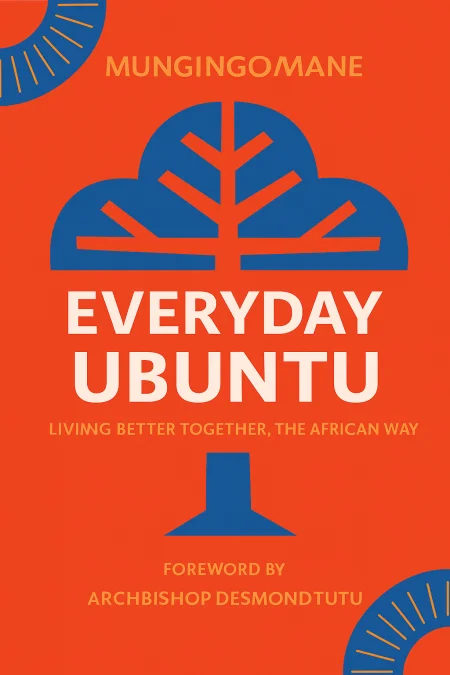
Everyday Ubuntu
Living Better Together, the African Way
Book Edition Details
Summary
In the heart of South Africa's diverse tapestry lies Ubuntu, a philosophy that redefines what it means to be human. This book is your gateway to a transformative mindset, where individuality is celebrated through the lens of collective humanity. Guided by 14 profound lessons, you'll uncover how interconnectedness can dissolve barriers and foster true unity in a world hungry for compassion. Each page is a journey through inspiring narratives and practical exercises designed to nurture empathy and understanding. More than a guide, it's a call to action—inviting you to weave Ubuntu into the fabric of your daily life and witness the profound changes it can bring. This is more than a philosophy; it’s an invitation to build bridges of kindness and discover the strength that comes from embracing our shared humanity.
Introduction
In the vibrant townships of South Africa, where humanity's greatest struggles and triumphs intersect, a young woman grew up breathing the air of ubuntu—a philosophy that would shape not only her worldview but offer profound wisdom for our fractured modern world. Mungi Ngomane, granddaughter of Nobel Peace Prize winner Archbishop Desmond Tutu, carries within her the living legacy of one of history's most transformative movements for justice and reconciliation. Born into a family where dinner conversations revolved around truth, reconciliation, and the fundamental interconnectedness of all human beings, Ngomane witnessed firsthand how ancient African wisdom could heal nations and transform hearts. Her grandfather's famous words, "My humanity is caught up, is inextricably bound up, in yours," became not mere philosophy but daily practice in a household where ubuntu—the belief that "I am only because you are"—guided every interaction. Through her intimate access to the architects of South Africa's peaceful transition from apartheid, Ngomane offers readers a unique window into how ubuntu's timeless principles can address today's challenges of division, isolation, and disconnection. Her journey from the Rainbow Nation to conflict zones in the Middle East, working with marginalized communities and advocating for human dignity, reveals how this ancient African philosophy provides practical wisdom for modern living. Readers will discover how ubuntu transforms our understanding of success from individual achievement to collective flourishing, how it offers hope in seemingly hopeless situations, and how it provides a roadmap for building authentic connections in an increasingly fragmented world.
Growing Up in Ubuntu: Family Legacy and Early Lessons
Growing up in the Tutu household meant living ubuntu before learning its name. For Mungi Ngomane, childhood dinner conversations weren't about homework or weekend plans—they centered on truth commissions, peaceful protests, and the radical idea that even one's enemies deserved dignity and respect. Her grandfather, Archbishop Desmond Tutu, and her mother, Naomi, embodied ubuntu's core principle daily: seeing oneself in others, treating every human encounter as sacred, and believing fundamentally in the interconnectedness of all humanity. The family's open-door policy exemplified ubuntu in action. Their home welcomed anyone in need—from fellow activists seeking sanctuary to strangers requiring temporary shelter. This wasn't charity in the traditional sense; it was the natural expression of a worldview that recognized no fundamental separation between self and other. Young Mungi watched her elders extend hospitality not from a sense of obligation but from genuine understanding that helping others was helping themselves. When her mother later offered their spare room to Karl, a man experiencing homelessness who had challenged her at a university presentation, it continued this family tradition of seeing past labels to recognize shared humanity. These early experiences taught Ngomane that ubuntu wasn't an abstract philosophy but a practical approach to daily life. She learned that respect begins with oneself—that one cannot genuinely honor others' dignity without first cultivating self-respect. The family's approach to setbacks and challenges demonstrated ubuntu's power: when facing criticism or opposition, they sought to understand rather than condemn, to find common ground rather than emphasize differences. Through her grandfather's jokes about apartheid's absurdity and her family's ability to find humor even in dark times, Ngomane absorbed ubuntu's essential lesson that maintaining one's humanity requires seeing the humanity in everyone else. The profound impact of witnessing ubuntu lived authentically shaped Ngomane's understanding that true strength comes not from individual achievement but from recognizing how every personal success depends on countless others' contributions. This foundation would prove essential as she ventured beyond her family's protection to apply ubuntu's wisdom in conflict zones, community work, and her eventual role as a bridge between ancient African wisdom and contemporary global challenges.
Ubuntu in Action: Truth, Reconciliation and Human Connection
The Truth and Reconciliation Commission represented ubuntu's most ambitious application—an entire nation choosing healing over vengeance, understanding over retribution. Under Archbishop Tutu's leadership, South Africa embarked on an unprecedented experiment: could a country torn apart by apartheid's systematic dehumanization rebuild itself through radical acts of forgiveness and truth-telling? For Ngomane, observing this process from within the Tutu family circle revealed ubuntu's transformative power when applied at scale. The Commission's approach embodied ubuntu's core insight that healing requires seeing the full humanity of both victims and perpetrators. Rather than pursuing Nuremberg-style trials focused on punishment, South Africa chose a path that acknowledged everyone's capacity for both evil and redemption. Ngomane witnessed her grandfather weeping after hearing testimonies about apartheid's horrors, yet maintaining unwavering belief in the essential goodness of those who had committed terrible acts. This wasn't naive optimism but ubuntu's profound recognition that reducing people to their worst moments denies their full humanity—and therefore denies our own. The Commission's requirement for public testimony, broadcast live across the nation, reflected ubuntu's understanding that individual healing requires community witnessing. When perpetrators like Eric Taylor confessed to murdering the Cradock Four, their admissions served not just personal redemption but national understanding. Even when victims like Nyameka Goniwe couldn't personally forgive, the Commission provided a collective space for forgiveness that allowed the nation to move forward. This demonstrated ubuntu's flexibility—it doesn't demand individual forgiveness but creates structures for communal healing. Through initiatives like the Ubuntu Round Table, which brought together police officers and young people from London's marginalized communities, Ngomane saw ubuntu's principles applied to contemporary conflicts. When teenagers who had been repeatedly stopped and searched sat across from the officers who had targeted them, both sides discovered shared humanity beneath their opposing roles. Police officers revealed their own fears and backgrounds, while young people explained their experiences of marginalization. These conversations didn't eliminate structural problems, but they created human connections that made future interactions more humane—ubuntu's practical magic in action.
Living Ubuntu Daily: Practical Wisdom for Modern Life
Ubuntu's transition from philosophical principle to daily practice requires what Ngomane calls "active seeing"—consciously recognizing the web of relationships that sustain every moment of our lives. In our hyperindividualistic culture, where social media promotes comparison and competition, ubuntu offers a radical alternative: measuring success not by personal achievement but by contribution to collective well-being. Ngomane's work with marginalized communities revealed how this shift in perspective transforms both individual fulfillment and community resilience. The practice begins with small acts of recognition—genuinely seeing the barista who serves morning coffee, thanking the cleaner who maintains shared spaces, acknowledging the countless invisible laborers whose efforts enable daily life. These aren't mere courtesies but exercises in ubuntu consciousness, training ourselves to perceive the reality of interdependence that modern life often obscures. When Ngomane worked with Palestinian families, she discovered how this practice of radical acknowledgment creates bridges even across deep political divisions. Sharing meals with people whose suffering stemmed partly from her own country's policies, she found that ubuntu's emphasis on shared humanity transcended nationality and ideology. Ubuntu's approach to conflict resolution emphasizes listening with the intent to understand rather than to respond. Ngomane's experience facilitating conversations between police and community members demonstrated how this practice transforms seemingly intractable conflicts. When both sides felt genuinely heard—not just their positions but their fears, hopes, and human complexity—defensive walls lowered and creative solutions emerged. This wasn't about agreeing on everything but about recognizing each other's full humanity, which naturally led to more compassionate interaction. Perhaps most challengingly, ubuntu demands that we extend this recognition to ourselves. In a culture of relentless self-criticism and perfectionism, ubuntu's insistence on self-respect as the foundation for respecting others offers both comfort and accountability. Ngomane learned from her family's example that caring for oneself isn't selfish but essential—one cannot sustainably serve others from an empty vessel. This means honoring our own needs, setting healthy boundaries, and recognizing our own inherent worth not as achievements to be earned but as birthrights to be claimed and shared.
Summary
Ubuntu offers the world a profound yet practical alternative to the isolation and competition that characterize so much of modern life. Through Mungi Ngomane's intimate access to this philosophy's living tradition, we discover that the ancient African wisdom of "I am because we are" provides essential tools for healing our fractured communities and finding authentic fulfillment in our interconnected world. The most transformative insight from ubuntu is that recognizing our fundamental interdependence doesn't diminish individual worth but reveals its true source—we become most fully ourselves not through separation but through connection. From her grandfather's work with the Truth and Reconciliation Commission to her own efforts bridging divides in contemporary conflicts, Ngomane demonstrates how choosing to see our shared humanity, even with those who have hurt us, opens pathways to healing that punishment and revenge cannot access. For anyone seeking authentic connection in an increasingly fragmented world, ubuntu provides both philosophical foundation and practical guidance for building communities where everyone can flourish because everyone is truly seen.
Related Books
Download PDF & EPUB
To save this Black List summary for later, download the free PDF and EPUB. You can print it out, or read offline at your convenience.
By Mungi Ngomane
