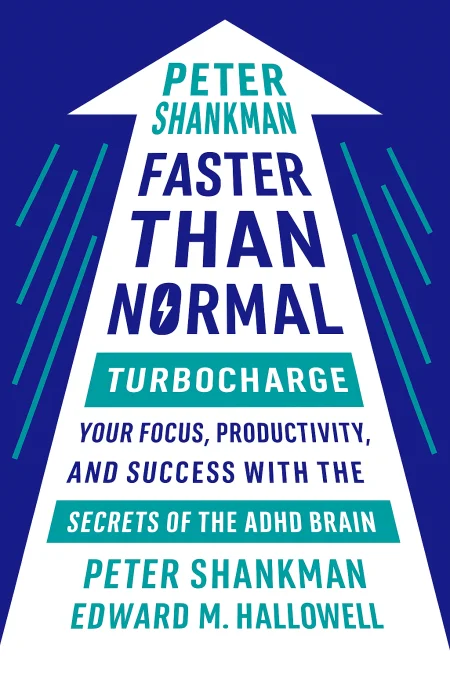
Faster Than Normal
Turbocharge Your Focus, Productivity, and Success with the Secrets of the ADHD Brain
byPeter Shankman, Edward M. Hallowell
Book Edition Details
Summary
Ever felt like the world just can't keep up with your pace? Meet Peter Shankman, the unstoppable dynamo who turns ADHD from a challenge into a superpower. In "Faster Than Normal," Shankman reveals his secrets to transforming high-energy chaos into extraordinary productivity. As a media mogul, marathon runner, and devoted dad, he seemingly bends time to his will. This isn't just a guide; it's a manifesto for channeling hyperfocus and creativity into success. Discover how to sidestep pitfalls, streamline your life, and utilize technology to unleash your brain’s full potential. For anyone feeling overwhelmed, this book offers a lifeline, showing how to harness a faster-than-normal mind without derailing.
Introduction
Sarah sits in her office at 3 AM, having lost track of time while working on a presentation that consumed her attention for hours. While her colleagues struggle to focus on mundane tasks, she effortlessly connects dots others miss, generating innovative solutions that transform entire project outcomes. Yet tomorrow, she'll likely forget her keys again and arrive late to the meeting where she'll present her brilliant work. This paradox defines millions of people living with minds that operate at lightning speed. Rather than viewing rapid-fire thinking and unconventional approaches as limitations, imagine discovering they're actually competitive advantages waiting to be unleashed. The challenge isn't slowing down to fit conventional expectations, but learning to harness extraordinary mental velocity for exceptional results. Through candid personal experiences and practical strategies, this exploration reveals how seemingly chaotic thinking patterns can become sources of remarkable creativity, productivity, and success. The journey ahead offers tools for transforming scattered energy into laser-focused achievement, turning perceived weaknesses into undeniable strengths, and embracing the unique gifts that come with thinking faster than normal.
From Scattered to Successful: My Journey with ADHD
Standing in a hotel lobby in the Caribbean, watching couples stroll by while checking his watch obsessively, Peter felt his evening dissolving into frustration. His girlfriend was still upstairs getting ready despite his clear communication about their 8 PM dinner reservation. As minutes ticked past, his mind spiraled through catastrophic scenarios: missing the reservation, ruining the vacation, confirming his inability to maintain relationships. The rational voice reminding him that five minutes late wouldn't end the world was drowned out by an internal storm of anxiety and self-doubt. Without conscious decision, he walked outside onto the beach, needing air and space to process his swirling thoughts. The next thing he knew, 45 minutes had passed, he was completely lost, and his girlfriend was nowhere to be found. What began as a momentary escape had transformed into a relationship crisis, with both parties feeling abandoned and misunderstood. This pattern of emotional hijacking represents a common experience for those with faster-than-normal brains. The same mental speed that generates brilliant ideas and innovative solutions can also amplify everyday frustrations into overwhelming experiences. The key lies not in suppressing this intensity, but in recognizing when the mind shifts into overdrive and developing strategies to channel that energy constructively rather than destructively.
The Science of Speed: Understanding Your Faster Brain
When Peter steps out of an airplane at 13,500 feet, his brain launches into emergency mode, flooding his system with dopamine, adrenaline, and serotonin to ensure survival. These are the same chemicals that most people produce naturally in sufficient quantities for daily focus and contentment. For him, this extreme activity provides what others get simply from sitting at a desk concentrating on routine tasks. After landing safely, parachute discarded in a corner of the drop zone, he pulls out his laptop and writes thousands of words in minutes, answers hundreds of emails with laser focus, and creates content with unprecedented clarity. His brain, now saturated with the neurochemicals it desperately craved, operates at peak performance for hours afterward. This isn't reckless thrill-seeking, but rather an unconventional approach to achieving optimal brain chemistry. The traditional view frames this as a deficit requiring correction, but the reality reveals something far more nuanced. Brains that run faster than normal simply require different fuel sources and operating conditions. Understanding this neurochemical landscape allows individuals to design lives that consistently provide what their minds need to function brilliantly, whether through calculated challenges, intense exercise, or engaging creative projects that naturally stimulate the same chemical pathways.
Building Your Operating System: Rules and Tools for Success
At 3:30 AM, while the world sleeps, Peter's day begins with deliberate precision. His gym clothes are already on because he sleeps in them, eliminating the friction of decision-making while barely awake. His phone automatically turns on lights throughout his apartment, his calendar syncs across all devices, and his morning routine flows without requiring conscious choices. By the time most people reach for their first cup of coffee, he's already completed a full workout and begun tackling his most important work. This isn't obsessive-compulsive behavior, but strategic life design. Faster brains excel at generating options and possibilities, which becomes problematic when simple decisions multiply into overwhelming complexity. Choosing what to wear from a closet full of options can consume mental energy better spent on creative challenges. Deciding between fifteen restaurant options can derail an evening's productivity. The solution involves systematically eliminating unnecessary choices while creating supportive structures for peak performance. This might mean wearing identical outfits daily, preparing meals in advance, or scheduling specific time blocks for different types of work. What appears rigid from the outside actually creates maximum freedom by removing friction from routine decisions, allowing extraordinary mental resources to focus on what truly matters.
Relationships and Beyond: ADHD in Your World
Jonathan asked his wife Josephine to teach him her "reverse sear" steak technique, looking forward to learning something new together. Instead of walking him through each step, she immediately took control of the pan, adjusted the heat, and began explaining while moving quickly through the process. When he tried to ask questions about steak thickness or timing, she grew impatient with interruptions. Soon he found himself sitting in the living room, feeling pushed aside, while she completed the entire meal alone. Later, Josephine stormed in, confused and hurt about why he'd abandoned their cooking session. From her perspective, she was enthusiastically sharing knowledge while he seemed uninterested and walked away. Neither recognized how the teaching moment had transformed into a takeover, leaving both feeling misunderstood and disconnected. This dynamic illustrates how good intentions can create relational friction when different processing speeds collide. Faster minds often want to help by jumping directly to solutions, inadvertently excluding others from the learning process. Success requires conscious effort to slow down, invite participation, and remember that efficiency isn't always the goal in relationships. Sometimes the journey of discovery together matters more than reaching the destination quickly, requiring patience and intentional presence with those who operate at different speeds.
Summary
The transformation from viewing rapid-fire thinking as a hindrance to embracing it as a superpower requires both understanding and strategy. Like discovering that a race car requires different fuel and handling than a standard vehicle, faster brains need specialized approaches to reach their full potential. The stories throughout this journey reveal that success comes not from fighting against natural intensity, but from creating systems that support and channel extraordinary mental energy. Three essential principles emerge from this exploration: first, environmental design matters tremendously, from eliminating decision fatigue to creating optimal conditions for focus and creativity. Second, self-awareness becomes the foundation for everything else, understanding personal triggers, peak performance conditions, and the unique rhythms of an accelerated mind. Finally, relationships thrive when differences are acknowledged and accommodated rather than ignored or resisted. The goal isn't to become normal, but to become exceptionally, authentically yourself. Those blessed with minds that operate in overdrive possess remarkable gifts of creativity, innovation, and problem-solving that the world desperately needs. The challenge and opportunity lie in learning to drive that incredible mental machinery with skill, intention, and joy.
Related Books
Download PDF & EPUB
To save this Black List summary for later, download the free PDF and EPUB. You can print it out, or read offline at your convenience.
By Peter Shankman
