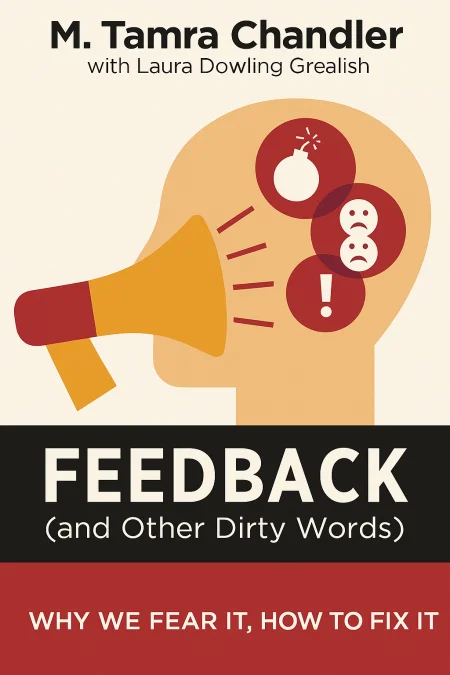
Feedback (and Other Dirty Words)
Why We Fear It, How to Fix It
byM. Tamra Chandler, Laura Dowling Grealish
Book Edition Details
Summary
Feedback—a word that often strikes fear into the hearts of many. Yet, it doesn't have to be a trigger for anxiety. M. Tamra Chandler and Laura Grealish unravel this cultural stigma in their eye-opening guide, "Feedback (and Other Dirty Words)." This book serves as a roadmap to transforming feedback from a source of dread into a tool for empowerment and growth. Through a blend of sharp wit and practical advice, the authors redefine feedback, introducing the transformative roles of Seeker, Extender, and Receiver. They share strategies to make feedback focused, fair, and frequent, enabling you to cultivate a thriving environment of trust and open communication. With hands-on exercises and real-life examples, this guide empowers you to harness feedback's full potential—unlocking pathways to enhanced performance and connection in both personal and professional realms.
Introduction
Picture this: your heart races, palms sweat, and your mind floods with worst-case scenarios the moment your manager says, "I have some feedback for you." Sound familiar? You're not alone in this visceral reaction. For decades, feedback has earned its reputation as a workplace villain, leaving countless professionals wounded by poorly delivered criticism, vague suggestions, and emotionally charged conversations that miss their mark entirely. But what if feedback could be your greatest ally instead of your biggest fear? What if those moments of insight could become catalysts for extraordinary growth rather than sources of dread? The transformation begins when we recognize that our collective struggle with feedback isn't a personal failing—it's a systemic problem with a powerful solution. When we shift from fearing feedback to flourishing through it, we unlock not just individual potential, but create organizations where people genuinely thrive, connect authentically, and achieve remarkable results together.
Redefining Feedback for Growth
True feedback transformation starts with abandoning everything we think we know about the process. Traditional feedback has been poisoned by decades of annual reviews, surprise attacks, and well-meaning but clumsy delivery that leaves everyone feeling worse than before. The real breakthrough comes when we redefine feedback as clear and specific information that's sought or extended with the sole intention of helping individuals or groups improve, grow, or advance. Consider Steven, a talented project manager who used to break into a cold sweat whenever his supervisor Mira requested a private meeting. Their relationship had been cordial but distant, and Steven's primitive brain would immediately trigger fight-or-flight responses, flooding his system with stress hormones that made genuine listening nearly impossible. The breakthrough came when Mira learned to completely reframe her approach, moving from evaluator to collaborator. Instead of calling Steven into her office with ominous statements like "we need to talk," Mira began asking permission first. She'd say something like, "Steven, I've observed some specific patterns in your project management approach that I think could help you advance to the senior level you're working toward. Would you be willing to explore these insights with me sometime this week?" This simple shift immediately changed the power dynamic and gave Steven time to prepare mentally. The transformation happens through three foundational elements: fairness, focus, and frequency. Fairness means sharing observations without judgment or hidden agendas. Focus requires keeping feedback bite-sized and specific rather than overwhelming someone with a laundry list of improvements. Frequency involves creating regular, informal touchpoints rather than saving everything up for formal review sessions. When you combine these elements with genuine care for the person's growth, feedback becomes a gift rather than a weapon. Start by examining your own relationship with feedback. Notice when your stress response kicks in, practice the three-breath technique to calm your nervous system, and remember that growth-oriented feedback is fundamentally different from criticism or evaluation. The goal isn't perfection—it's progress toward becoming the person you want to be.
Building Trust Through Connection
Trust forms the bedrock of every successful feedback conversation, yet most people skip this crucial foundation entirely. Without trust, even the most skillfully delivered insights will bounce off like arrows hitting armor. The secret lies in understanding that trust isn't built in grand gestures—it's constructed through countless small moments of authentic connection, consistency, and genuine care for others' wellbeing. Research reveals a powerful truth through the Gottman 5:1 ratio: relationships flourish when positive interactions outnumber negative ones by at least five to one. This principle, originally discovered in marriage research, transforms workplace dynamics when applied thoughtfully. Mai Ling, a project manager in a multinational company, experienced this firsthand when her remote supervisor began shifting their interaction pattern. Previously, Mai Ling only heard from her boss when deadlines were missed or problems arose. The relationship felt transactional and tense, making any feedback feel like an attack. Everything changed when her supervisor started reaching out regularly just to check in—asking about project challenges, celebrating small wins, and offering support when she encountered obstacles. These weren't formal feedback sessions, but genuine moments of human connection that gradually built a foundation of mutual respect and safety. Over several months, this consistent positive engagement created an environment where honest conversations about improvement areas felt supportive rather than threatening. When her supervisor eventually needed to address some missed deadlines, Mai Ling was able to receive the feedback openly because she trusted his intentions and felt valued as a whole person, not just a performer of tasks. Building this trust requires intentional daily practices. Start each interaction by genuinely checking in on people as humans, not just workers. Share your own challenges and vulnerabilities appropriately. Follow through consistently on promises and commitments. Express authentic appreciation for others' contributions, being specific about what you noticed and why it mattered. Most importantly, be present during conversations rather than rushing through them as agenda items. Remember that trust-building is an investment that pays compound interest. Every positive interaction makes the next feedback conversation easier and more effective, creating an upward spiral of connection and growth.
Mastering the Art of Seeking and Receiving
The most powerful shift in feedback culture happens when people stop waiting to be told what they need to know and start actively seeking the insights that fuel their growth. This transformation from passive recipient to active seeker changes everything—it eliminates the element of surprise, puts you in control of your development agenda, and signals to others that you're committed to continuous improvement. Dr. Sarah Chen, a rising leader in a healthcare organization, discovered this principle during a career plateau that left her frustrated and stagnant. Despite solid performance reviews, she wasn't advancing and couldn't understand why. Everything changed when she decided to become a strategic seeker of feedback, starting with her most trusted colleague who had recently been promoted to the role Sarah wanted. Instead of asking the vague question "How am I doing?" Sarah got specific: "I'm working toward the department director role, and I know communication with stakeholders is crucial at that level. When you observe me in cross-departmental meetings, what do you notice about my communication style that helps or hinders my influence?" This focused approach made it easy for her colleague to provide concrete, actionable insights about Sarah's tendency to present too many options without clearly stating her recommendations. Armed with this specific feedback, Sarah began practicing more decisive communication and asking for ongoing observation from multiple colleagues. She discovered the power of seeking feedback from diverse sources—not just supporters, but also people who had different perspectives on her work. This multi-angle approach helped her identify blind spots she never would have seen otherwise. The key to masterful receiving lies in managing your emotional response and focusing on the future rather than defending the past. When receiving feedback, practice assuming positive intent, ask clarifying questions to understand specifics, and resist the urge to justify or explain. Instead of saying "Yes, but..." try responding with "Help me understand..." or "What would success look like?" Transform your approach by scheduling regular feedback conversations with key stakeholders, preparing specific questions about areas where you want to grow, and creating a personal board of advisors who can provide ongoing insights. Remember, the most successful people aren't those who need the least feedback—they're the ones who seek it most actively and use it most effectively.
Creating Your Feedback Movement
Sustainable feedback transformation requires more than individual skill-building—it demands creating a cultural movement that spreads organically throughout your sphere of influence. This shift happens when people experience feedback as genuinely helpful rather than threatening, inspiring them to extend the same quality of support to others. The transformation often begins with leaders who model vulnerability by seeking feedback first. Marcus, a division president at a technology company, kickstarted this cultural shift during a team meeting where quarterly results had fallen short of expectations. Instead of launching into analysis of what went wrong, he opened with a question: "I know my leadership during this challenging quarter hasn't been perfect. I'd like to understand how my approach affected our team's ability to navigate these obstacles. What would help you feel more supported as we tackle the next quarter?" This question stunned his team because leaders in their organization typically delivered feedback rather than requesting it. Over the following weeks, Marcus consistently demonstrated that he valued honest input by making visible changes based on what he learned. When team members saw their feedback actually influencing decisions and improving conditions, they began seeking more feedback themselves. The movement accelerated when Marcus instituted simple practices that made feedback exchange feel natural and safe. Team meetings began including brief appreciation rounds where people could acknowledge specific contributions from colleagues. Project debriefs always included both "what worked well" and "what we'd do differently next time" discussions. Most importantly, feedback became forward-focused rather than backward-looking, always connecting insights to future success rather than dwelling on past mistakes. Creating your own feedback movement starts with examining your current patterns and making specific commitments to change. Practice the CONNECT model: establish Context for conversations, focus on ONE thing at a time, share what you NOTICE without judgment, avoid gossip and rumors, describe the EFFECT of behaviors, create space for CONVERSATION, and build TRUST through consistency. Begin where you have the most influence, whether that's with your direct reports, your peer group, or even your manager. Start small with low-risk feedback exchanges, celebrate successes when feedback leads to positive outcomes, and be patient as new habits develop. Remember that cultural transformation happens through consistent modeling over time, not through single dramatic gestures.
Summary
The journey from fearing feedback to flourishing through it represents one of the most significant shifts any professional can make. When we redefine feedback as clear, specific information shared with the sole intention of helping others improve and grow, we transform it from a source of anxiety into a catalyst for extraordinary development. As the research clearly demonstrates: "Performance management is ineffective for companies that have a weak performance feedback culture," but organizations that master growth-oriented feedback achieve double the financial results of their peers. Your path forward begins with a single, powerful decision: commit to seeking one piece of specific, focused feedback this week from someone whose perspective you value. Ask them to notice something particular about your work or approach, give them time to observe, then follow up with genuine curiosity about their insights. This simple act will begin rewiring your relationship with feedback and modeling a new possibility for everyone around you.
Related Books
Download PDF & EPUB
To save this Black List summary for later, download the free PDF and EPUB. You can print it out, or read offline at your convenience.
By M. Tamra Chandler
