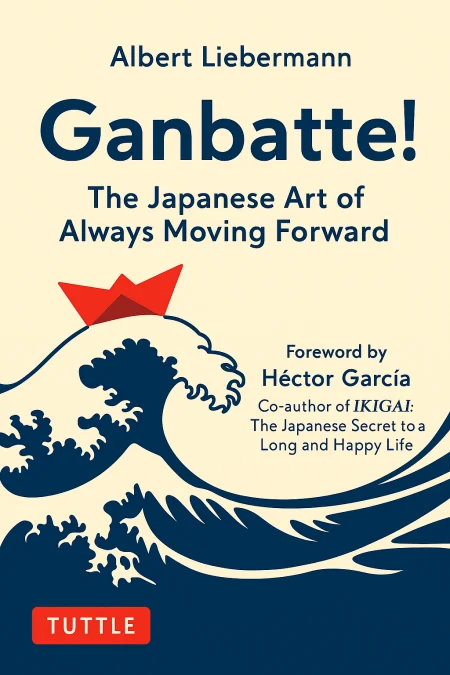
Ganbatte!
The Japanese Art of Always Moving Forward
byAlbert Liebermann, Héctor García
Book Edition Details
Summary
With unwavering tenacity, Ganbatte! by Albert Liebermann offers a fresh take on resilience, inspired by a profound Japanese ethos. This captivating guide invites you to infuse your life with the spirit of "doing your best with what you have." In fifty thought-provoking chapters, Liebermann skillfully blends practicality with inspiration, drawing you into the art of overcoming life's hurdles. Whether you're struggling with personal fitness, navigating love, or launching a venture, the "Ganbatte Rules" provide actionable strategies to propel you forward. A foreword by Hector Garcia enhances the narrative, enriching your understanding of ganbatte through the wisdom of Japan's centenarians. Embrace this empowering philosophy and transform challenges into stepping stones toward a more fulfilling life.
Introduction
Picture a 108-year-old man in Okinawa, standing steadily without assistance, his eyes sparkling with the vitality of someone decades younger. When asked about the secret to his remarkably long and vibrant life, he responds with a single word: "Ganbatta" - I made an effort and always did the best I could. This profound moment, witnessed by researchers studying longevity in Japan's centenarian villages, reveals something extraordinary about the Japanese approach to life's challenges. While many cultures wish each other "good luck" before facing difficulties, the Japanese offer something far more powerful: "Ganbatte!" - a call to inner strength that places control firmly in our own hands. This philosophy transforms how we view obstacles, setbacks, and the very nature of success itself. Rather than hoping for external forces to favor us, ganbatte teaches us to cultivate an unshakeable spirit of perseverance that can weather any storm. This exploration of Japanese resilience offers more than cultural insight; it provides a practical roadmap for anyone seeking to develop deeper determination, find meaning in struggle, and discover the profound satisfaction that comes from giving our absolute best effort, regardless of outcomes.
The Art of Never Giving Up: From Ancient Wisdom to Modern Resilience
Mount Fuji stands sentinel over a small train station where an extraordinary tale of persistence unfolds. When the Kishigawa railway line faced closure in 2006 due to dwindling passengers, residents refused to accept defeat. Instead of watching their connection to the world disappear, they proposed an unconventional solution: appointing a cat named Tama as stationmaster. This wasn't merely whimsical thinking - it was ganbatte in action. Tama the cat, wearing her official cap and living in the station hut, became more than a mascot. She embodied the community's refusal to surrender to seemingly impossible circumstances. Within months, passenger numbers increased by ten percent, saving not just the railway but revitalizing local tourism. When Tama passed away in 2015, over three thousand people attended her funeral, and a Shinto shrine was built in her honor. This story illustrates a fundamental truth about the ganbatte philosophy: it's not about having perfect conditions or guaranteed success. It's about maintaining forward momentum even when conventional wisdom suggests giving up. The residents didn't wait for external salvation - they created their own solution with creativity, dedication, and unwavering belief in their cause. Their persistence transformed what appeared to be an ending into a new beginning, proving that with enough ganbatte spirit, even the most unconventional approaches can yield extraordinary results.
Masters of Persistence: Stories of Japanese Excellence and Dedication
In a humble ten-seat restaurant beneath Tokyo's Ginza station, culinary history unfolds daily. Jiro Ono, now in his nineties, continues the work he began over eight decades ago, crafting sushi with an obsession for perfection that has redefined excellence itself. When President Obama dined at Jiro's restaurant, he declared it the best sushi he'd ever experienced. Yet this global recognition came not from luck or talent alone, but from an almost incomprehensible commitment to daily improvement. Jiro's philosophy reveals the heart of mastery: "I do the same thing over and over, improving bit by bit. There is always a yearning to achieve more. I'll continue to climb, trying to reach the top, but no one knows where the top is." New assistants must work for ten years before being recognized as chefs, not because Jiro is harsh, but because true mastery cannot be rushed. He notices which customers are left-handed, adjusts octopus massage time from thirty to forty-five minutes, and creates an atmosphere where every detail matters because someone cares enough to perfect it. Similarly, the world's longest-lasting companies - many of them Japanese family enterprises spanning centuries - share this commitment to relentless refinement. They survive wars, economic upheavals, and technological revolutions because they focus not on quick gains but on the unchanging fundamentals that define their purpose. Whether it's a 1,300-year-old hot spring hotel or a contemporary sushi master, the principle remains constant: excellence emerges from the patient accumulation of countless small improvements, each one a testament to the ganbatte spirit.
Love, Loss, and Moving Forward: The Human Spirit in Action
Joseph Merrick, known as "the Elephant Man," faced a life that would have crushed most spirits. Born with severe physical deformities that made him an object of cruel exhibition, he experienced isolation and suffering that few could imagine. Yet in the protected environment of London Hospital, where he spent his final years, Merrick revealed something extraordinary about the human capacity for growth and grace under the most challenging circumstances. Despite constant physical pain and limited mobility, Merrick learned basketmaking and gave his creations to those who showed him kindness. He constructed detailed cardboard models, including an intricate replica of the church visible from his window. Perhaps most remarkably, when his right hand became useless, he taught himself elegant left-handed penmanship and wrote poetry that revealed his profound understanding of human dignity. In one poem, he wrote: "If I could reach from pole to pole, or grasp the ocean with a span, I would be measured by the soul - the mind's the standard of the man." Merrick's story embodies ganbatte at its most profound level - not just persistence in pursuit of goals, but the determination to remain fully human regardless of circumstances. He chose creativity over bitterness, generosity over self-pity, and grace over resentment. His life demonstrates that the true measure of ganbatte isn't in what we achieve despite our limitations, but in how we choose to respond to them. Even when stripped of conventional opportunities for success, we retain the power to cultivate our inner lives, to create beauty, and to treat others with kindness.
Summary
The wisdom of ganbatte reveals that true strength lies not in avoiding life's storms, but in developing the resilience to dance with them. Like the sailors in Hokusai's Great Wave, we cannot stop the waves from coming, but we can learn to navigate them with skill, courage, and an unshakeable commitment to moving forward. This Japanese philosophy teaches us that effort itself is a victory - that the person who gives their absolute best has already succeeded, regardless of external outcomes. Three profound insights emerge from these stories of persistence. First, creativity often flourishes under constraint - when Tama the cat became a stationmaster or Joseph Merrick learned left-handed calligraphy, impossible circumstances sparked innovative solutions. Second, mastery is built through daily devotion to small improvements rather than dramatic breakthroughs - Jiro's decades of sushi refinement prove that excellence is a practice, not a destination. Finally, our response to adversity defines us more than the adversity itself - we may not control what happens to us, but we always retain the power to choose our attitude and effort. Ganbatte is ultimately an invitation to fully engage with life, to meet each challenge as an opportunity for growth, and to find deep satisfaction in the knowledge that we have given our best. In a world that often promises easy solutions, this ancient wisdom reminds us that the most meaningful achievements require patience, persistence, and the courage to begin again each day.
Related Books
Download PDF & EPUB
To save this Black List summary for later, download the free PDF and EPUB. You can print it out, or read offline at your convenience.
By Albert Liebermann
