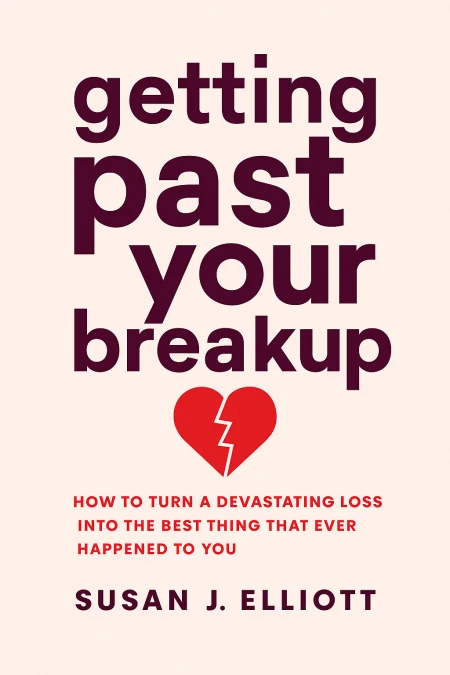
Getting Past Your Breakup
How to Turn a Devastating Loss into the Best Thing That Ever Happened to You
Book Edition Details
Summary
Heartbreak strikes like a storm, leaving chaos in its wake. But amidst the wreckage lies a chance to rebuild, stronger and wiser than before. "Getting Past Your Breakup" by Susan Elliott offers a beacon of hope for those caught in the tempest of romantic endings, including divorces. With wisdom honed from years of guiding thousands through her workshops and blog, Elliott reveals how to transform pain into power. Her approach isn't about winning back lost love; it's about rediscovering yourself and nurturing a life where you flourish, regardless of your relationship status. Embrace this pivotal moment as the beginning of a transformative journey towards self-love and resilience.
Introduction
The end of a meaningful relationship can feel like the collapse of an entire world. In those devastating moments when love transforms into loss, when shared dreams crumble into solitary reality, the human spirit faces one of its most profound tests. Yet within this darkness lies an extraordinary opportunity for transformation. The journey from heartbreak to healing is not merely about recovering from what was lost, but about discovering what was always there waiting to be found: a stronger, wiser, more complete version of ourselves. This exploration reveals how the most painful endings can become the most powerful beginnings. Through the debris of broken relationships, we learn to construct something far more valuable than what we lost. We discover that true healing involves not just moving past the pain, but moving into a deeper understanding of our own worth, our patterns, and our capacity for genuine love. From this journey, readers will understand how to transform grief into growth, how to break destructive relationship patterns that keep us trapped in cycles of heartbreak, and how to build the foundation for authentic love that begins with loving ourselves. The path is neither quick nor easy, but it leads to a destination worth every difficult step: a life of emotional freedom and the ability to love fearlessly.
Breaking Free: The Journey from Devastation to No Contact
The immediate aftermath of a breakup often feels like being caught in an emotional hurricane. Every instinct screams to reach out, to explain, to fix what feels unfixable. The mind races with questions that have no satisfying answers, replaying conversations and searching for clues that might resurrect what has died. This is the beginning of a journey that seems impossible but is absolutely essential: learning to let go completely. The concept of "no contact" appears deceptively simple but proves devastatingly difficult. It means no calls, no texts, no accidental encounters at familiar places, no checking social media profiles, and no asking mutual friends for updates. It means sitting with the deafening silence where constant communication once lived. This silence feels unbearable at first, like holding your breath underwater, but it is precisely in this space that healing begins to take root. The excuses for breaking no contact are endless and creative. We tell ourselves we need closure, or that we must return borrowed items, or that this one conversation will finally bring clarity. These are all elaborate self-deceptions designed to avoid the fundamental truth: healing requires space, and space means accepting that some questions will never be answered. The person who was once our closest confidant must become a stranger, at least temporarily. What emerges from maintaining this difficult boundary is remarkable. The obsessive thoughts begin to quiet. The desperate need to know what they're doing, who they're with, and whether they miss us starts to fade. In the space created by no contact, we rediscover our own voice, our own rhythm, our own life. The silence that once felt like death becomes the fertile ground from which our new self begins to grow.
Healing Within: Grief, Self-Care, and Personal Transformation
Grief after a breakup is not a linear progression but a complex dance of emotions that ebb and flow without warning or logic. One moment brings anger that burns like fire, the next delivers sadness that feels bottomless. There might be bargaining with the universe, denial that refuses to accept reality, or numbness that seems to protect but actually postpones the necessary work of mourning. Understanding that these fluctuations are not signs of weakness but evidence of a heart learning to heal is crucial to the process. The temptation during this phase is to either wallow in the pain or run from it entirely. Neither approach serves healing. Instead, the path forward requires learning to be present with difficult emotions while simultaneously nurturing ourselves through the storm. This means developing daily practices of self-care that go beyond bubble baths and comfort food, though these have their place. True self-care involves journaling to process emotions, setting goals that excite us, engaging in physical activity that reconnects us with our bodies, and gradually building a support network of people who see our worth. Personal transformation during grief is not about becoming someone entirely new, but about excavating who we truly are beneath the layers of compromise and adaptation that relationships often require. We rediscover interests we abandoned, reconnect with friends we neglected, and remember dreams we set aside. This process can feel selfish at first, especially for those accustomed to defining themselves through their relationships, but it is actually the most generous thing we can do for our future partnerships. The miracle of proper grief work is that it doesn't just help us get over one relationship, it helps us understand all our relationships. We begin to see patterns in our choices, recognize the wounds that drive us toward certain types of people, and develop the emotional intelligence to choose differently next time. This is not just recovery, it is evolution.
Building Boundaries: From Past Patterns to Present Strength
The examination of relationship patterns often reveals uncomfortable truths about how our past continues to shape our present choices. Many people discover they have been unconsciously recreating childhood dynamics, seeking partners who represent familiar struggles rather than healthy compatibility. This recognition can be jarring, but it is also profoundly liberating because it means our romantic failures are not random cruel fate but predictable patterns that can be changed. Developing healthy boundaries becomes the cornerstone of this transformation. Boundaries are not walls built to keep others out, but clear definitions of where we end and others begin. They help us distinguish between our responsibilities and those of others, between healthy compromise and destructive self-abandonment. Learning to say no without guilt, to express needs without apology, and to walk away from situations that diminish us requires practice and courage, but these skills become the foundation of all future happiness. The process of setting boundaries often meets resistance, both from within and from others who benefited from our previous lack of limits. Family members may accuse us of becoming selfish, friends might express confusion about our new standards, and potential romantic partners may test our resolve. This resistance is actually confirmation that the boundaries are necessary and working. The people who truly care about our wellbeing will adjust to and ultimately respect our new clarity. What emerges from this boundary work is a different kind of strength. It is not the brittle strength of defensiveness, but the flexible strength of someone who knows their own worth and refuses to accept less. This strength becomes magnetic, attracting healthier people and opportunities while naturally repelling those who would take advantage. The very qualities that once made us vulnerable to poor treatment become the foundation of our power when properly channeled and protected.
Moving Forward: Real Love and Life After Loss
The question of when someone is ready to love again has no universal answer, but there are reliable indicators. Readiness comes when being alone feels like a choice rather than a punishment, when thoughts of an ex evoke neutral curiosity rather than intense emotion, and when the desire for partnership stems from wanting to share a full life rather than needing someone to complete an incomplete one. This transformation can take months or years, but it cannot be rushed without risking the repetition of old patterns. Real love, as opposed to the desperate attachments that often masquerade as love, has distinct characteristics. It expands rather than contracts our world, encouraging our friendships, interests, and individual growth rather than demanding we sacrifice these things. It feels peaceful rather than chaotic, supportive rather than competitive, and secure rather than constantly threatened. Real love does not require us to walk on eggshells, decode mixed messages, or prove our worth through suffering. The dating process after significant personal work requires a different approach than before. Instead of trying to impress or seeking validation, the focus shifts to honest evaluation. The question becomes not "How can I make them like me?" but "Do I actually like them?" This shift in perspective eliminates much of the anxiety and desperation that plague early dating, replacing it with genuine curiosity and authentic connection. Perhaps most importantly, the journey through heartbreak and healing reveals that our romantic relationships are just one aspect of a rich, full life. The person who has learned to be happy alone brings a different quality of presence to partnership. They offer love as a gift rather than demanding it as payment for their insecurities. They can walk away from situations that don't serve them because they know their worth is not determined by someone else's recognition of it. This is the foundation upon which lasting love is built.
Summary
The transformation from heartbreak to healing represents one of the most profound journeys the human spirit can undertake, revealing that our greatest pain can become the catalyst for our most significant growth. When we resist the temptation to rush past our grief or numb our pain, when we do the difficult work of understanding our patterns and building healthy boundaries, we emerge not just recovered but fundamentally changed. We develop the rare and precious ability to love without losing ourselves, to be vulnerable without being weak, and to choose partners from a place of strength rather than need. This journey teaches us that the love we were so desperate to keep was often a poor substitute for the love we are capable of both giving and receiving once we understand our own worth. For anyone standing in the rubble of a broken relationship, wondering if they will ever feel whole again, this exploration offers both comfort and challenge: comfort in knowing that healing is possible, and challenge in recognizing that true healing requires courage, commitment, and the willingness to become the person we were always meant to be.
Related Books
Download PDF & EPUB
To save this Black List summary for later, download the free PDF and EPUB. You can print it out, or read offline at your convenience.
By Susan J. Elliott
