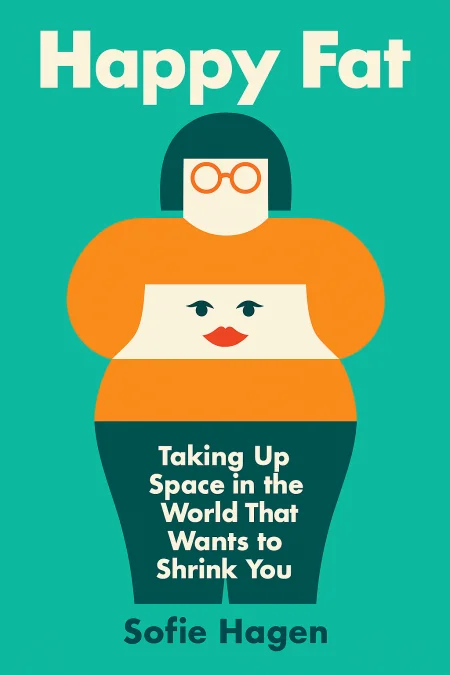
Happy Fat
Taking Up Space in a World That Wants to Shrink You
Book Edition Details
Summary
In a society that polices body size with an iron fist, Sofie Hagen's "Happy Fat" is a vibrant rebellion against the tyranny of fatphobia. This audacious memoir invites readers into Sofie's world, where humor, anger, and love collide in her quest for self-acceptance. As she tackles everything from the indignities of cramped airplane seats to the complexities of intimacy, Sofie strips away layers of prejudice, revealing the insidious myths that equate fat with unhealthy. Her candid stories are interwoven with insights from fellow Fat Liberation advocates, crafting a fierce manifesto that challenges societal norms. "Happy Fat" is a testament to the power of claiming space unapologetically, making it an essential read for anyone ready to confront the status quo with a laugh and a fight.
Introduction
Fat bodies exist in a state of constant siege within contemporary society, subjected to a relentless campaign of medicalization, moralization, and marginalization that masquerades as concern for public health. This systematic oppression operates through interlocking mechanisms of capitalism, patriarchy, and what can only be described as institutional fatphobia, creating a cultural apparatus designed to extract profit from human insecurity while maintaining hierarchical power structures. The prevailing narrative presents fatness as a personal moral failing requiring correction through diet culture's endless cycle of restriction, shame, and commercial intervention. Yet this seemingly natural order reveals itself as entirely constructed when examined through the lens of critical fat studies and liberation politics. The transformation from viewing fatness as inherently problematic to recognizing it as a site of resistance requires dismantling deeply embedded assumptions about health, beauty, morality, and human worth. Through personal narrative, historical analysis, and systematic critique of medical and cultural institutions, a radical reframing emerges that positions fat acceptance not as individual self-help but as collective political action. The journey from self-hatred to self-love becomes inseparable from broader struggles against systems designed to keep marginalized bodies compliant, profitable, and politically powerless.
The Social Construction of Fatphobia and Its Harmful Origins
Fatphobia emerges not from natural human instinct but from deliberate historical processes that transformed fat bodies from neutral variations in human form into symbols of moral corruption and social threat. The archaeological evidence reveals that Western beauty standards consistently favored thinness throughout history, contradicting popular myths about past eras celebrating larger bodies. Medieval Christianity's condemnation of gluttony as a deadly sin established the moral framework that continues to underpin contemporary fat hatred, while emerging capitalism found profitable ways to monetize this manufactured insecurity. The medicalization of fatness represents a crucial turning point in this constructed oppression. When researchers like McGinnis and Foege published studies about lifestyle factors affecting mortality, their nuanced findings about diet and exercise patterns were systematically misrepresented in media and policy circles as direct condemnations of fat bodies themselves. The transformation of complex health research into simplistic anti-fat messaging serves commercial interests that profit from perpetual dissatisfaction with human bodies as they naturally exist. This historical construction becomes visible when examining how fat activism emerged in direct response to systematic discrimination. The Fat Liberation Movement of the 1960s, primarily led by fat, queer, Jewish women, identified the connections between body oppression and broader systems of social control. Their analysis recognized that teaching people to hate their own flesh serves authoritarian interests by redirecting energy that might otherwise challenge structural inequalities into endless cycles of self-improvement and consumption. The intersectional nature of fatphobia reveals its true function as a tool for maintaining hierarchical power relations, where fat bodies become scapegoats for anxieties about class, gender, sexuality, and social change itself.
Systematic Discrimination Against Fat Bodies in Society and Medicine
Contemporary institutions systematically exclude and penalize fat bodies through policies and practices that operate with legal impunity across most jurisdictions. Employment discrimination against fat workers remains perfectly legal in most countries, while transportation systems, public accommodations, and healthcare facilities continue designing spaces that physically exclude larger bodies without consequence. This institutional architecture of exclusion operates alongside cultural representations that either erase fat people entirely or present them exclusively as objects of ridicule, medical concern, or cautionary warning. Medical encounters reveal the deadly consequences of systematic bias within healthcare systems. Healthcare providers routinely dismiss fat patients' symptoms as weight-related regardless of presenting complaints, leading to delayed diagnoses of serious conditions including tumors misidentified as excess weight. Studies document that fat patients receive substandard care across all medical specialties, with providers expressing explicit disgust and reluctance to provide necessary treatments. The medical establishment's obsession with weight loss as universal prescription ignores extensive research demonstrating that weight cycling and chronic dieting cause the very health problems attributed to fatness itself. Educational systems perpetuate discrimination by failing to provide appropriate accommodations while actively promoting anti-fat bias through health curricula that stigmatize larger bodies. Workplace environments create hostile conditions through inadequate seating, dress codes that assume particular body types, and wellness programs that explicitly target fat employees for intervention. Social spaces from restaurants to theaters to public transportation continue operating with designs that accommodate only a narrow range of human bodies. This systematic exclusion extends beyond inconvenience into active violence, as fat people face higher rates of medical malpractice, employment termination, housing discrimination, and physical assault, all while lacking legal protections afforded to other marginalized groups.
Debunking the Health Myths Used to Justify Anti-Fat Bias
The supposed health crisis of fatness dissolves under rigorous scientific examination, revealing a vast apparatus of misrepresented research and manufactured panic serving commercial and ideological interests. The body mass index system, still widely used despite its origins in 19th-century mathematical modeling rather than medical research, fails to account for basic variations in bone density, muscle mass, and body composition. Meanwhile, the concept of metabolically healthy obesity demonstrates that up to 35% of fat people show no markers for diabetes, heart disease, or other conditions routinely attributed to body size. Research consistently demonstrates that fitness and diet quality predict health outcomes far more accurately than body weight, with fat individuals who exercise regularly showing mortality rates identical to thin fit people. The supposed epidemic of obesity-related deaths traces back to David Allison's discredited studies, later revised downward by factors of fifteen when proper methodology was applied. The weight-loss industry's funding of obesity research creates systematic bias toward findings that pathologize fatness while suppressing evidence of dieting's harmful effects. The actual health crisis facing fat people stems from weight stigma itself, which produces measurable physiological stress responses leading to precisely the conditions blamed on body size. Discrimination elevates cortisol levels, disrupts sleep patterns, increases inflammation, and creates chronic stress states that directly cause cardiovascular disease, diabetes, and other metabolic disruptions. Medical bias compounds these effects by deterring fat people from seeking healthcare while providing substandard treatment when they do. Weight loss interventions fail at rates approaching 98% over five years while causing documented harm through metabolic disruption, psychological trauma, and increased mortality risk from weight cycling. The surgical interventions promoted as solutions carry death rates up to 5% with common complications including dumping syndrome, nutritional deficiencies, and increased suicide risk.
From Individual Self-Love to Collective Fat Liberation Movement
Personal transformation from fat shame to fat pride requires understanding that individual healing cannot occur in isolation from collective political struggle against systems designed to maintain fat oppression. The journey begins with reclaiming language, using "fat" as neutral descriptive term rather than moral condemnation, while developing critical consciousness about how diet culture functions as mechanism of social control. Daily practices of self-acceptance create foundation for political resistance, but remain insufficient without broader movement building. The shift from body positivity to fat liberation marks crucial evolution from individual therapy toward systematic change. Body positivity's focus on personal self-esteem gets co-opted by commercial interests selling empowerment while maintaining underlying structures of oppression. Fat liberation demands material changes in policies, institutions, and resource distribution rather than simply encouraging people to feel better about inequality. This requires understanding intersectionality, recognizing how fatphobia combines with racism, sexism, classism, and ableism to create compound marginalizations requiring coordinated resistance. Community building becomes essential component of liberation practice, connecting isolated individuals experiencing fat oppression into collective networks capable of mutual support and political action. Online spaces, local meetups, clothing swaps, and activist organizations provide alternatives to dominant culture's anti-fat messaging while developing shared analysis of root causes. These communities incubate strategies for resistance ranging from personal boundary-setting to policy advocacy to direct action against discriminatory institutions. The ultimate goal extends beyond acceptance toward transformation of social conditions that currently make fat existence precarious. This demands confronting capitalism's requirement for manufactured insecurity, patriarchy's control over bodies, and white supremacy's beauty standards, while building alternative systems prioritizing human dignity over profit and conformity.
Summary
The liberation of fat bodies from systematic oppression requires recognizing fatphobia as deliberately constructed system of control rather than natural response to health concerns, demanding collective political resistance that transforms social conditions rather than individual adaptation to unjust circumstances. The journey from shame to pride becomes meaningful only when connected to broader movements dismantling all forms of bodily oppression and building worlds where human diversity flourishes without apology. Readers seeking to understand how personal struggles with body image connect to larger systems of power, or those ready to transform individual healing into collective liberation, will find essential tools for both analysis and action within this comprehensive challenge to diet culture's stranglehold on contemporary life.
Related Books
Download PDF & EPUB
To save this Black List summary for later, download the free PDF and EPUB. You can print it out, or read offline at your convenience.
By Sofie Hagen
