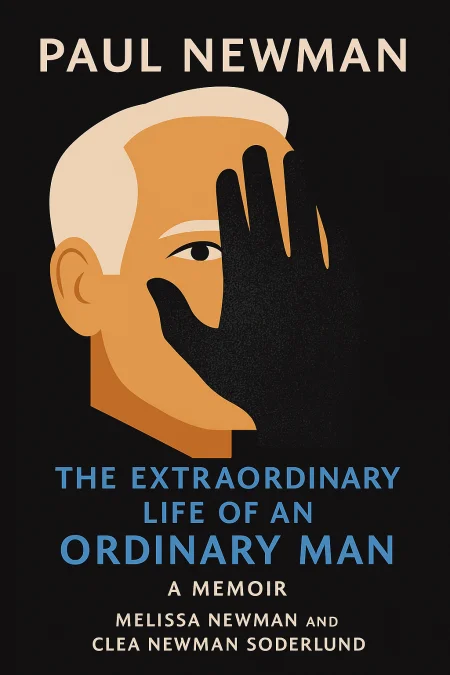
The Extraordinary Life of an Ordinary Man
A Memoir
byPaul Newman, Melissa Newman, Clea Newman Soderlund
Book Edition Details
Summary
For those who seek truth in the glint of a Hollywood icon's eyes, Paul Newman's memoir is a revelation wrapped in candor. Beyond the silver screen's glamour, this chronicle unfurls the tapestry of a life where triumph meets turmoil. From an unsettling childhood to the vibrant highs and shadowed lows of stardom, Newman bares his soul with unflinching honesty. His reflections on legends like Brando and Dean, and his profound bond with Joanne Woodward, pulse with raw emotion. Each page is colored by the voices of those who shared his journey, painting a portrait that is as textured as it is unguarded. This isn't just a memoir; it's a masterclass in vulnerability and resilience, inviting readers to glimpse the extraordinary essence of an ordinary man.
Introduction
In the golden age of Hollywood, few stars possessed the rare combination of magnetic screen presence and genuine humanity that defined Paul Newman. Born into middle-class comfort in Shaker Heights, Ohio, Newman would rise to become not only one of cinema's most enduring icons but also a man who fundamentally challenged what it meant to be a celebrity in America. His piercing blue eyes and natural charisma made him a heartthrob, yet beneath the surface lay a complex individual wrestling with self-doubt, seeking authenticity in a world built on illusion. Newman's story transcends the typical Hollywood narrative, revealing a man who transformed personal struggles into artistic excellence and later channeled his success into extraordinary philanthropy. Through his journey, readers will discover how an "ordinary man" grappled with extraordinary circumstances, finding meaning through craft, love, and service. His evolution from a conflicted young actor to a racing champion and humanitarian offers profound insights into the nature of identity, the weight of fame, and the redemptive power of giving back to others.
From Shaker Heights to Broadway: Early Life and Acting Beginnings
Paul Newman's journey began in the manicured suburbs of 1930s Shaker Heights, where appearances mattered more than authenticity. Growing up in a household marked by unspoken tensions, Newman experienced the peculiar burden of being his mother's "decoration" while yearning for his father's approval that seemed perpetually out of reach. His father Arthur, a frustrated writer turned sporting goods businessman, maintained an emotional distance that would haunt Newman throughout his life. Meanwhile, his mother Teresa treated him like a prized possession, showering him with attention that felt hollow and performative. The Newman household was a theater of suppressed emotions, where young Paul and his brother Arthur literally banged their heads against the dining room wall in frustration. This physical expression of inner turmoil would prove prophetic, as Newman later found refuge in the world of performance. His early experiences with anti-Semitism, stemming from his Jewish father's heritage, added another layer of complexity to his developing sense of self. These rejections from high school fraternities and social circles taught him early lessons about exclusion and belonging. World War II service in the Pacific provided Newman with his first taste of independence, though he characteristically downplayed its impact, comparing it to "being in a touring company." Upon returning, his time at Kenyon College marked the beginning of his theatrical awakening. Initially drawn to the stage more by circumstance than passion, Newman discovered that acting offered something his carefully controlled upbringing had never provided: a sanctuary where emotions could be expressed without judgment. Though he would later claim he "never enjoyed acting," these early performances revealed a natural magnetism that others recognized even when he could not. His transition from college productions to summer stock in Wisconsin introduced him to both professional theater and his first wife, Jackie Witte. This period represented Newman's initial attempt to construct an adult identity, though he approached marriage and fatherhood with the same lack of self-awareness that characterized much of his early life. The move to New Haven for Yale Drama School and subsequently to New York marked the beginning of his serious pursuit of acting, even as he remained uncertain about his own abilities and motivations.
Hollywood Stardom and Personal Transformation: Marriage, Fame, and Identity
Newman's arrival in Hollywood coincided with a period of profound personal upheaval that would define both his career and his understanding of himself. His first film, "The Silver Chalice," became an experience he would later describe as emblematic of everything wrong with Hollywood's superficiality. Yet this apparent failure taught him valuable lessons about the industry's mechanics and his own determination to seek better material. The film's poor reception might have derailed a less resilient personality, but Newman used it as motivation to prove his worth beyond mere physical appearance. The transformative moment came with his casting in "Picnic," where he met Joanne Woodward. Their backstage romance while he remained married to Jackie Witte created a crisis that exposed Newman's capacity for both passion and moral conflict. Joanne awakened something in Newman that he described as revolutionary—a sexuality and emotional authenticity that had been dormant throughout his controlled upbringing. This affair, conducted over years of secrecy and guilt, revealed Newman's struggle between responsibility and desire, between the "good son" his upbringing had created and the complex man he was becoming. The dissolution of his first marriage and his wedding to Joanne marked more than a personal transition; it represented Newman's emergence as both a serious actor and a more integrated human being. Films like "Cat on a Hot Tin Roof" and "The Long, Hot Summer" showcased a newfound screen magnetism that seemed to flow directly from his personal transformation. Critics and audiences began to recognize something beyond mere good looks—a depth and authenticity that elevated his performances above conventional leading-man roles. This period also established patterns that would define Newman's approach to fame. His discomfort with celebrity, his insistence on privacy, and his sometimes sharp interactions with the press reflected a man determined to maintain control over his public image. Unlike many stars who embraced the Hollywood lifestyle, Newman treated fame as a tool rather than a destination, using his growing influence to choose projects that challenged him artistically. His willingness to play morally ambiguous characters like Hud demonstrated an artistic courage that distinguished him from more conventional movie stars, even as it sometimes puzzled audiences expecting traditional heroic roles.
Beyond the Screen: Racing, Philanthropy, and Finding Authenticity
Newman's discovery of auto racing while filming "Winning" provided him with something Hollywood never could: a arena where performance was measured by objective standards rather than subjective opinions. Behind the wheel of a race car, Newman found an authenticity that had eluded him throughout his acting career. Racing demanded skills that could not be faked or manufactured—split-second timing, physical courage, and the ability to perform under extreme pressure. His evolution from Hollywood curiosity to genuinely competitive driver represented a triumph of dedication over natural talent. The racing world also offered Newman a community where he was valued for his abilities rather than his celebrity status. Fellow drivers like Jim Fitzgerald became genuine friends who saw Newman as a peer rather than a movie star. This environment allowed him to shed some of the self-consciousness that had plagued him throughout his career. His numerous championships, including becoming the oldest winner of a professionally sanctioned race at age seventy, provided validation that was entirely separate from his film career. Parallel to his racing achievements, Newman's philanthropic evolution revealed another dimension of his search for meaning. The creation of Newman's Own began almost as a lark—making salad dressing with friend A.E. Hotchner—but its success provided Newman with resources for giving that matched his growing desire to contribute meaningfully to society. His decision to donate all profits to charity was not calculated philanthropy but an instinctive response to what felt right. The venture's success enabled him to fund camps for seriously ill children, environmental initiatives, and educational programs with a freedom that few individuals ever possess. The Hole in the Wall Gang Camp represented perhaps Newman's purest expression of values, creating a place where children facing life-threatening illnesses could experience normal childhood joys. His hands-on involvement with the camp revealed a man capable of profound empathy and practical compassion. Unlike the performative charity common among celebrities, Newman's philanthropic work was characterized by genuine engagement and a desire to create lasting change rather than mere publicity opportunities. This work provided him with a sense of purpose that acting alone had never supplied.
Legacy of Excellence: The Man Behind the Legend
In his later years, Newman achieved the integration of personality that had eluded him for decades. The various facets of his identity—actor, racing driver, philanthropist, husband, and father—began to coalesce into a more coherent whole. His continued acting in films like "The Verdict" and "The Color of Money" demonstrated an artistic maturity that drew from his life experiences rather than fighting against them. These performances revealed an actor who had finally learned to trust his own instincts rather than constantly questioning his abilities. Newman's relationship with his craft evolved from the tortured self-doubt of his early career to a more seasoned understanding of his strengths and limitations. He developed what director George Roy Hill called "a quality of reserve" that allowed him to suggest depths without overplaying. This restraint, initially born of insecurity, became one of his greatest assets as a performer. His ability to convey complexity through subtle means rather than theatrical gestures marked him as a distinctly modern screen actor, influencing generations of performers who followed. The tragedy of his son Scott's death from a drug overdose provided Newman with perhaps his most profound test of character. Rather than allowing grief to embitter him, Newman channeled his pain into deeper commitment to his surviving children and expanded philanthropic work. His ability to find meaning in tragedy demonstrated a resilience that went beyond mere survival to transformation. The experience deepened his empathy and strengthened his resolve to make positive contributions to the world. Newman's approach to aging was characterized by continued growth rather than mere graceful decline. His return to Broadway in "Our Town" at age seventy-seven proved he could still challenge himself artistically. His racing career continued almost until his death, symbolizing his refusal to be constrained by others' expectations about appropriate behavior for someone his age. Even his philanthropic work expanded in scope and sophistication, suggesting a man who remained engaged with life's possibilities rather than dwelling on its limitations.
Summary
Paul Newman's extraordinary life demonstrates that authenticity is not a destination but a continuous journey of self-discovery and service to others. His transformation from a conflicted young man seeking approval to a confident individual who found meaning through excellence in multiple fields offers a powerful model for anyone struggling to define their own identity in a world of external expectations. Newman's story reveals that true success comes not from achieving fame or accumulating wealth, but from the courage to remain curious about oneself and committed to contributing something meaningful to the world. His legacy reminds us that ordinariness and extraordinariness are not mutually exclusive—that within every person lies the potential for both artistic achievement and genuine service to humanity, waiting only for the decision to pursue excellence with humility and purpose.
Related Books
Download PDF & EPUB
To save this Black List summary for later, download the free PDF and EPUB. You can print it out, or read offline at your convenience.
By Paul Newman
