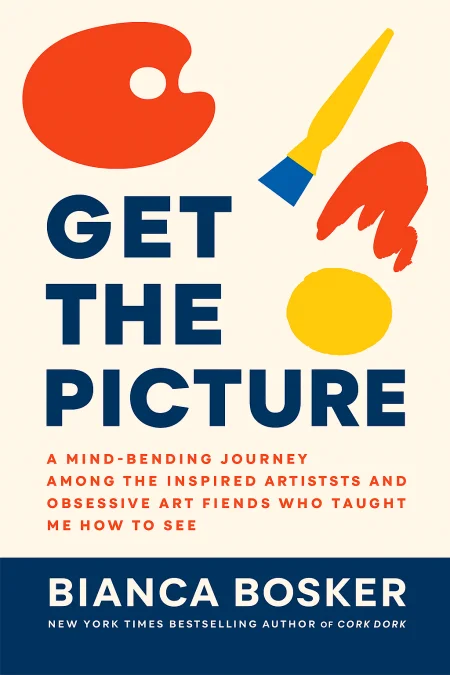
Get the Picture
A Mind-Bending Journey among the Inspired Artists and Obsessive Art Fiends Who Taught Me How to See
Book Edition Details
Summary
In a world where creativity clashes with commerce and passion teeters on the edge of obsession, Bianca Bosker plunges into the enigmatic realm of contemporary art with infectious curiosity. "Get the Picture" is a vivid chronicle of Bosker's audacious escapades—from cozying up to billionaire collectors at exclusive soirées to weathering the gritty realities of an artist's life. Her quest unearths the peculiar rituals and fervent desires that bind artists and aficionados alike, revealing art’s profound impact on our existence. As Bosker navigates this labyrinthine scene, she invites readers to question their own perceptions and embrace a more vibrant engagement with art. With wit and wisdom, this tale promises to transform not just how we see art, but how we see the world.
Introduction
Standing in a pristine white gallery, staring at what appeared to be a urinal mounted on the wall, a journalist found herself asking the question that haunts so many of us: "But is it art?" The piece was priced at millions, surrounded by reverent whispers from well-dressed patrons, yet she felt nothing but confusion. This moment of bewilderment became the catalyst for an extraordinary journey into the art world's most guarded secrets. What happens when someone with no formal art training decides to infiltrate the exclusive circles of galleries, collectors, and critics? When the very people who control what we see and value in art view outsiders as threats to their carefully constructed kingdom? This exploration reveals not just how art is made, sold, and celebrated, but why it matters so deeply to human existence. Through immersive experiences—from working behind gallery desks to witnessing million-dollar transactions in Miami's art fairs—we discover that understanding art isn't about memorizing names and dates, but about learning to see with fresh eyes. The journey transforms both our relationship with creativity and our understanding of what it means to live a more expansive, beautiful life.
Learning the Rules: Inside Gallery Culture and Its Gatekeepers
The first shock came not from the art itself, but from the people who controlled access to it. When our intrepid explorer approached gallery after gallery, seeking to understand how the art world operated, she was met with suspicion, fear, and outright hostility. "You'll make some powerful enemies," warned a seasoned collector. Gallery owners refused to meet, artists went off the record for sharing the most mundane details, and even recent graduates trembled at the thought of speaking to a journalist. The paranoia was so thick you could cut it with a palette knife. Working inside a Brooklyn gallery revealed the elaborate codes that govern this hidden world. There were rules about everything: how to paint walls (nine coats minimum), what words to use ("placed" never "sold"), and who deserved access to art. The gallery owner meticulously controlled every detail, from the temperature of the lighting to the punctuation in Instagram posts. Visitors were categorized as either "good people" with extensive networks and museum connections, or "Joe Schmos" who might love the art but lacked the social currency to matter. The most startling discovery was how context—an artist's education, connections, and social media following—often mattered more than the artwork itself. A painting's value could skyrocket based on who owned it, where it was shown, or whether the artist attended the right graduate program. The gallery's location on the second floor wasn't about rent costs; it was designed to keep out casual browsers who might not understand the unspoken rules of engagement. This system of exclusion reveals a profound contradiction at the heart of contemporary culture. While art is supposedly one of humanity's most universal languages, its gatekeepers have created barriers that would make a medieval guild blush. Yet understanding these dynamics is the first step toward seeing beyond them, toward developing the confidence to trust your own eyes and experiences with art.
From Studio to Sale: The Making and Marketing of Art
Inside a sunlit studio in Brooklyn, watching an artist wrestle with a canvas revealed art's most fundamental truth: every mark is a decision. As paint was mixed, brushes selected, and colors adjusted for the hundredth time, it became clear that creating art is less about divine inspiration and more about relentless problem-solving. The artist spoke to her paintings as if they were temperamental children, coaxing cooperation from stubborn canvases that refused to behave. "Painting is constant decision-making," she explained, adjusting the blue of a sky for the third time that day. This intimate view of creation stood in stark contrast to the sterile discussions happening in galleries, where art was dissected through the lens of theory and market value. Watching the physical struggle—blistered hands from stretching canvas, the careful mixing of colors that took hours to achieve—revealed how much gets lost when we focus only on concepts and prices. Each brushstroke carried the memory of the artist's hand, each color choice reflected countless small battles won and lost. The journey from studio to sale exposed art's economic realities with brutal clarity. Emerging artists juggled multiple jobs while pouring their savings into materials and studio rent. A $4,000 painting, after the gallery's 50% commission, might leave an artist with barely enough to cover a year's expenses. Yet they persisted, driven by something deeper than financial logic. As one sculptor put it, "There's, like, zero other choice." The art market's pricing mechanisms proved to be part science, part psychology, and part pure invention. Prices were set by comparing similar artists, adjusted based on demand, and sometimes simply pulled from thin air by a group of dealers who thought "someone would pay that." The most expensive art wasn't necessarily the best—it was often the most successfully contextualized, surrounded by the right names and institutions that gave it cultural weight.
Miami Madness: Where Commerce Meets Culture and Status
Miami Art Week transformed the usually hushed world of galleries into a carnival of excess, where billion-dollar collections were displayed like trophies and champagne flowed as freely as the art world gossip. In sprawling mansions that doubled as private museums, collectors gave tours of their acquisitions while uniformed staff served canapés. The same artists appeared in house after house, suggesting that collecting art was as much about following trends as expressing individual taste. The art fairs themselves were masterclasses in manufactured scarcity and social hierarchy. VIP passes came in multiple tiers—First Choice, Private Day, Vernissage—each granting access at different times, creating artificial urgency around artworks that had been available for weeks. Galleries had already pre-sold pieces to their most important clients, yet the theater of discovery continued. Collectors who could afford anything were trained to want only what they couldn't easily have. Working on the sales floor revealed the delicate dance between art appreciation and commerce. Successful selling meant staying "in the work"—focusing on the visual and emotional experience rather than immediately jumping to context and credentials. When a collector stopped breathing while staring at a photograph, when tears formed in someone's eyes before an abstract painting, these moments of genuine connection proved more powerful than any résumé or institutional affiliation. The week's intensity—parties, openings, sales, and sleepless nights—created a pressure cooker environment where the art world's contradictions became impossible to ignore. Here were artworks criticizing wealth accumulation being sold to the ultra-wealthy, pieces about social justice displayed in mansions with servants' quarters, and discussions of art's transformative power happening between lines of cocaine in bathroom stalls. Yet beneath the excess and contradiction, something authentic persisted. People were genuinely moved by art, collectors formed deep relationships with pieces they lived with daily, and artists found ways to support their practice through this imperfect but functioning system.
The Art of Seeing: Museums, Guards, and Slow Looking
The museum guard's perspective offered a radically different view of how art functions in society. Standing for hours beside the same artworks day after day, watching thousands of visitors stream past, revealed patterns of human behavior that curators and critics rarely acknowledged. Most people spent mere seconds with each piece, rushing through galleries as if checking items off a shopping list rather than engaging with the profound questions these objects were meant to provoke. The slow looking that came with the guard's enforced stillness transformed familiar artworks into complex companions with ever-changing moods and meanings. A sculpture that seemed boring on first encounter revealed new facets after weeks of observation—subtle details in the marble's grain, shifts in how light played across its surface, the way its presence affected the energy of the entire gallery. This extended intimacy with artworks demonstrated that appreciation wasn't about instant recognition or immediate understanding, but about patience, attention, and willingness to let meaning unfold gradually. The museum's role as cultural gatekeeper became increasingly apparent through daily interactions with visitors from all backgrounds. The institution's architecture, lighting, and presentation methods all worked to create a sense of reverence that could either inspire or intimidate. While some visitors felt empowered to engage deeply with challenging works, others seemed paralyzed by the weight of cultural authority, afraid to trust their own responses or ask questions that might reveal their supposed ignorance. The most profound encounters happened when visitors abandoned their need for immediate understanding and allowed themselves to be genuinely surprised by what they encountered. These moments revealed that art's greatest gift isn't the creation of beautiful objects, but the cultivation of beautiful perception—teaching us to see with greater depth, curiosity, and courage in every aspect of our lives.
Summary
The art world's greatest secret isn't hidden in some vault or whispered in exclusive circles—it's hiding in plain sight. After months of infiltrating galleries, working art fairs, and witnessing the machinery of cultural production, the most radical discovery was this: you don't need anyone's permission to have a meaningful relationship with art. The elaborate codes, hierarchies, and gatekeeping mechanisms exist not to protect art's sacred mysteries, but to maintain the power of those who profit from keeping others out. True engagement with art begins when we stop outsourcing our opinions to experts and start trusting our own eyes, hearts, and minds. Whether it's the way light catches on a painted surface, the emotional resonance of an unexpected color combination, or the physical presence of an object in space, art speaks directly to our senses and experiences. The most profound encounters happen not when we can recite an artist's biography or place their work in art historical context, but when we allow ourselves to be genuinely surprised, moved, or challenged by what we see. The path forward isn't about rejecting expertise or dismissing the value of knowledge, but about remembering that art exists first and foremost as a human experience. Every person who has ever been stopped in their tracks by a painting, felt their breath catch at a sculpture, or found themselves returning again and again to contemplate a photograph has accessed something essential about what it means to be alive. In a world that often feels mechanical and disconnected, art offers a reminder that beauty, meaning, and transformation are not luxuries reserved for the elite—they are birthright experiences available to anyone willing to look with genuine curiosity and openness.
Related Books
Download PDF & EPUB
To save this Black List summary for later, download the free PDF and EPUB. You can print it out, or read offline at your convenience.
By Bianca Bosker
